

22nd Nov 2026
7 Safe Household Cleaners for Sensitive Skin
Table of Contents
- Why Household Cleaners Irritate Sensitive Skin
- Cleaning Ingredients to Avoid for Sensitive Skin
- How to Choose Fragrance-Free Cleaning Products
- Eczema-Safe Household Cleaning Products: What to Look For
- Cleaning Products for Allergies: Reducing Airborne Triggers
- Gentler Alternatives: White Vinegar, Baking Soda, and Enzyme Cleaners
- A Task-by-Task Routine to Protect Your Skin While Cleaning
- Choosing Natural Ginesis for Your Sensitive-Skin Household
- Frequently Asked Questions
Last Updated: October 26, 2026
Why Household Cleaners Irritate Sensitive Skin
Spray a conventional bathroom cleaner and your skin may sting within minutes. That reaction is not imaginary. A 2022 review of cleaning agents' health hazards found that these products carry several kinds of health risk, with corrosion and irritation hazards standing out as the most common (review of cleaning agents' health hazards(https://pmc.ncbi.nlm.nih.gov/articles/PMC9250289/)).
The mechanism is simple. Many cleaners contain surfactants, solvents, acids, and preservatives that strip the skin's natural oils. Once that barrier weakens, irritants get in more easily. For people with sensitive skin or eczema, the result is redness, itching, and contact dermatitis.
Airborne exposure matters too. A 2024 literature analysis found that using cleaning products and disinfectants raises occupants' exposure to a range of potentially harmful chemicals in indoor air (EXTERNAL_LINK: analysis of cleaning products and indoor air | https://www.sciencedirect.com/).
At Natural Ginesis, we hear from parents and adults with chronic skin conditions who have cycled through drugstore products without relief. The pattern is consistent: harsh cleaners irritate skin, and the irritation gets blamed on something else.
Below, we break down which ingredients to avoid, how to read labels, and how to build a routine around safe household cleaners for sensitive skin.
Cleaning Ingredients to Avoid for Sensitive Skin
Certain ingredients show up again and again in skin reactions. If your skin is reactive, scan labels for these first:
- Fragrance and parfum. The leading cause of cosmetic contact dermatitis. Fragrance mixes can contain dozens of undisclosed compounds.
- Dyes and colorants. Added purely for appearance, with no cleaning benefit.
- Harsh surfactants such as sodium lauryl sulfate, which strip oils aggressively.
- Chlorine bleach. A strong irritant to skin and lungs.
- Quaternary ammonium compounds. Common in disinfecting wipes and linked to irritation.
- Solvents like glycol ethers, found in degreasers and glass cleaners.
- Preservatives such as methylisothiazolinone, a known allergen.
A common mistake is assuming "natural" means safe. The same 2022 review notes that cleaning agents in general can cause irritation and corrosion, and nothing in the research shows every natural or homemade cleaner is automatically gentle.
Watch out: mixing vinegar with bleach creates chlorine gas. Never combine them, even in small amounts.
How to Choose Fragrance-Free Cleaning Products
Start with the label, not the front of the bottle. Marketing words like "green" and "eco" are not regulated the same way as "fragrance-free," and three claims cause the most confusion for sensitive-skin shoppers: fragrance-free, unscented, and hypoallergenic.
Fragrance-free means no fragrance has been added, but it does not guarantee a product is free of every odor-producing ingredient. Some ingredients smell on their own. Unscented means the product has no noticeable smell, and it may contain a masking fragrance to cover the smell of raw ingredients. For reactive skin, fragrance-free is the safer claim; unscented is not a synonym. Hypoallergenic is a marketing term, not a regulated standard. No agency approves which products may use it, so treat it as a hint rather than a guarantee.
Medical News Today identifies fragrance-free and dye-free products as safer choices for eczema-prone users, and the American Lung Association advises selecting products with no or reduced fragrances and irritants (EXTERNAL_LINK: guidance on fragrance-free products for sensitive skin | medicalnewstoday.com).
Here is a label-reading checklist that goes beyond the front of the bottle:
- The words "fragrance-free" appear, not just "unscented"
- No dyes, colorants, or "may contain color" language in the ingredients
- The full ingredient list is printed on the bottle or the brand's website, not just "active ingredients"
- Fragrance appears nowhere in the list, including under names like parfum, aroma, or essential oil blend
- The product carries a recognized safer-ingredient certification
That last point matters. The EPA's Safer Choice program certifies products containing ingredients safer for human health and the environment (EPA Safer Choice certification(https://www.epa.gov/greenerproducts/identifying-greener-cleaning-products)). Certification is not a skin-allergy guarantee, but it removes some of the guesswork about what is in the bottle.
Ingredient lists are ordered by concentration, so the first five ingredients tell you most of what you need to know. If fragrance, dye, or a harsh surfactant appears near the top, the product is a poor fit for reactive skin regardless of what the front label says. If a brand publishes only a partial list or hides behind "proprietary blend," that is a reason to keep looking.
"Unscented" is not the same as "fragrance-free." Unscented products may contain masking fragrances to cover chemical smells. If your skin reacts, that difference is everything.
Eczema-Safe Household Cleaning Products: What to Look For
For eczema-prone skin, the goal is fewer ingredients, not more. A short ingredient list gives your skin fewer chances to react.
Look for these qualities:
- Fragrance-free and dye-free formulations
- Few ingredients, each with a recognizable name
- pH-balanced options for anything that touches skin
- Concentrated formulas you dilute, reducing residue on surfaces
- Clear safety data on the label or brand site
A 2022 study found that weekly use of disinfecting wipes at home was associated with current asthma, while fewer risks were observed with green and homemade cleaning products (study on household green and homemade cleaning products(https://pmc.ncbi.nlm.nih.gov/articles/PMC9545541/)).
That does not mean every DIY mix is safe. It means safe household cleaners for sensitive skin tend to carry lower risk for sensitive households. Choose certified or clearly labeled options when you can, and patch-test anything new on a small area of skin first.
Cleaning Products for Allergies: Reducing Airborne Triggers
Air quality and skin health are linked. Strong fumes can trigger headaches, allergic reactions, and respiratory symptoms, according to the American Lung Association.
To cut airborne triggers:
- Switch from spray bottles to pour-and-wipe application
- Open windows and run a fan while cleaning
- Choose fragrance-free products to reduce volatile organic compounds
- Avoid aerosol disinfectants entirely
- Clean when the house is empty, if possible
The 2024 indoor air analysis supports this approach: cleaning products and disinfectants increase exposure to airborne chemicals, so reducing how much goes into the air matters as much as what touches your skin.
If someone in your home has asthma or allergies, treat ventilation as part of the cleaning job, not an afterthought.
Gentler Alternatives: White Vinegar, Baking Soda, and Enzyme Cleaners
Three household staples cover most everyday cleaning, and all three are gentle on skin when used correctly. The key word is correctly: dilution, surface, and contact time decide whether a gentle ingredient stays gentle or turns into an irritant.
Diluted white vinegar works on glass, hard water stains, and light grease. Mix one part white vinegar with one part water in a spray bottle for everyday surfaces; for heavy mineral buildup on faucets, use undiluted vinegar and let it sit a few minutes before rinsing. Do not use it on natural stone such as marble, limestone, or travertine, which vinegar can etch, and do not use it on aluminum or waxed wood. Vinegar is acidic, so wear gloves if your skin is already cracked or irritated, and rinse surfaces that children or pets contact.
Baking soda, or bicarbonate of soda, handles scouring and odor removal. Make a paste with about three parts baking soda to one part water for sinks, tubs, and stovetops, then rinse thoroughly. Sprinkle it dry on carpets, let it sit, and vacuum. It is mildly abrasive, so use a light hand on delicate finishes such as stainless steel and nonstick coatings. Baking soda is alkaline; do not mix it with vinegar in a closed container, because the two neutralize each other and the fizzing can pressurize the container.
Enzyme cleaners use organic enzymes to break down dirt, grease, and organic residue. They clean without harsh solvents, which makes them a strong choice for sensitive-skin households. Follow the label dilution, allow the recommended dwell time so the enzymes can work, and avoid use on unsealed wood. Enzyme products are typically pH-neutral and low-fragrance, but check the label because some brands add fragrance.
| Cleaner | Best For | Dilution | Avoid On |
|---|---|---|---|
| White vinegar | Glass, hard water, light grease | 1:1 with water for everyday use; undiluted for mineral buildup | Natural stone, aluminum, waxed wood, bleach |
| Baking soda | Scouring, odors, carpets | Paste of ~3 parts baking soda to 1 part water; dry for carpets | Delicate finishes, nonstick coatings |
| Enzyme cleaner | Grease, organic residue, drains | Follow label | Unsealed wood |
The table is a starting point, not a rulebook. Test any DIY mix on an inconspicuous area first, keep the area ventilated, and stop using a cleaner if your skin stings even through gloves. If a surface is unknown, choose the mildest option and increase strength only if needed.
A Task-by-Task Routine to Protect Your Skin While Cleaning
Protection starts before you pick up a bottle. Follow this routine for each cleaning session.
Before you clean:
- Put on powder-free gloves, especially for bathrooms and kitchens
- Open a window or turn on a fan
- Read the label and confirm the dilution ratio
During cleaning:
- Apply product to a cloth, not directly to surfaces
- Work in small sections and rinse thoroughly
- Keep bare skin away from concentrated product
After cleaning:
- Wash gloved hands, then bare hands with a gentle soap
- Apply a fragrance-free moisturizer to seal the skin barrier
- Store products out of reach of children and pets
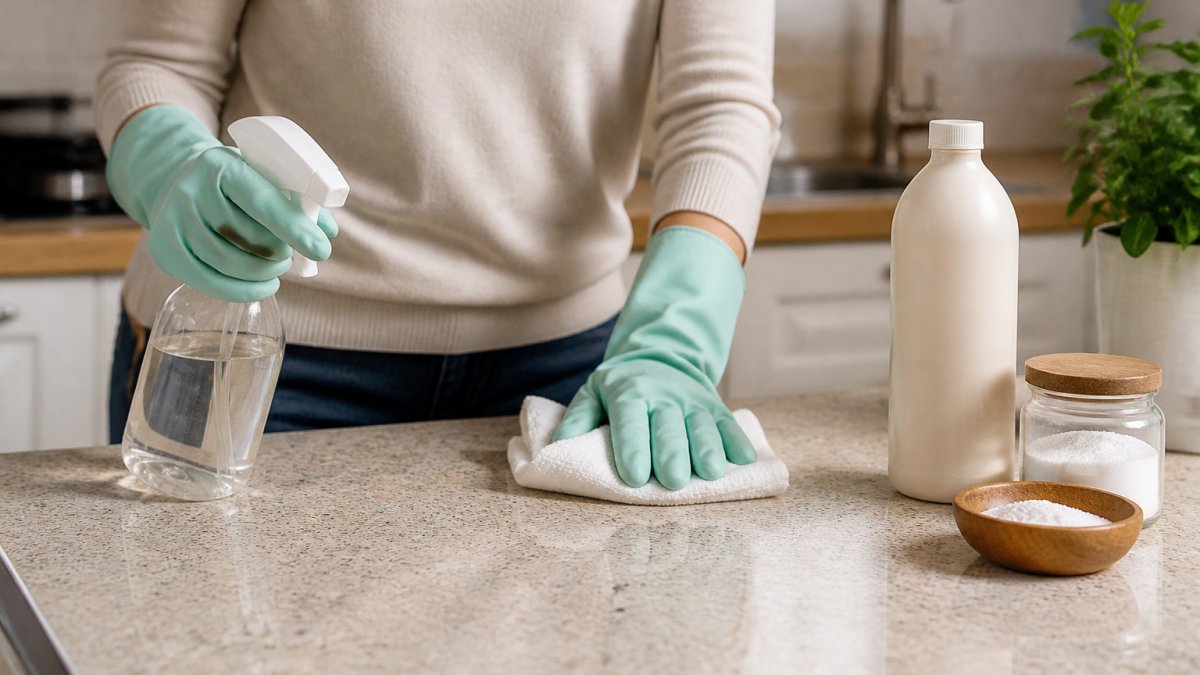
Gloves are the single biggest protective measure. A common mistake is skipping them for "quick" jobs, which is exactly when splashes happen.
Choosing Natural Ginesis for Your Sensitive-Skin Household
Natural Ginesis builds products around being gentle enough to trust.
Our enzyme-based formulas are non-toxic and biodegradable. They use a unique organic blend of enzymes to break down dirt, grease, and organic residue. That makes them a practical fit for households managing sensitive skin, allergies, or chemical sensitivities.
The same approach extends beyond cleaning. Our pest control products offer a non-toxic alternative to chemical-based pesticides, and they are safe for use on the body, in the home, and around pets.
If you have tried drugstore cleaners and watched your skin react, the problem may not be you. It may be the ingredients.
Frequently Asked Questions
What are the safest cleaning products for sensitive skin?
Look for fragrance-free, dye-free formulas with short ingredient lists. The American Lung Association advises choosing products with no or reduced fragrances and irritants, and Medical News Today names fragrance-free and dye-free products as safer for eczema-prone users. Certified options like EPA Safer Choice help identify products with ingredients safer for human health. Always patch-test a new sensitive skin cleaner on a small area first, and rinse surfaces thoroughly after use to reduce residue contact.
Which cleaning ingredients should I avoid if I have sensitive skin?
Common irritants include synthetic fragrances, dyes, chlorine bleach, ammonia, and harsh surfactants. A 2022 review of cleaning agents' health hazards found corrosion and irritation hazards particularly prominent. Check the ingredient list for vague terms like 'fragrance' or 'perfume' and opt for products that disclose every component. If a label only says 'natural,' that alone does not guarantee safety, so read the full list before buying.
Do gloves really protect sensitive skin while cleaning?
Yes, gloves reduce direct contact between cleaning chemicals and your skin, which is one of the simplest protective measures available. Choose powder-free gloves to avoid additional irritation from powder residue, and wash and dry your hands after removing them. Gloves are not a substitute for gentler products, however. A 2022 study linked weekly disinfecting wipe use at home to current asthma, so pair gloves with low-irritant cleaners and good ventilation.
Are DIY cleaners like vinegar and baking soda safe for sensitive skin?
Diluted white vinegar and baking soda are gentler alternatives for many household surfaces, but they are not risk-free. Vinegar is acidic and can irritate broken or eczema-prone skin, and baking soda is abrasive on delicate surfaces. A 2022 review notes cleaning agents can pose irritation hazards regardless of whether they are natural. Use diluted vinegar, rinse thoroughly, wear gloves, and avoid mixing vinegar with bleach, which creates dangerous fumes.
Your skin should not pay the price for a clean home. Natural Ginesis offers non-toxic, biodegradable enzyme cleaners plus pest control products that are safe for your body, home, and pets. Get started with Natural Ginesis and build a cleaning routine your whole household can live with.
