

18th Nov 2026
Are Enzyme Sprays Safe for Pets? A 2026 Guide
Table of Contents
- Are Enzyme Sprays Safe for Pets? The Short Answer
- Enzyme Cleaner Safety for Cats: What to Watch
- Enzyme Cleaner Safety for Dogs: Size, Snout, and Scent
- How Long Enzyme Cleaner Takes to Dry (and When Pets Can Return)
- What to Do if a Pet Licks Enzyme Cleaner
- How to Apply Enzyme Sprays Safely Around Pets
- Ingredients to Avoid in Pet-Safe Enzyme Sprays
- Conclusion
- Frequently Asked Questions
Last Updated: October 21, 2026
Are Enzyme Sprays Safe for Pets? The Short Answer
Yes, enzyme sprays are generally safe for pets when you use them as directed and let surfaces dry fully. The enzymes themselves are proteins that break down organic messes like urine and vomit. They target the stain, not your pet.
At Natural Ginesis, we build our products around this same idea: non-toxic, bio-degradable enzyme blends that tackle pests and odors without harsh chemicals. The catch is in the details. "Safe" depends on the formula, the animal, and how you apply it.
Below, we'll walk through what makes an enzyme spray safe, which ingredients to avoid, and how to use one around cats and dogs without worry. But first, here's what most guides get wrong: they treat "natural" and "safe" as the same word. They aren't.
Enzyme Cleaner Safety for Cats: What to Watch
Cats are the more sensitive of the two common pets, and the biggest risk isn't the enzymes. It's the added scents and essential oils that some formulas include.
A common mistake is assuming a "natural" scent is harmless. Many plant oils are fine for humans but hard on a cat's liver. Cats also groom constantly, so anything on their paws ends up in their mouth.
Here's what to check for a cat-safe enzyme cleaner:
- No essential oils like citrus, tea tree, or eucalyptus
- No strong perfumes or fragrance additives
- Low-foam formulas so residue wipes away clean
- Full drying before your cat returns to the area
Cats are also fastidious about clean spaces. If a spot still smells like the original mess, they may avoid it, or worse, mark it again. An enzyme cleaner that fully removes the odor helps prevent repeat accidents.
Enzyme Cleaner Safety for Dogs: Size, Snout, and Scent
Dogs face a different set of risks than cats, mostly because of how they explore. A dog's nose goes everywhere, and so does its tongue.
Size matters here. A small dog near a freshly sprayed floor is closer to the residue than a large one. Puppies and senior dogs are more vulnerable too, since their systems handle chemicals differently.
What most guides miss is the sniffing factor. Dogs investigate with their noses right at surface level, so strong fumes hit them first. A formula with heavy fragrance can irritate a dog's airways even if the enzymes are gentle.
For dog households, favor:
- Unscented or lightly scented formulas
- Thorough rinsing on food bowls and toys
- Spot testing on a small area first
- Keeping dogs off the treated surface until dry
The good news: enzymes that break down pet waste are doing the same job your dog's body already handles. The risk comes from what else is in the bottle, not the enzymes themselves.
How Long Enzyme Cleaner Takes to Dry (and When Pets Can Return)
Most enzyme cleaners need 10 to 30 minutes to dry on hard surfaces, and longer on carpet or upholstery. The exact time depends on humidity, airflow, and how much you applied.
The safe rule is simple: keep pets away until the surface is completely dry to the touch. Wet residue is what pets can lick or absorb through their paws.
To speed drying:
- Open windows and run a fan
- Blot excess liquid with a clean towel
- Apply a thin, even layer rather than soaking
On carpet, expect closer to an hour. Enzyme products work by staying wet long enough to break down the mess, so don't rush the process. Once it's dry, the enzymes have done their job and the area is safe for paws and noses.
| Surface | Typical Dry Time | When Pets Can Return |
|---|---|---|
| Hard floors | 10-30 minutes | Fully dry to touch |
| Carpet | 45-60 minutes | Fully dry, no damp spots |
| Upholstery | 30-60 minutes | Fully dry |
| Pet bedding | 1-2 hours | Completely dry |
What to Do if a Pet Licks Enzyme Cleaner
Stay calm. A small lick of a diluted, pet-safe enzyme cleaner is rarely a serious problem. The enzymes are proteins, and the formula is designed to be low in toxicity.
Still, watch your pet for the next few hours. Signs that warrant a call to your vet include:
- Vomiting or diarrhea
- Drooling or pawing at the mouth
- Lethargy or unusual behavior
- Loss of appetite
If your pet swallowed a large amount of concentrated cleaner, contact your veterinarian or a pet poison helpline right away. Bring the bottle so you can read the ingredients aloud.
A common mistake is waiting for symptoms to get bad before calling. It's always better to ask early. Most cases resolve on their own, but a quick check gives you peace of mind.
How to Apply Enzyme Sprays Safely Around Pets
Safe application comes down to a few habits. Do them every time and the risk stays low.
- Read the label first. Confirm it's pet-safe and check for scent or oil warnings.
- Move pets to another room. Close the door so they can't wander back in.
- Spot test on a hidden area to check for staining.
- Apply a thin layer and let it sit as directed.
- Blot, don't soak. Excess liquid takes longer to dry and invites licking.
- Ventilate with a fan or open window.
- Wait until fully dry before letting pets return.
- Store the bottle out of reach when done.
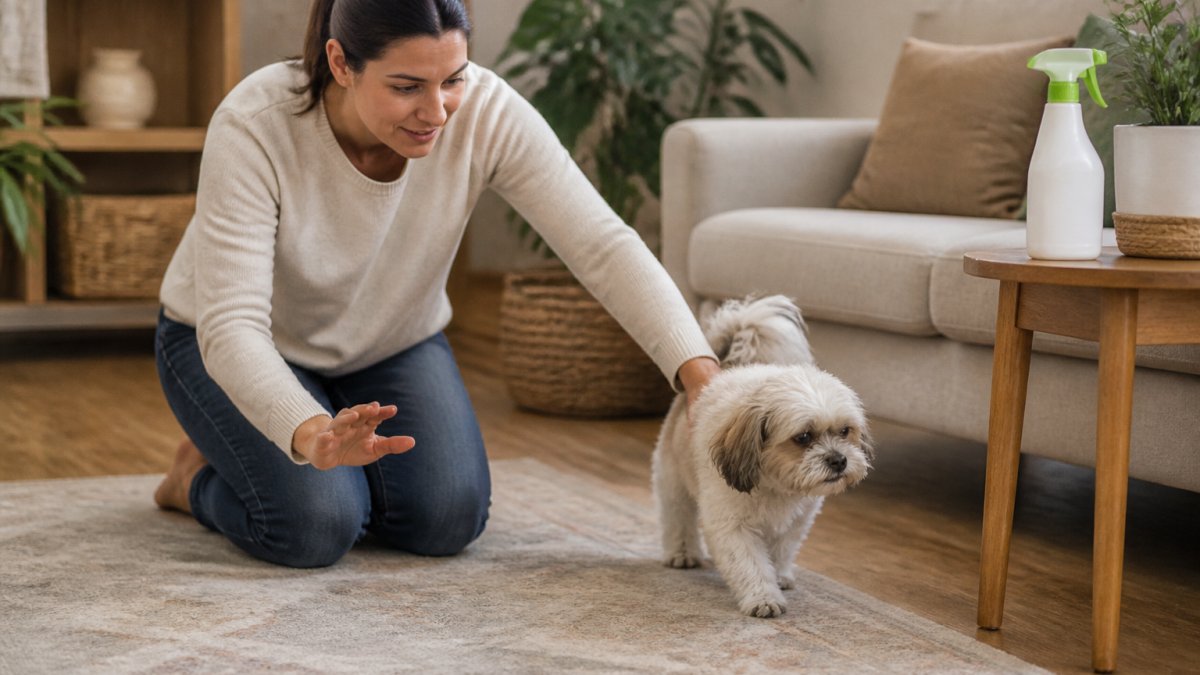
A pro tip from experience: treat the mess, not the whole room. Targeted application dries faster and cuts the area your pet needs to avoid. It also saves product and reduces lingering scent.
Ingredients to Avoid in Pet-Safe Enzyme Sprays
The word "enzyme" on a label tells you little about the full formula. Read the ingredient list and steer clear of these:
- Essential oils (citrus, tea tree, eucalyptus, peppermint): can be toxic to cats and irritating to dogs
- Bleach and ammonia: harsh fumes and dangerous if licked
- Synthetic fragrances: a common source of airway irritation
- Phenols and parabens: best avoided around pets that groom
- Alcohol-based carriers: drying and irritating to paws and skin
What you do want: water-based formulas, bio-degradable ingredients, and a clear statement that the product is safe for pets when used as directed. At Natural Ginesis, our enzyme blends are built to break down messes and odors without the harsh extras, which is the whole point of a pet-safe solution.
Conclusion
Keeping your home clean around pets shouldn't mean choosing between a spotless floor and a safe animal. Enzyme sprays give you both, as long as you pick a gentle formula and let surfaces dry fully before paws and noses return.
Natural Ginesis offers non-toxic, bio-degradable enzyme products designed for homes with pets. Our organic blends target odors and pests like fleas naturally, with no harsh chemicals. If you want a solution you can feel good about using around your animals, explore our pet-safe range and see the difference a clean formula makes.
Frequently Asked Questions
Are enzyme sprays safe for pets?
Enzyme sprays are generally considered low-risk for pets when used as directed because they rely on enzymes and beneficial bacteria rather than harsh pesticides. The main precautions are keeping pets out of the treated area until it dries, storing bottles out of reach, and choosing formulas free of added fragrances or harsh solvents. Puppies, kittens, and pets with sensitive skin or respiratory issues need extra care, so check the label and test a small area first.
Can I use enzyme cleaner around cats and dogs?
Yes, with a few adjustments. Cats are especially sensitive to strong scents and essential oils, so pick a fragrance-free enzyme cleaner and ventilate the room. Dogs often investigate wet spots with their noses and tongues, so keep them out of the area until it is fully dry. Always follow the label dilution and dwell time, and store the bottle where pets cannot knock it over.
How long should I wait before letting my pet back into a treated area?
Wait until the surface is completely dry to the touch, which usually takes 30 minutes to a few hours depending on humidity, surface type, and how heavily you sprayed. Carpet and upholstery hold moisture longer than tile or hardwood. If you can still smell the product or feel dampness, give it more time and keep the room ventilated with a fan or open window.
What should I do if my pet licks enzyme cleaner?
Move your pet away from the area, wipe their mouth with a damp cloth, and offer fresh water. Most enzyme cleaners are low in toxicity, but a pet that ingests a large amount or shows vomiting, drooling, or lethargy should be checked by a vet. Keep the product label handy so you can share the ingredient list. Prevent repeats by storing bottles in closed cabinets and drying treated areas fully before letting pets back in.