

25th Aug 2026
What’s Your Cleaning Style? There’s More Than One Way to Love Your Home
Some people can walk into a room and immediately notice that a picture frame is crooked by three degrees.
Others can walk into the same room, step over a pair of shoes, move yesterday’s coffee cup to make room for today’s coffee cup, and think, This is nice.
And you know what? Both people can have a home they love.
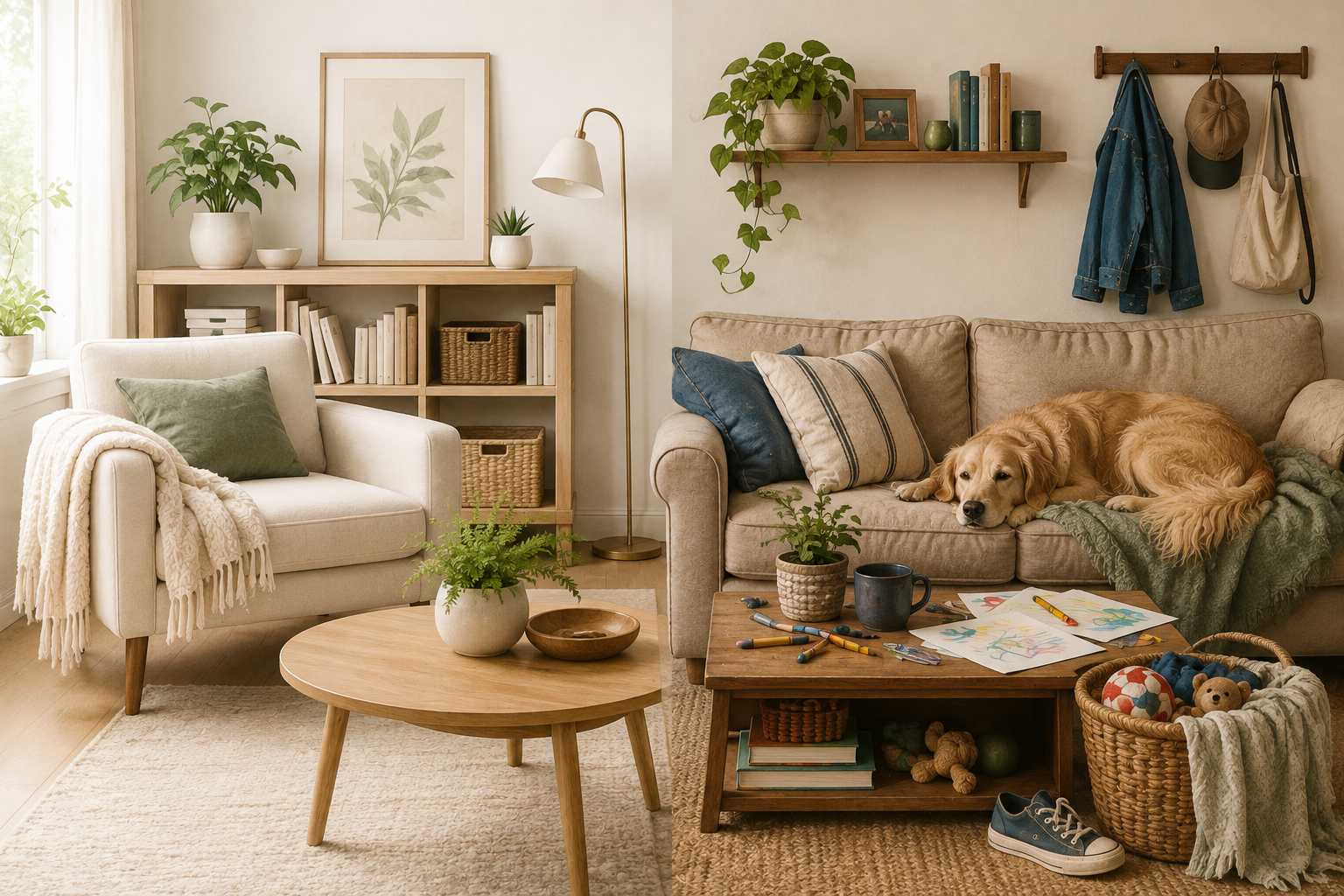
There isn't one correct way for a home to look. Some of us genuinely enjoy order. We like clear counters, neatly folded towels, polished surfaces, and possessions that look almost as good as the day we bought them. Cleaning and maintaining things gives us a sense of calm.
Others prefer a home that looks and feels lived in. There are books on the table because somebody is reading them. A blanket stays on the couch. The dog's toys have somehow migrated into every room. The shelves aren't styled—they're just shelves. And that's comfortable, too.
Most of us probably live somewhere in between.
At Kleen Green, we think the more interesting question isn't "How clean is your house?"
It's "Does your home feel good to live in?"
And that's where cleaning gets surprisingly interesting—because underneath the spray bottles, rags and vacuum cleaners, there's quite a bit of chemistry going on.
Cleaning Isn't Just Wiping
Have you ever cleaned something with a wet cloth, looked at it and thought it was clean—then gone over it with a fresh dry cloth?
And the second cloth comes away brown?
That's a good reminder that cleaning is usually a process rather than a single wipe.
Water helps loosen and soften soil. A cleaning solution can help separate grime from a surface. Agitation from your cloth or brush helps physically break that attachment. But then something still has to carry the loosened material away.
That's why the follow-up dry cloth can make such a difference. The first pass isn't necessarily failing. It may be doing the important work of hydrating, loosening and suspending the grime. The second pass is picking up what the first one freed.
It's a little like washing muddy hands. Getting them wet is only the beginning.
And Then There Are Enzymes
Enzyme cleaners add another tool to the process.
Enzymes are proteins that act as catalysts, helping particular chemical reactions happen much faster. Different enzymes can help break down different kinds of organic material, including proteins, fats and starches. That's one reason enzymes are commonly used in laundry and dishwashing products and why enzymatic cleaners can be especially useful for food spills, pet messes and other organic soils.
Instead of simply trying to overpower a smell with fragrance, the goal is to help break apart the material responsible for the mess.
Think about spaghetti sauce dried onto a counter versus mineral deposits around a faucet. They may both look like "dirt," but chemically they're very different problems. No single cleaning ingredient is ideal for everything.
That makes enzyme cleaners particularly interesting for people who don't necessarily want to scrub everything in sight.
Sometimes chemistry can do part of the work for you.
Give Your Cleaner a Little Time
We're accustomed to spraying something and immediately wiping it away.
With an enzyme cleaner, that can be like hiring someone to clean your kitchen and telling them they have eleven seconds.
Enzymes need contact time. The American Cleaning Institute recommends allowing enzymatic cleaners time to work—often at least 10–15 minutes, depending on the product and soil—and following the particular product's directions.
Moisture matters, too. Enzyme activity takes place in the presence of water, so allowing a treatment to remain damp for its recommended dwell time can give it more opportunity to work. Once the area is completely dry, you shouldn't assume that meaningful cleaning action is continuing indefinitely. Commercial enzyme formulations vary considerably, and some products are specifically formulated so dried residue can become active again when rewetted.
So rather than thinking:
Spray → wipe → done
try thinking:
Apply → give it time → agitate if appropriate → remove the loosened soil → dry
That little change in mindset can make cleaning easier.
The Ultimate Test: Cat Pee
There are ordinary household odors.
And then there is the moment when you walk into a room, stop moving, sniff once and say:
"The cat did something."
Cat urine is a particularly good example of why cleaning isn't always about making something look clean.
You can wipe the area. You can wash it. You can make it look spotless.
And somehow, especially when the room gets warm or humid...
It's back.
Veterinary guidance specifically recommends enzyme-based cleaners for cat urine because they help break down urine compounds rather than simply covering the odor. Thoroughly treating the contaminated area matters because urine can penetrate farther into carpet, padding, upholstery or other porous material than the visible spot suggests.
This is also a situation where more product isn't necessarily about making the surface wetter for the sake of it. The cleaner needs to actually reach the same places the urine reached.
If urine soaked through the carpet into the padding, lightly misting the top of the carpet may never solve the problem.
Can You Spray Enzyme Cleaner on a Clean Surface and Let It Dry?
This is an interesting idea, and the answer is potentially yes—but follow the directions for the particular product you're using.
If you've cleaned an area and want to apply an enzyme cleaner afterward, letting an appropriate product dwell and air-dry may be exactly what its instructions call for. Some enzyme products are specifically formulated to leave residual enzymes that can become active again when moisture returns. Kleen Green's related enzyme-cleaning products, for example, describe this kind of reactivation behavior.
But enzymes aren't little microscopic janitors wandering around a dry floor looking for something to eat.
They need the right conditions—including moisture and the material they're capable of acting upon—to do useful chemical work. Drying largely pauses that activity, and drying conditions can also affect enzyme stability.
So for something difficult like an old pet accident, the most effective approach is generally to apply enough enzyme cleaner to reach the contamination, keep it in contact long enough to work, and then allow the area to dry according to the product directions.
For stubborn pet stains, keeping the treated area damp longer can substantially increase the opportunity for enzymatic action.
Cleaning Can Be Preventive, Too
This may be where enzyme cleaners fit particularly well with the more relaxed cleaning personality.
You don't necessarily have to wait until something becomes disgusting.
Think about the places where small amounts of organic material gradually accumulate:
Around the kitchen trash can.
Near the cat's litter box.
Pet bedding.
Bathroom surfaces.
Laundry hampers.
Food-preparation areas.
The mysterious region underneath the refrigerator that we're all collectively pretending doesn't exist.
Regular cleaning keeps these areas from becoming major projects.
And where an enzyme cleaner is appropriate for the surface and type of soil, giving it time to work can mean relying a little more on chemistry and a little less on elbow grease.
For the Meticulously Clean Person
If you're someone who notices every fingerprint, every crumb and every slightly questionable smell, enzyme cleaners can become another precision tool.
You may appreciate using the right chemistry for the right soil instead of simply scrubbing harder.
You can clean carefully, maintain things before they deteriorate, and periodically treat the organic residues that ordinary wiping can leave behind.
And yes, you are absolutely allowed to straighten that picture frame.
We know you've been looking at it for the last five minutes.
For the "This House Is Lived In" Person
You don't have to become somebody else.
Your house can have shoes by the door.
There can be mail on the counter.
The dog can have a favorite chair that everyone knows technically belongs to the dog now.
Instead, concentrate your effort where it makes the biggest difference: odor, spills, food residue, pet areas, bathrooms, bedding and the surfaces you touch frequently.
Let good products, sufficient dwell time and a couple of good cloths do more of the work.
You don't need a perfect house.
You need a house that's pleasant to live in.
The Two-Rag Experiment
Here's a simple cleaning experiment anyone can try.
Take an area that hasn't been cleaned recently. Apply your chosen cleaner according to its directions and give it time to loosen the soil.
Then wipe it thoroughly with a damp cloth.
Now take a clean, dry cloth and wipe the same area again.
Look at that second cloth.
If it's dirty, you've just watched cleaning chemistry and physics at work. The first step helped loosen material from the surface. The second helped remove moisture and the material suspended in it.
For tougher organic grime, try the same experiment after giving an appropriate enzyme cleaner its recommended dwell time.
You may discover that one of the easiest ways to clean better isn't scrubbing harder.
It's waiting longer and wiping twice.
Clean Enough to Make You Happy
We spend an enormous amount of our lives inside our homes. They shouldn't make us feel judged.
A perfectly organized home can be wonderful.
A slightly chaotic house filled with children, pets, hobbies, half-read books and evidence that human beings actually live there can be wonderful, too.
Cleaning isn't a competition. It's one of the ways we take care of the environment immediately around us.
Understanding a little of the chemistry can make that job easier. Water can soften. Surfactants can help lift and suspend soil. Enzymes can help break down certain organic materials. Time lets chemistry work. Agitation helps release grime. And that final clean cloth actually carries it away.
Kleen Green can be part of that process—not because every home needs to be spotless, but because every cleaning style has the same ultimate goal: creating a place where you can walk through the door, relax and feel at home.
Whether that means sparkling counters and perfectly arranged shelves...
...or moving the cat off the clean laundry so you can finally fold it.