

13th Aug 2026
What’s That Smell? Simple Ways to Keep Kitchen Odors Under Control
The kitchen is supposed to smell like fresh coffee, warm bread, or whatever is simmering on the stove.
Unfortunately, sometimes it smells like something died behind the refrigerator.
Kitchen odors can be surprisingly difficult to track down because there isn't always one obvious culprit. A slightly overripe piece of fruit, a damp dish towel, yesterday's food scraps, an old onion hiding in the pantry, or a tiny spill underneath the trash can can all contribute to that mysterious “What is that smell?” moment.
And because kitchens are warm, humid, and full of food, small problems can become smelly problems quickly.
Here are some of the most common places to investigate—and how Kleen Green Naturally can help keep the kitchen fresher and more pleasant.
Start With the Trash and Compost
Even when the trash isn't technically "full," it may already be producing odors.
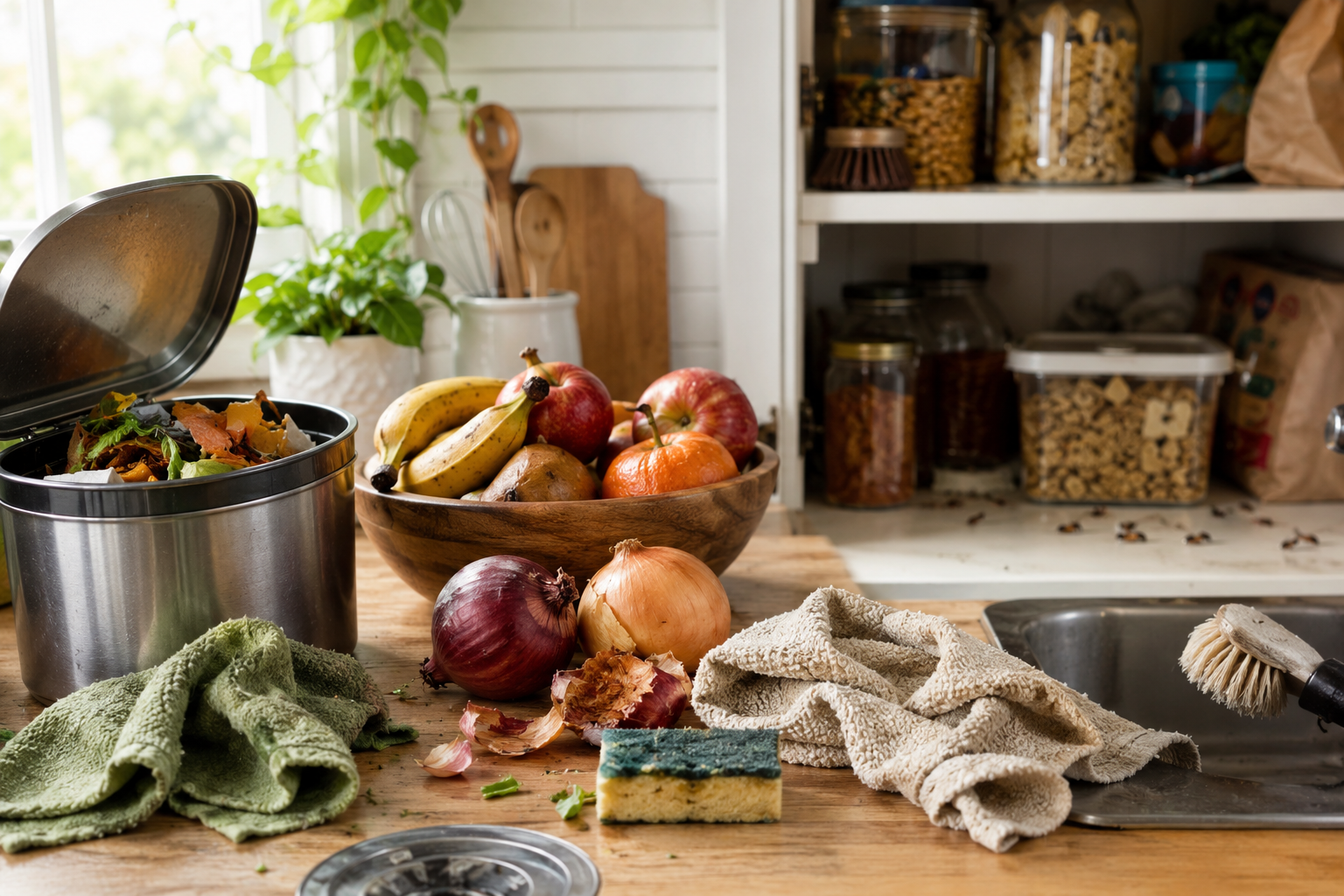
Food scraps are especially troublesome. Fruit peels, vegetable trimmings, meat packaging, coffee grounds, and compost can begin breaking down quickly. A little liquid leaking through a bag can also leave an odor behind long after the trash itself is gone.
Empty food waste regularly and don't forget the container itself. Wipe down the inside, outside, lid, handles, and the floor underneath it.
Kleen Green Naturally can be used as part of your regular cleaning routine on appropriate washable surfaces to help remove the grime and organic residue associated with everyday kitchen odors rather than simply trying to cover smells with perfume.
Check the Fruit Bowl
That beautiful bowl of peaches, bananas, apples, or tomatoes can turn against you surprisingly fast.
One piece of damaged or overripe fruit can begin leaking underneath everything else. Onions and potatoes can be even sneakier because they may look fine from one side while becoming soft or spoiled underneath.
Periodically empty fruit bowls and produce baskets completely. Check everything individually and clean the container before putting good produce back.
It's a five-minute job that can solve a kitchen odor you've been hunting for all afternoon.
Don't Forget Wet Towels and Sponges
Sometimes the garbage is innocent.
That sour smell may actually be coming from the dish towel hanging over the sink.
Dishcloths, towels, sponges, reusable cleaning pads, and even oven mitts can hold moisture and food residue. If they remain damp, they can quickly develop unpleasant odors.
Rotate washable kitchen towels frequently and give them a chance to dry thoroughly between uses. Regularly wash the containers, racks, and sink areas where wet cleaning supplies sit as well.
Kleen Green can be a useful addition to routine cleaning around these frequently used areas where moisture and food residue tend to accumulate.
Look Under Things
Kitchens have an impressive ability to hide food.
A blueberry rolls underneath the refrigerator. A little milk splashes between the counter and stove. Something drips underneath the trash can. A piece of kibble disappears beneath a cabinet.
Individually, these things are tiny. Give them enough time, though, and your nose may eventually discover them.
Occasionally move smaller appliances, trash cans, pet bowls, and other movable objects and clean underneath them. Pay special attention to corners, baseboards, cabinet edges, and the areas around the stove and refrigerator.
Investigate the Pantry
If something smells strange when you open the pantry door, don't ignore it.
Old flour, cereal, grains, nuts, spices, potatoes, onions, pet food, and forgotten packages can all become sources of unpleasant odors. Open or damaged food packages may also attract pantry pests.
Inspect food periodically for signs of insects, webbing, holes in packaging, unusual clumping, or other evidence of contamination. Discard affected food appropriately and thoroughly clean shelves, cracks, corners, containers, and nearby surfaces.
Kleen Green can help with the cleaning side of the job, particularly when you're trying to remove the food residue and grime that can remain after spoiled food or a pantry problem has been discovered.
Remember the Sink and Drain Area
The sink sees almost everything that happens in the kitchen.
Tiny bits of food and grease can collect around the drain, strainer, garbage disposal splash guard, faucet base, sink edges, and seams around the countertop.
The sink may look clean from across the room while hidden areas are anything but.
Make these spots part of your regular cleaning routine instead of waiting until you can smell them.
Clean the Refrigerator Before It Smells
Refrigerators deserve regular investigation too.
Check produce drawers, door shelves, condiment bottles, leftovers, and the mysterious containers pushed all the way to the back. Clean spills when they happen instead of allowing them to dry into sticky residue.
And periodically remove drawers and shelves so you can clean the surfaces underneath them.
A refrigerator doesn't have to look dirty to be harboring yesterday's spilled milk or last month's forgotten vegetable.
Don't Just Cover Up the Smell
A heavily fragranced product may make a room smell different without actually addressing what's causing the odor.
A better approach is to find the source and clean it.
That's where a versatile cleaner like Kleen Green Naturally can make kitchen maintenance easier. Instead of keeping a different cleaning product for every little mess, Kleen Green can become part of a simple routine for cleaning many of the washable surfaces where food, spills, grime, and everyday kitchen messes accumulate.
The goal isn't to make your kitchen smell like you've sprayed something in it.
The goal is for the bad smell to be gone because the thing causing it is gone.
The Five-Minute Kitchen Smell Check
The next time you walk into the kitchen and wrinkle your nose, do a quick investigation:
- Check the trash and compost.
- Look through the fruit bowl and produce.
- Smell the dish towel and sponge.
- Check onions, potatoes, and pantry foods.
- Look underneath the trash can and pet bowls.
- Inspect the sink, drain, and disposal area.
- Check forgotten leftovers and refrigerator drawers.
- Look for spills underneath countertop appliances.
You may be surprised how often the culprit is something small.
Keeping a kitchen fresh doesn't necessarily require hours of scrubbing or a cabinet full of specialized cleaners. A little detective work, frequent removal of food waste, good moisture control, and regular cleaning with Kleen Green Naturally can go a long way toward making the busiest room in the house cleaner, fresher, and much nicer to walk into.
Preferably without having to ask:
“Okay...who left an onion somewhere?”