

22nd Apr 2026
Lice Doesn’t Stop at Your Front Door
What Families, Schools, and Facilities All Get Wrong About Treatment
It usually starts the same way.
A note comes home from school. A quick scalp check. A pharmacy run. A bottle of lice shampoo. A long night with a comb and a towel.
You handle it. You clean the house. You breathe a sigh of relief.
And then… two weeks later, it’s back.
If this sounds familiar, it’s not because you did something wrong.
It’s because lice isn’t just a “your house” problem. It’s a shared environment problem—and most treatment approaches don’t reflect that.
Lice Doesn’t Respect Boundaries
Lice doesn’t stop at:
- Your front door
- Your child’s classroom
- The couch at a friend’s house
- Shared helmets, headphones, or costumes
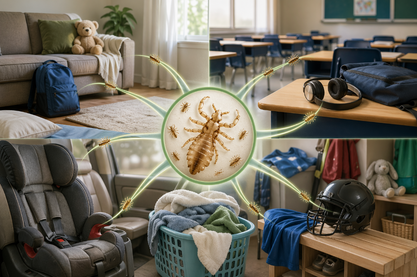
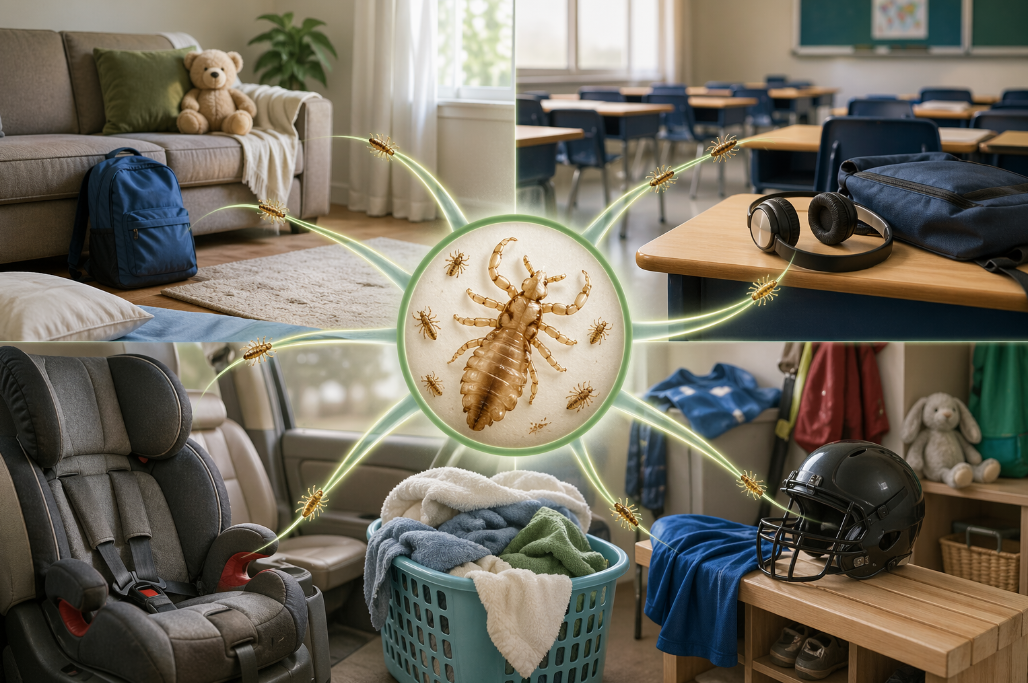
It travels quietly between people and spaces. That means even if you treat one person perfectly, re-exposure is incredibly common.
The biggest mistake? Treating lice as a one-time event instead of a cycle.
Where Things Go Wrong
1. Treating the Person—but Not the Environment
Most treatments focus entirely on the scalp. That’s important—but incomplete.
Lice and nits can linger in:
- Bedding and pillows
- Upholstered furniture
- Car seats
- Stuffed animals
- Rugs and carpets
If those aren’t addressed, it creates an easy path back.
2. Relying on Harsh Chemical Treatments Alone
Traditional lice shampoos often rely on pesticides. The problem?
- Some lice populations have developed resistance
- Multiple treatments are often needed
- They can be harsh on skin and hair
- They don’t solve environmental exposure
So families end up repeating the same cycle—again and again.
3. Inconsistent Treatment Across Groups
One family treats thoroughly. Another doesn’t realize there’s an issue yet. A classroom has mixed responses. A daycare handles it differently.
The result:
Lice survives in the gaps between people doing “almost enough.”
4. Missing the Timing Window
Lice eggs (nits) don’t all hatch at once.
If follow-up treatment isn’t timed correctly, newly hatched lice can restart the infestation before you even realize it.
A Smarter Way to Break the Cycle
To truly get ahead of lice, treatment has to be multi-layered and consistent:
- Scalp: Address live lice and nits thoroughly
- Environment: Treat the spaces where contact happens
- Timing: Repeat treatment to catch newly hatched lice
- Awareness: Coordinate with schools, caregivers, and family
When all four are aligned, the cycle can actually stop.
Where Enzyme Cleaners Fit In
This is where a product like Kleen Green can make a meaningful difference.
Instead of relying on harsh chemicals, enzyme-based cleaners work by breaking down organic matter—including what lice depend on to survive.
That makes them useful for:
- Bedding and laundry
- Upholstery and carpets
- Car interiors
- Shared spaces like classrooms and daycare areas
And because they’re non-toxic when used as directed, they can be used more broadly and consistently—without the concerns that come with repeated chemical exposure.
The Big Shift: From Reaction to Prevention
The goal isn’t just to “get rid of lice” once.
It’s to break the reinfestation loop.
That means:
- Thinking beyond a single treatment
- Treating environments, not just people
- Acting early when there’s exposure
- Using solutions that can be applied safely and repeatedly
Final Thought
Lice doesn’t stop at your front door—but your approach can.
When families, schools, and shared spaces start thinking of lice as a connected problem, not an isolated one, everything changes.
And that’s when it finally stops coming back.