

18th Aug 2026
The Cat Litter Box: Small Box, Big Impact on a Clean Home
Cats are famously clean animals. They groom themselves, avoid muddy puddles, and generally prefer their surroundings to be tidy.
And then there’s the litter box.
For something that occupies only a few square feet of your home, a litter box can have an impressive effect on how the entire house smells and feels. The problem isn’t necessarily that you aren’t cleaning it enough. Odors, litter dust, tracked particles, bacteria, and the occasional “miss” can all make keeping the area truly fresh surprisingly difficult.
Fortunately, a few simple habits can make a big difference.
Why Does the Litter Box Smell Even After You Scoop It?
Scooping removes the obvious source of odor, but it doesn’t necessarily remove everything left behind.
Urine can reach the bottom or sides of the box, particularly if litter isn't deep enough or your cat likes to dig. Tiny amounts of waste can also remain behind after scooping. Over time, scratches in a plastic litter box can make it even harder to get completely clean.
Then there’s the surrounding area. Litter gets kicked out, carried away on paws, and worked into nearby flooring, rugs, baseboards, and cracks.
That may explain a familiar experience for cat owners: the litter box looks clean, but the room still smells like there’s a litter box in it.
Don't Just Scoop—Clean the Box
Regular scooping is important, but the box itself also needs periodic cleaning.
Emptying the litter completely gives you an opportunity to clean away residue that normal scooping leaves behind. A thorough cleaning can help remove the organic material responsible for lingering odors rather than simply covering the smell with perfume.
Kleen Green Naturally is especially useful anywhere you're dealing with organic messes. Rather than trying to overpower unpleasant smells with another strong fragrance, cleaning the source can help the area smell genuinely clean.
Always follow the product directions, and rinse or dry the litter box as appropriate before adding fresh litter and allowing your cat to use it again.
Don't Forget the Floor
Take a look around your litter box—then look a little farther away.
You might be surprised how far litter travels.
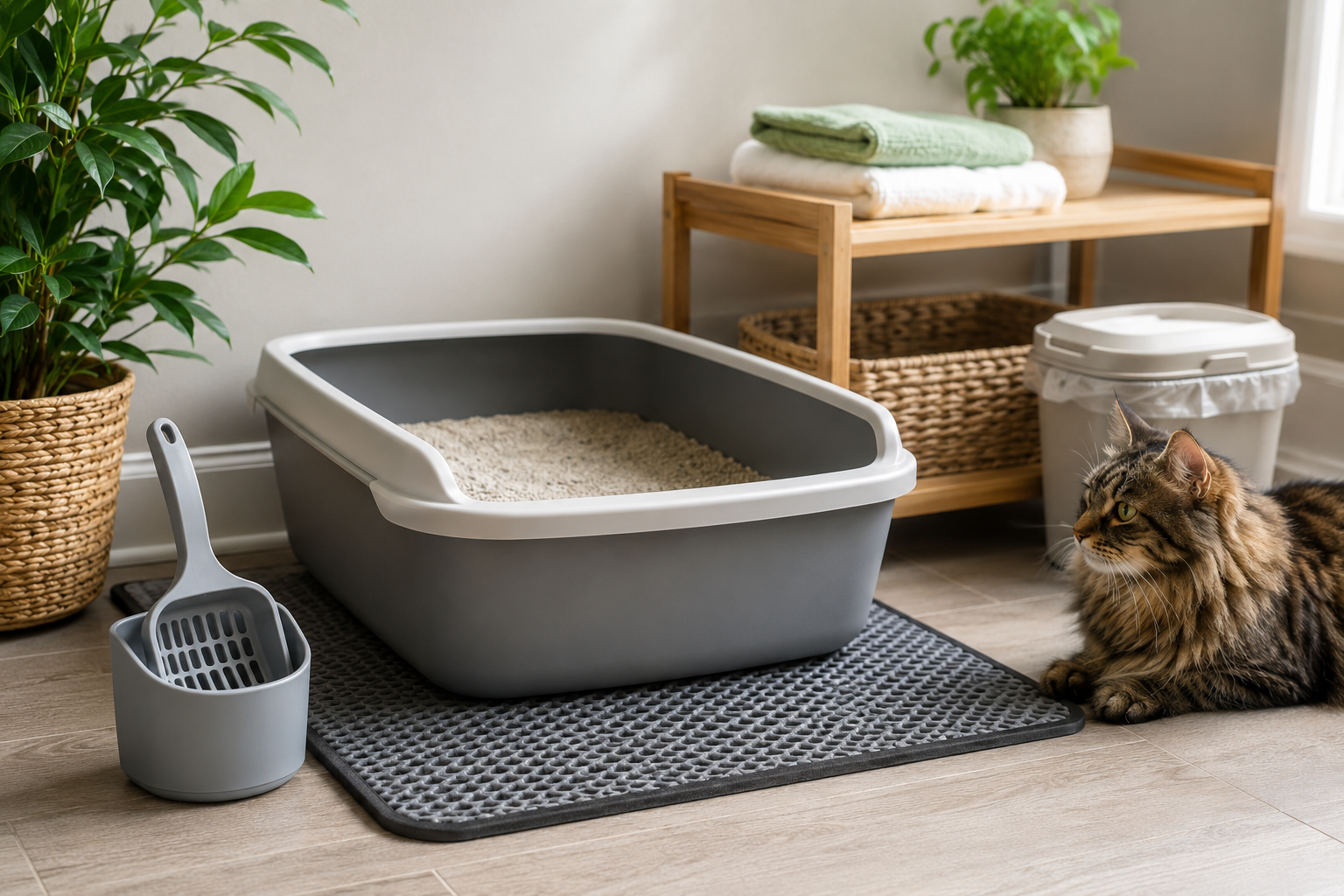
A good litter-catching mat helps, but regular vacuuming or sweeping around the box is still worthwhile. Periodically clean the floor itself as well, particularly around the edges of the box and along nearby walls or baseboards.
If your cat occasionally misses the box, clean the accident promptly. Cat urine is particularly notorious for leaving behind an odor after the visible mess has disappeared.
The Litter Scoop Needs Cleaning Too
Here's one of those things that's incredibly obvious once somebody points it out:
When was the last time you washed the litter scoop?
It goes into the dirtiest place in the house several times a day, gets shaken off, and then usually goes right back into its holder.
The scoop and holder can accumulate residue and become odor sources of their own. Give both regular attention when you're cleaning the litter-box area.
The same goes for nearby trash cans and containers used for disposing of litter.
What About Litter Dust?
Odor isn't the only concern.
Some litters produce quite a bit of dust when they're poured, scooped, or enthusiastically excavated by a cat who apparently believes buried treasure is somewhere underneath the litter box.
That dust can settle on nearby surfaces and become part of your indoor environment.
Choosing a lower-dust litter can help. So can regular cleaning of nearby floors and surfaces. If the litter box is in a small enclosed space, good ventilation and an appropriately sized air purifier may also help reduce airborne particles and odors.
More Fragrance Isn't Necessarily More Freshness
When a litter box smells, it's tempting to reach for something strongly scented.
But there's an important distinction between adding a pleasant smell and removing what's causing an unpleasant one.
Cats also have an extraordinarily sensitive sense of smell. A fragrance that seems mild to you may be much more noticeable to your cat. In fact, some cats may avoid a litter box if they dislike its litter, fragrance, location, or cleanliness.
That's another reason we like the idea of cleaning the source rather than creating a fragrance competition between "spring meadow" and "cat."
Nobody wins that contest.
A Cleaner Box Can Be Better for Your Cat, Too
Keeping the litter box clean isn't just about having guests walk into your home without immediately realizing you own a cat.
Cats generally prefer clean litter boxes. Regular cleaning also gives you an opportunity to notice changes. If your cat suddenly begins using the box much more or less frequently, has diarrhea, urinates unusually often, or starts avoiding the box, those changes can sometimes warrant a conversation with your veterinarian.
In other words, scooping isn't merely housekeeping. It's also one of the little ways you keep an eye on your cat.
The Five-Minute Litter Box Routine
Keeping ahead of litter-box problems is much easier than trying to rescue an area after odors have become established.
A simple routine can be enough:
- Scoop frequently.
- Sweep or vacuum tracked litter.
- Clean the scoop and its holder.
- Periodically empty and thoroughly clean the litter box.
- Wipe down the surrounding floor and nearby surfaces.
- Clean accidents promptly rather than letting them dry.
- Pay attention to ventilation and litter dust.
- Replace badly scratched or damaged plastic boxes when they become difficult to clean.
And when organic grime and odors have made themselves at home, Kleen Green Naturally can be a useful part of your cleaning routine, helping you tackle the source of the mess instead of simply trying to disguise it.
Because living with a cat should mean finding fur on a black shirt five minutes after you lint-rolled it.
It doesn't have to mean smelling the litter box from the next room.