

8th Sep 2026
Pet Stain Cleaner vs. Kleen Green: Do You Really Need a Special Cleaner?
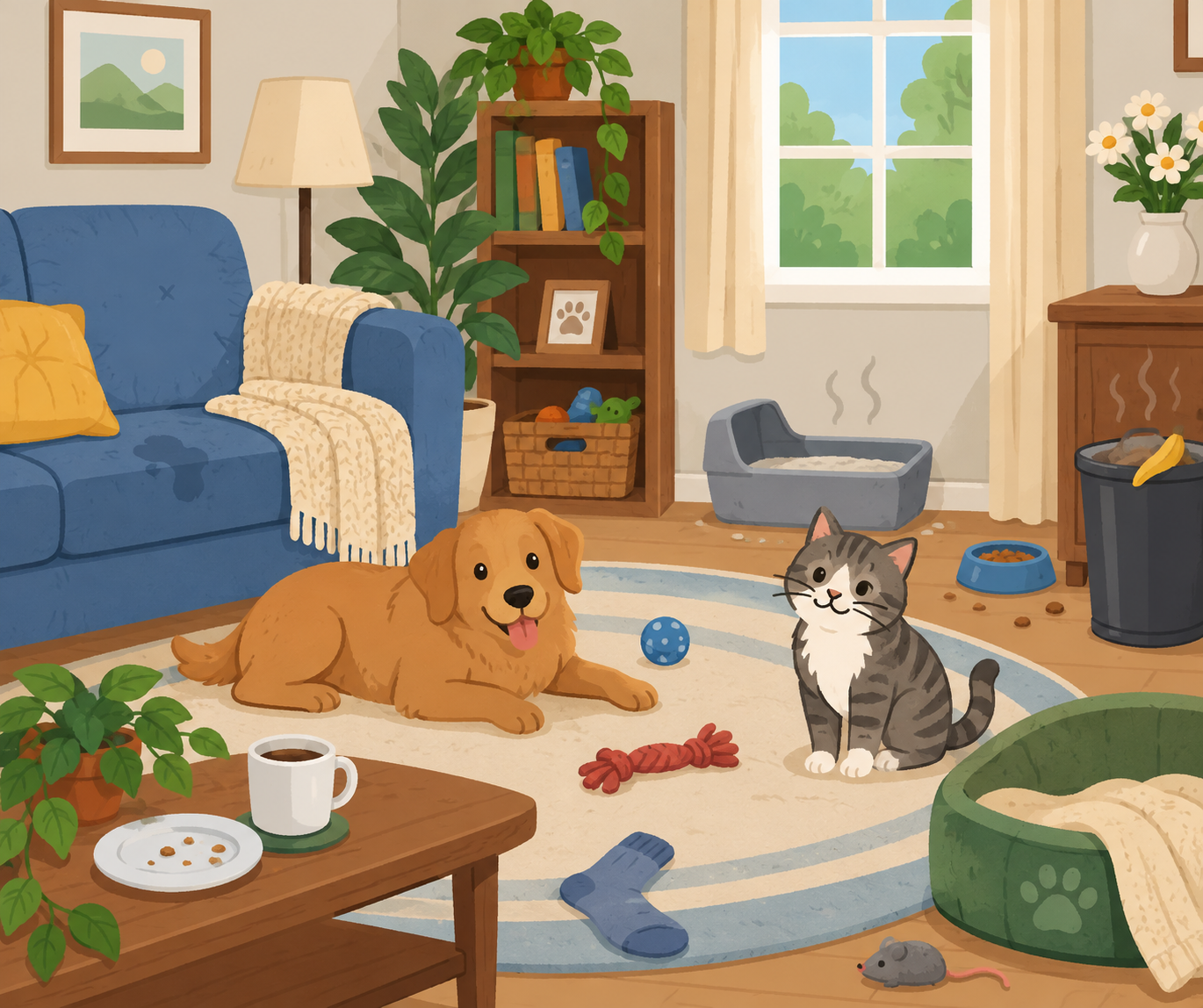
Walk down the pet aisle and you’ll find an impressive collection of cleaners. Cat urine remover. Dog stain remover. Carpet odor eliminator. Litter box cleaner. Upholstery spray. “Extreme” formulas for the accidents that apparently require extreme measures.
If you share your home with a cat or dog, you may already have several of these bottles under the sink.
But what makes a pet stain cleaner different from a versatile enzyme cleaner like Kleen Green? And do you really need a separate product for every kind of mess?
Why Pet Accidents Can Be So Difficult to Clean
A pet accident isn’t quite like spilling a glass of water or tracking a little mud across the floor. Urine, vomit, feces, drool and other organic messes contain compounds that can remain behind even after the area looks clean.
That’s particularly noticeable with urine.
You can wipe up an accident, scrub the surface and think everything is fine—only to notice the odor again later. Cats and dogs, with their much more sensitive noses, may detect residues that we don't notice at all.
That’s one reason enzyme-based cleaners have become so popular for pet households. Rather than relying entirely on fragrance to cover an odor, enzyme cleaners are intended to help break down organic material so it can be removed.
How Does Kleen Green Compare With a Pet-Specific Enzyme Cleaner?
The biggest difference is right there on the label.
A typical cat or dog stain-and-odor cleaner is marketed primarily for pet accidents. Depending on the particular product, it may be designed for carpeting, upholstery, bedding or other surfaces where pets are likely to have accidents.
Kleen Green takes a broader approach.
Kleen Green is a naturally derived enzyme cleaner designed to help clean organic grime and residue in many areas of the home. That makes pet cleanup one use rather than the entire reason for owning the bottle.
So after dealing with the mysterious wet spot next to the litter box, you don't necessarily have to put Kleen Green away until the next pet emergency.
You can keep cleaning.
The Pet Is Only One Source of Organic Mess
Think about everything else happening in a normal household.
There are food spills on the kitchen floor, fingerprints around light switches, grime around the trash can, dirty bathroom surfaces, sweaty clothing, pet bedding and all the little bits of organic residue that accumulate as people and animals go about their lives.
A bottle labeled specifically for cat urine might be excellent at its intended job. But you probably aren't going to look at a grimy kitchen surface and think, “Where did I put the cat urine remover?”
That's where a multipurpose cleaner can be especially convenient.
Instead of organizing your cleaning cabinet around who made the mess, you can organize it around what needs to be cleaned.
What About That Spot the Cat Keeps Returning To?
This is where enzyme cleaning can be particularly useful.
When a pet repeatedly soils the same area, cleaning what you can see isn't necessarily the whole job. Residual odor can remain in porous materials, cracks, carpet padding and other places that are difficult to reach.
The first step should always be to remove as much of the mess as possible. Blot liquids rather than immediately rubbing them farther into absorbent material. Remove solids. Then use an appropriate cleaner according to its directions and give it sufficient contact time.
For carpeting or upholstery, remember that the contamination may have traveled deeper than the visible spot. Test any cleaner on an inconspicuous area first, especially on delicate or color-sensitive materials.
And if a cat suddenly begins urinating outside the litter box, cleaning is only part of the solution. Changes in litter-box habits can have behavioral, environmental or medical causes, so recurring accidents deserve some investigation rather than simply another round with the spray bottle.
Don't Forget the Dry Towel
There's also a wonderfully unglamorous part of cleaning that deserves more attention: removing the loosened dirt.
A cleaner can help loosen and break down grime, but that material still needs somewhere to go.
Try cleaning a dirty area with a damp cloth and then following it with a clean, dry cloth. You may be surprised by what appears on that second cloth.
The wet stage helps loosen the mess. The dry stage helps pick up moisture and the material you've loosened.
It's a simple technique that can make a noticeable difference, whether the original offender had two legs or four.
So Which Should You Buy?
There isn't anything inherently wrong with a specialized pet stain cleaner. In fact, there are situations where a product formulated and labeled for a particular surface or type of stain may be exactly what you want.
The advantage of Kleen Green is versatility.
If your only cleaning problem is one occasional dog accident on the carpet, a dedicated pet product may suit you perfectly.
But real homes tend to be messier than that.
The dog tracks something through the hallway. The cat misses the litter box. Somebody spills breakfast. The trash can smells questionable. There's something sticky on the floor and nobody is admitting responsibility.
That's the kind of household where having one versatile enzyme cleaner starts to make a lot of sense.
Because Pets Aren't the Problem—Life Is Messy
Living with animals means accepting a certain amount of mess. So does living with children. Or spouses. Or, for that matter, living by yourself.
The goal doesn't have to be a home that looks untouched.
It can simply be a home that feels comfortable, clean and lived in.
Kleen Green gives you an enzyme-based cleaning option that isn't confined to the pet aisle. Use it for the cat and dog messes, certainly—but when those are cleaned up, there will probably be something else waiting for you.
There always is.