

6th Aug 2026
A Cleaner Bedroom Could Mean a Better Night’s Sleep
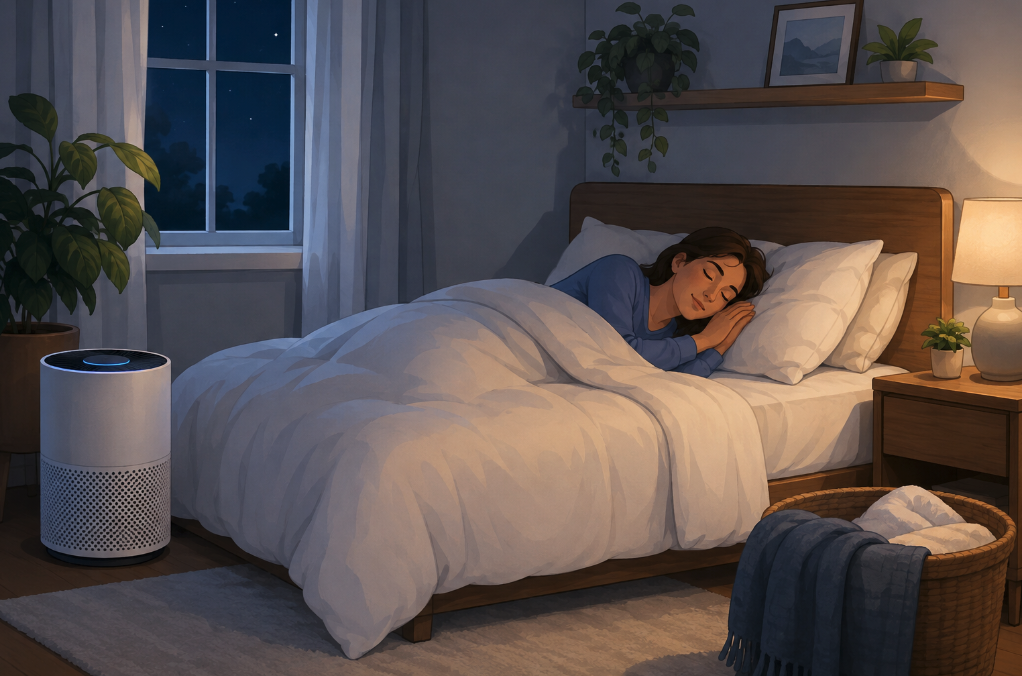
We spend roughly a third of our lives sleeping, and those hours are anything but wasted. Sleep is when the body performs an extraordinary amount of maintenance, supporting the immune system, repairing tissues, consolidating memories, regulating hormones, and preparing us physically and mentally for the next day.
We hear plenty about bedtime routines, screen time, caffeine, mattresses, and keeping the bedroom dark. But there’s another part of good sleep that’s easy to overlook:
The room you’re sleeping in.
Start With the Air You Breathe
For seven or eight hours every night, you're breathing the air in one relatively small space. That makes bedroom air quality worth thinking about.
Dust, pet dander, pollen, mold spores, and other airborne particles can irritate the nose and airways, especially for people with allergies or asthma. Congestion, coughing, itching, or simply feeling stuffy isn't exactly a recipe for uninterrupted sleep.
A properly sized air purifier with a good particulate filter, such as a HEPA filter, can reduce airborne particles in a bedroom. It isn't a magic sleep machine, but if allergens or airborne irritants are interfering with your comfort, cleaner air may help create a better environment for restful sleep.
And don't forget the filter that's already in your home. If you have forced-air heating or central air conditioning, regularly checking and replacing the HVAC filter can help keep dust and other particles from continually circulating.
What About Sleep Apnea?
This is an important distinction.
Obstructive sleep apnea happens when a person's airway repeatedly becomes narrowed or blocked during sleep. An air purifier does not treat sleep apnea, and someone who suspects they have it should discuss it with a healthcare professional.
However, air quality and nasal congestion can still affect how comfortable breathing feels at night. Allergies and irritants may contribute to a stuffy nose or irritated airways. Reducing those irritants may make the bedroom more comfortable, but it shouldn't be viewed as a substitute for diagnosis or treatment of sleep apnea.
Loud snoring, gasping or choking during sleep, witnessed pauses in breathing, morning headaches, or significant daytime sleepiness are all good reasons to talk with a medical professional.
Your Bed Deserves Some Attention Too
Then there's the place where you're actually spending those eight hours.
Sheets, blankets, mattresses, and pillows naturally accumulate skin cells, body oils, dust, and allergens over time. Pets add another layer if they're allowed on the bed, and we're pretty sure the dog has never once worried about your indoor air quality.
Regularly washing sheets and pillowcases can make the bed feel better while reducing accumulated allergens. Pillows should also be cleaned or replaced when appropriate for their material and condition.
There's no universal expiration date for a pillow. But if yours is permanently flattened, lumpy, stained, uncomfortable, or no longer supporting your head and neck properly, it may be trying to tell you something.
Don't Forget What's Under the Bed
Bedrooms have an interesting habit of looking clean while quietly collecting dust in all the places we don't normally see.
Under the bed. Behind the nightstand. Along baseboards. On ceiling fans. Around vents. On blinds and curtains.
Regular vacuuming and dusting, particularly with methods that capture dust rather than simply launching it back into the air, can help reduce the reservoir of particles waiting to become airborne again.
If allergies are an issue, paying particular attention to the bedroom makes sense because of the amount of uninterrupted time spent there.
Temperature and Humidity Matter, Too
A clean bedroom can still be an uncomfortable bedroom.
Most people sleep better in a room that's comfortably cool rather than overly warm. Humidity matters as well. Air that's extremely dry can irritate the nose and throat, while excessive humidity can encourage mold and dust mites.
The goal isn't to turn your bedroom into a laboratory. It's simply to create a space that feels cool, fresh, comfortable, and easy to breathe in.
Think of Your Bedroom as Your Recovery Room
We often clean the parts of our homes that other people see first, the kitchen, living room, bathroom, and entryway.
But your bedroom may deserve just as much attention.
You don't need a perfect room, expensive equipment, or a complicated nighttime ritual. Start with the basics: fresh bedding, a reasonably clean mattress and pillow, less accumulated dust, good ventilation, appropriate humidity, and filtration when it makes sense.
Then turn down the lights, put away the phone, and give your body the environment and the time it needs to do what it does remarkably well every night recover.
At Kleen Green, we believe a cleaner home isn't just about how your house looks. It's about creating a healthier, more comfortable place to live and sometimes, to get a really good night's sleep.