

23rd Nov 2026
Can Enzyme Spray Kill Bed Bugs: What the Evidence Shows
Last Updated: October 30, 2026
Quick Summary
Enzyme spray can kill bed bugs it directly touches, but no independent lab test in the research reviewed establishes that it clears an infestation or affects eggs. Treat it as a contact product that kills only what it reaches, and pair it with heat, laundering, and repeat treatments.
- Rutgers testing found direct spraying killed at most half the bed bugs exposed, a benchmark for contact products generally.
- Enzyme cleaners are well established for breaking down organic soils, stains, and odors.
- Heat reliably kills bed bugs and their eggs, so launder bedding on hot wash and hot dryer cycles.
- Re-treat and re-inspect about a week later to catch newly hatched nymphs before they lay eggs.
- The EPA advises using EPA-registered pesticides with bed bugs listed on the label.
Table of Contents
- Can Enzyme Spray Kill Bed Bugs? The Honest Answer
- How Enzyme-Based Products Are Claimed to Work
- What Independent Testing Says About Treatment Efficacy
- What Kills Bed Bugs and Their Eggs
- Choosing a Natural Bed Bug Spray: Safety for People and Pets
- How to Get Rid of Bed Bugs: A Step-by-Step Workflow
- Building a Bed Bug Treatment Plan That Holds
- Choosing Your Enzyme Spray and Starting Treatment
- Frequently Asked Questions
Can Enzyme Spray Kill Bed Bugs? The Honest Answer
Here is the honest answer: contact kills happen. Whole-room control is another matter.
Most guides skip that distinction.
The U.S. Environmental Protection Agency's bed bug guidance describes bed bug control as complex and recommends an integrated approach.
Below, we explain what enzyme products claim, what testing shows, and how to build a treatment plan that holds.
How Enzyme-Based Products Are Claimed to Work
An enzyme-based product is a liquid cleaner that uses proteins to break down organic matter.
Enzymatic action is real chemistry. Enzymes speed up the breakdown of fats, proteins, and oils. That is why enzyme cleaners work well on stains and odors.
Whether that same action kills an insect is a separate question. A label claim is not a lab result.
Enzymatic Action on the Exoskeleton
The exoskeleton is the hard outer shell of a bed bug. It protects the insect and holds in moisture.
Contact Kill Claims and Their Limits
Contact kill means the product kills the pest when it touches it. Most enzyme sprays are contact products, not residual ones.
That distinction decides everything:
- A direct spray hits the bug you can see
- A residual effect keeps killing bugs that arrive later
- Bed bugs you cannot see are the ones that rebuild the population
Rutgers Cooperative Extension's testing summary reported that direct spraying with two products in a lab study killed at most half the bed bugs exposed. Those were not identified as enzyme sprays, so treat the number as a benchmark for contact products generally, not a verdict on enzymes.
The takeaway: contact sprays kill what they reach. Nothing more.
What Independent Testing Says About Treatment Efficacy
No independent lab test in the research we reviewed establishes that enzyme sprays kill bed bugs or their eggs. That should shape how you read any product page, but "no evidence" is not "proven ineffective."
What is known:
- Enzyme cleaners are well established for breaking down organic soils, stains, and odors.
- Contact insecticides of several classes have been tested against bed bugs in university and government labs, with results varying widely by formulation, surface, and bed bug population.
- Bed bugs have developed resistance to multiple conventional insecticide classes, one reason researchers keep testing alternatives.
What is not established:
- That any specific enzyme spray kills bed bugs at the dilution and coverage a homeowner actually applies.
- That enzyme sprays affect bed bug eggs.
- That enzyme sprays leave any residual effect after the surface dries.
A common pattern is a maker citing "lab testing" without publishing the protocol, kill rate, or exposure time, a marketing claim wearing a lab coat.
How to Read an Efficacy Claim Like an Editor
When a product page claims independent testing, ask four questions:
- Who ran the test? A named university, government lab, or contract testing firm is verifiable. "Independent lab" with no name is not.
- What was measured? Look for a kill rate (for example, percent mortality at a stated dose and time), not just "kills bed bugs."
- What was the exposure? A direct spray on a confined insect is a very different test from a misted surface a bug walks across.
- Was it peer-reviewed or published? A summary PDF on a sales page is weaker than a paper you can find in a journal or extension publication.
If a maker cannot answer those four questions, treat the claim as unverified. That standard applies to enzymes and to conventional sprays alike.
What the Adjacent Evidence Actually Suggests
Rutgers researchers, summarized by the USDA National Institute of Food and Agriculture, found that two liquid formulations knocked down all bed bugs within three to four days, while other sprays topped out around 80%. Those were pesticide formulations, not enzyme products. Read that carefully: even the best-performing sprays in that work were conventional pesticides, and they still took days.
Rutgers Cooperative Extension's testing summary reported that direct spraying with two products in a lab study killed at most half the bed bugs exposed. Those were not identified as enzyme sprays, so treat the number as a benchmark for contact products generally, not a verdict on enzymes.
The pattern is consistent: contact products kill what they reach, and reach is the limiting factor. An enzyme spray that performs like a typical contact product would fit that pattern; one that outperforms it would need published data to prove it.
So judge a natural bed bug spray on three things:
- Does the label list bed bugs as a target pest?
- Does the maker publish test results you can actually read?
- Does the product leave anything behind to kill later arrivals?
Here is what the article says is and is not established about enzyme sprays against bed bugs.
| Claim | Status in the article |
|---|---|
| Enzyme sprays kill bed bugs or eggs | No independent lab test in the research reviewed establishes it |
| Enzyme cleaners break down soils, stains, odors | Well established |
| Enzyme sprays affect bed bug eggs | Not established |
| Enzyme sprays leave residual effect after drying | Not established |
| Contact products kill only what they reach | Consistent pattern across testing |
| Direct spraying killed at most half exposed bed bugs | Rutgers benchmark for contact products generally |
| Two liquid formulations knocked down all bed bugs in three to four days | Conventional pesticides, not enzyme products |
What Kills Bed Bugs and Their Eggs
Heat kills bed bugs and their eggs reliably. Comprehensive strategies often integrate these thermal methods alongside other forms of professional bed bug treatment to ensure that every hiding spot is addressed.
Sprays, by contrast, have a reach problem. Eggs are glued into seams and crevices, and many contact products do not penetrate them.
Why Eggs and Residual Activity Matter
An infestation is not one bug. It is adults, nymphs, and bed bug eggs at the same time.
The Illinois Department of Public Health's bed bug guidance makes a related point about freezing devices: they kill only the bugs directly treated and leave no residual effect.
This is where repeat treatment earns its place. Plan on more than one round, spaced to catch newly hatched nymphs before they lay eggs of their own.
A workable rhythm:
- Treat, then wait about a week
- Inspect the same seams and hiding places again
- Re-treat any spot with live bugs
Choosing a Natural Bed Bug Spray: Safety for People and Pets
Safety claims deserve the same scrutiny as kill claims. "Natural" and "non-toxic" are marketing words, not regulated guarantees.
The EPA's guidance on do-it-yourself bed bug control says to use EPA-registered pesticides with bed bugs listed on the label.
For households with kids and animals, the practical rules are simple:
- Read the product label and follow the application directions exactly
- Keep people and pets out of the room until the surface is dry
- Wash hands after skin contact, even with mild products
Enzyme products are generally lower in toxicity than conventional insecticides. That is not a license to skip the label.
Surface-Specific Application and Label Safety
Different surfaces need different handling. A spray that suits a baseboard may stain a mattress or soak through bedding.
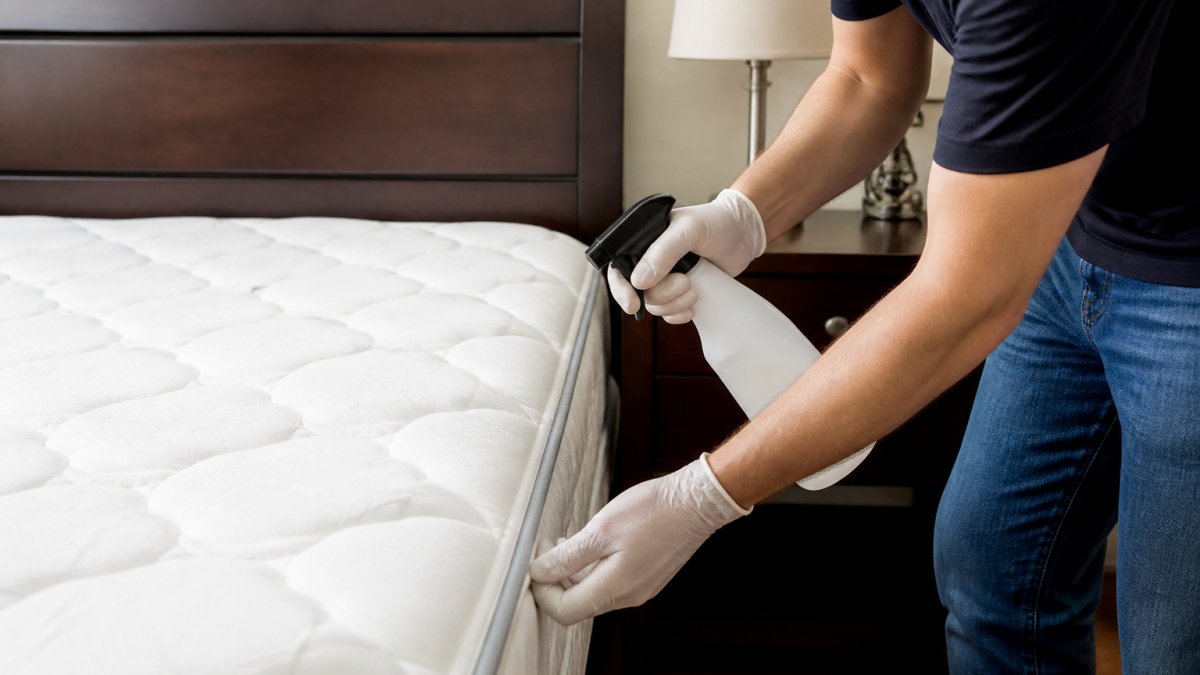
- Bedding and mattress: wash and dry on high heat first; spray only if the label allows it
- Furniture: test a hidden spot and let it dry before treating the whole piece
- Cracks and baseboards: apply lightly, then let it dry completely
How to Get Rid of Bed Bugs: A Step-by-Step Workflow
Getting rid of bed bugs takes inspection first, treatment second, and verification last. Skip the inspection and you will spray the wrong places.
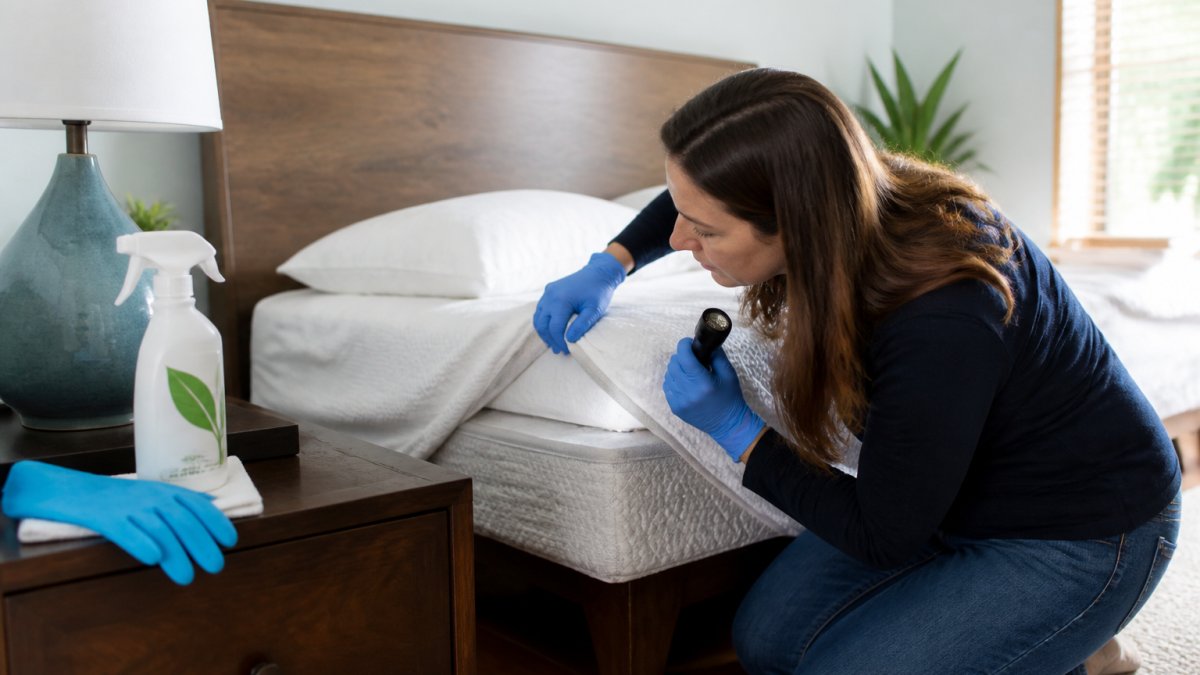
Step 1: Inspect Before You Spray
Check mattress seams, box spring edges, headboard joints, bed frame corners, and baseboards with a flashlight. Look for dark spots (fecal marks), shed shells, live bugs, and tiny pale eggs glued into seams. A common pattern is to find the heaviest activity within a few feet of where people sleep, so start there and work outward.
Step 2: Clear and Prepare the Room
Vacuum thoroughly, then seal the vacuum bag and dispose of it outside. Remove clutter from under the bed and around baseboards so you can actually see and treat hiding places. Pull the bed a few inches from the wall if the label and your setup allow it.
Step 3: Launder Everything Washable
Bedding, curtains, and clothing go through a hot wash and a hot dryer cycle. Heat is one of the few methods with strong evidence for killing bed bugs and their eggs, so do not skip this step and rely on spray alone.
Step 4: Treat the Hiding Places, Surface by Surface
Apply your chosen spray to seams, cracks, and edges per the label. Mist, do not soak.
Step 5: Let It Dry Fully
Keep the room empty until surfaces are dry, then ventilate. Drying time is a label instruction, not a suggestion.
Step 6: Repeat on Schedule
Re-treat and re-inspect about a week later to catch newly hatched nymphs before they lay eggs. Contact sprays leave no residual effect, so any eggs that survived round one will produce a new generation.
Step 7: Verify Success With Monitoring
Checking the same spots every few days for several weeks is how you distinguish a temporary contact kill from actual control. Two practical tools:
- Interceptors under bed legs catch bugs trying to reach the bed and give you a count you can track over time.
- A dated inspection log of the seams and cracks you treated lets you compare week to week instead of relying on memory.
No live bugs, no new fecal spots, and empty interceptors across several consecutive checks means you are clear. A single bug-free day is not proof.
That sequence is the backbone of any bed bug treatment plan. The spray is one step, not the whole plan, and verification is the step most DIY guides leave out.
Building a Bed Bug Treatment Plan That Holds
A plan that holds combines methods. This is what integrated pest management means in practice: chemical and non-chemical tools working together.
- Heat treatment for bedding, curtains, and clothing
- Vacuuming to pull bugs and eggs out of seams
- Laundering on the hottest setting fabrics allow
Professional treatment earns its place when the infestation is heavy or spans multiple rooms; an operator can apply methods a homeowner cannot buy.
Choosing Your Enzyme Spray and Starting Treatment
Choose an enzyme spray for the contact kill and the low-toxicity profile, not as a standalone cure.
This is where Natural Ginesis fits.
In general, a sound approach is to inspect thoroughly, treat the seams and edges, launder everything, and set a repeat date one week out.
Visit the Natural Ginesis website to see the current product range and get started.
Frequently Asked Questions
Can enzyme spray kill bed bugs on contact?
An enzyme spray can kill bed bugs it directly reaches, but contact alone is not a full solution. Contact-only spray testing in university studies has generally found that direct application kills only the bugs it reaches. Bed bugs hiding in seams, frames and outlets never get hit. Treat enzyme spray as one part of an integrated plan alongside vacuuming, laundering and repeat applications.
Can enzyme spray kill bed bug eggs?
There is no independent test data establishing that enzyme sprays destroy bed bug eggs. Eggs are glued into seams and crevices and are not reached by a surface spray, so a product that kills adults may leave eggs untouched. This is why repeat treatment timing matters: eggs hatch in roughly 6 to 10 days, so a second application after that window catches newly emerged nymphs before they lay more eggs.
How should you use spray as part of a bed bug treatment plan?
Start with inspection: check mattress seams, box springs, bed frames and baseboards. Vacuum and launder bedding on the hottest setting the fabric allows, then apply the spray following the product label exactly, including drying time. Treat cracks and harborage edges rather than open surfaces. Repeat after the egg hatch window and keep monitoring with interceptors so you can verify the infestation is actually declining.
Is a natural bed bug spray safe around children and pets?
Safe use depends on following the label. Keep people and pets out of the treated room until surfaces are fully dry, avoid skin contact during application, and never spray bedding you will sleep on without checking the application directions. If an infestation persists after repeat treatments, a professional using integrated pest management is the reliable next step.
The challenge is not finding a spray. It is building a plan that reaches the hiding places and keeps going until the last egg hatches. Natural Ginesis offers non-toxic, bio-degradable enzyme formulas that are safe for body, home, and pets, so you can treat your space without trading safety for results. Get started with Natural Ginesis and treat your home with a plan you can stick to.
