

18th Nov 2026
How to Buy Non Toxic Flea Spray Online Safely
Last Updated: November 17, 2026
Quick Summary
To buy non toxic flea spray online safely, verify the label shows full ingredient disclosure, clear use instructions, and a named manufacturer with real contact details. Avoid rock-bottom marketplace prices, since counterfeit pest products often undercut legitimate ones. Match the formula to your pet and surfaces, then treat on a schedule that respects the flea life cycle.
- Amazon moved more than 7,000 units of plant-based flea and tick spray in a single month.
- A review of 25 studies found essential oils show measurable efficacy against flea species.
- Vet's Best Home Spray starts at $22.99 and uses peppermint oil and eugenol.
- Patch-test on bedding for 24 hours before applying any spray to a cat's coat.
- Vacuum first, treat baseboards and seams, then repeat treatment in 10 to 14 days.
Table of Contents
- Why Buying Non Toxic Flea Spray Online Beats Store Shelves
- How to Spot a Genuine Non Toxic Flea Spray for Home Use
- The Best Flea Spray for Home and Furniture: What to Compare
- Non Toxic Flea Spray for Cats: Safety Rules Before You Buy
- How to Use Flea Spray in the House Without Missing Spots
- Allergy Testing and Veterinary Integration: Two Steps Buyers Skip
- Check Natural Ginesis Stock and Place Your First Order
- Frequently Asked Questions
Why Buying Non Toxic Flea Spray Online Beats Store Shelves
Shopping for a non toxic flea spray online gives you access to plant-powered formulas that most big-box stores simply don't stock. Pet owners increasingly want effective pest control without the harsh residues left by conventional pesticides. Online retailers now carry a far wider range of botanical, enzyme-based options than any single store shelf can hold.
The numbers back this up. Amazon alone moved more than 7,000 units of plant-based flea and tick spray in a single month, according to Amazon sales data. That volume signals real demand, not a niche trend.
But buying online carries a risk the store shelf doesn't: counterfeit products. Government agencies warn that e-commerce sites may host fake flea treatments containing toxic chemicals not listed on the label, per UK Government warning on counterfeit pest products. So the convenience comes with a responsibility to verify what you're buying.
Below, we'll show you exactly how to tell a genuine non toxic flea spray from a risky one, and how to use it correctly once it arrives.
What Plant-Based Formulas Actually Do to Fleas
Plant-based flea sprays work differently from synthetic insecticides. Instead of a single neurotoxin, they combine essential oils and botanical compounds that disrupt fleas at multiple life stages. A review of 25 studies analyzed by PMC, National Institutes of Health found that essential oils and active plant compounds show measurable efficacy against flea species, making them a credible non-chemical alternative.
A good formula should target flea eggs, larvae, and adults, not just the adults you can see.
How to Spot a Genuine Non Toxic Flea Spray for Home Use
The first thing to check is the label's intended use. Some sprays labeled for "home use" are not safe for direct application on pets, and misuse is a violation of federal law, according to EPA guidance via Black Flag. Read the fine print before you assume "natural" means "safe everywhere."
Look for these markers of a trustworthy product:
- Full ingredient disclosure on the label or product page, not vague "botanical blend" language
- Clear use instructions separating home surfaces from pet application
- A named manufacturer with a real website and contact details
- Third-party reviews from verified buyers, not just star ratings
Watch out: a rock-bottom price on a marketplace listing is a red flag, not a bargain. Counterfeit pest products often undercut legitimate ones.
The Best Flea Spray for Home and Furniture: What to Compare
When comparing the best flea spray for home and furniture, three factors decide it: contact-kill speed, residual effect, and whether the formula is safe around pets and children. But the factor most guides ignore is lifecycle specificity, which ingredients actually kill flea eggs and larvae versus merely repelling adult fleas. That distinction determines whether you break the infestation or just chase visible adults.
Here's how the leading plant-based options stack up on those criteria.
| Product | Starting Price | Best For | Key Limitation | Lifecycle Targeting |
|---|---|---|---|---|
| Natural Ginesis | See site for current pricing | Whole-home, body, and pet use | Pricing depends on kit size | Enzyme blend targets eggs, larvae, and adults |
| Vet's Best Home Spray | $22.99 | Carpets and bedding | Not for all pets directly | Peppermint oil and eugenol kill adults and eggs on contact |
| Only Natural Pet EasyDefense | $14.46 | Budget repellent | Repellent, not heavy-duty kill | Primarily adult repellency |
| Natural Care Repellent | $7.78 | Large-area maintenance | Needs frequent reapplication | Adult repellency with limited residual |
Natural Ginesis offers products for the body, home, and pets. For current pricing, check the Natural Ginesis website.
If your home already has an active infestation with visible flea dirt or biting, prioritize a formula explicitly labeled for eggs and larvae, not just adult fleas. If you're treating preventively after a single sighting, a repellent-only spray may be enough.
Starting prices of plant-based flea spray products
Non Toxic Flea Spray for Cats: Safety Rules Before You Buy
Cats are not small dogs, and a non toxic flea spray for cats needs extra caution. Felines groom constantly, so any product applied near a cat should be used with care.
So "natural" does not automatically mean "safe for cats."
Before buying, confirm the label explicitly permits feline use, and never apply a home-surface spray directly to a cat's coat. Test a small area first, and keep the treated room ventilated.
Even a cat-safe formula can trigger a reaction in a sensitive animal. Here's a simple patch-test protocol:
- Apply a small amount of the diluted spray to a cotton ball and dab it on a 1-inch square of the cat's bedding, not the cat itself, and let it dry.
- Observe the cat's behavior around the treated bedding for 24 hours. Watch for sneezing, excessive grooming, or avoidance.
- If no reaction, test a tiny spot on the cat's coat behind the shoulder blades (where they can't easily lick) using a cotton swab. Monitor for 24 hours.
- Only proceed with full application if both tests show no redness, itching, or behavioral change.
Integration with veterinary treatments. If your cat is on a prescription flea medication (oral like nitenpyram, or topical like selamectin), tell your vet before adding a natural spray to the routine. The two can complement each other, but only when coordinated. A vet can confirm whether your chosen formula interferes with an existing parasite prevention plan, and whether the natural spray is redundant, since many prescriptions already cover the full lifecycle.
For households with cats, treating surfaces and bedding rather than the animal directly is a sensible approach unless the product is cleared for direct use.
How to Use Flea Spray in the House Without Missing Spots
Knowing how to use flea spray in the house correctly matters as much as which spray you buy. Fleas hide in the fibers, seams, and shadows you'd never think to spray, so a quick pass over the carpet won't cut it.
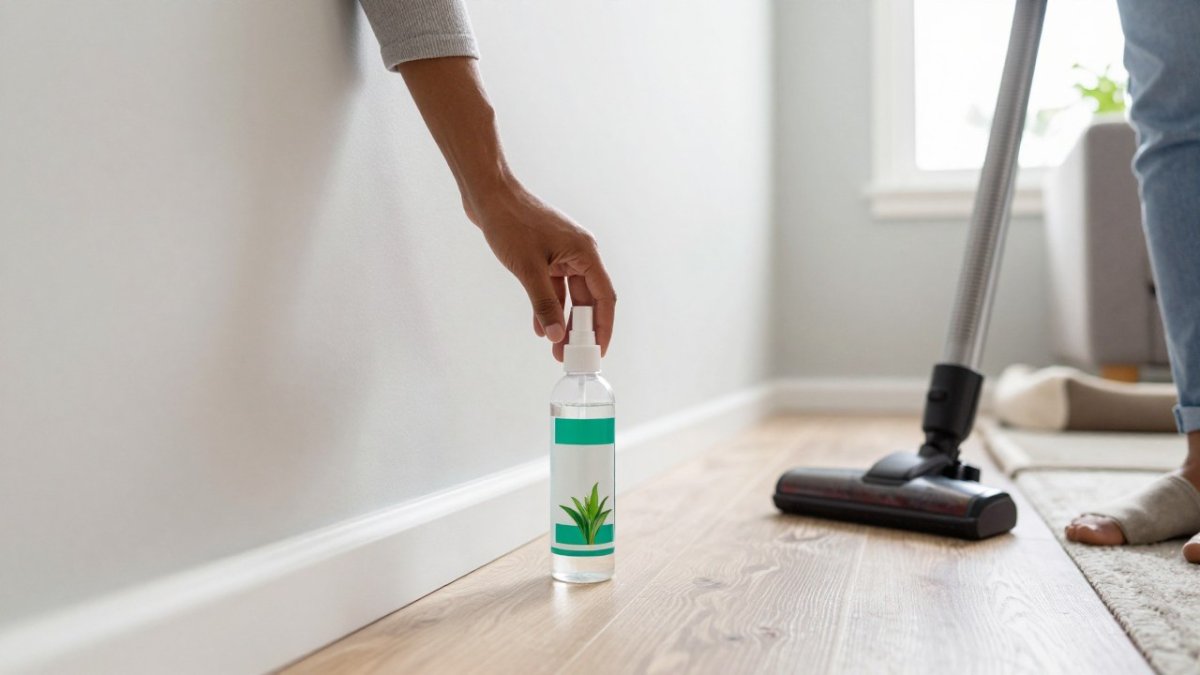
Follow this sequence for a thorough treatment:
- Vacuum first to pull fleas and eggs out of carpet fibers, then seal and discard the bag.
- Treat baseboards and seams where larvae hide, holding the nozzle close.
- Spray carpets and upholstery evenly, then let the product dry fully.
- Wash all bedding in hot water on the same day.
- Repeat treatment in 10 to 14 days to catch newly hatched fleas.
Application frequency depends on the product's residual effect. Follow the label's directions for reapplication.
Allergy Testing and Veterinary Integration: Two Steps Buyers Skip
Botanical ingredients can still trigger reactions in sensitive animals, so test a small amount of any new spray before full treatment.
Second, integration with veterinary treatments. If your pet is on a prescription flea medication, tell your vet before adding a natural spray to the routine. The two can complement each other, but only when coordinated. A vet can confirm whether your chosen formula interferes with an existing parasite prevention plan.
Check Natural Ginesis Stock and Place Your First Order
Buying a non toxic flea spray online comes down to three habits: verify the label, match the product to your pet and surfaces, and treat on a schedule that respects the flea life cycle. Do those, and you avoid both the counterfeit risk and the wasted money of a formula that never had a chance to work.
Natural Ginesis offers non-toxic, bio-degradable formulations designed for the body, home, and pets, using a unique organic blend of enzymes.
Visit the Natural Ginesis website to browse products and get started.
Fleas don't wait, and neither should your treatment plan. At Natural Ginesis, our pesticide-free enzyme blends handle fleas across the body, home, and pets, with bio-degradable ingredients you can trust around the whole family. Check current stock and find the right kit for your household. Get started with Natural Ginesis and build a flea-free home the safe way.
Frequently Asked Questions
What is a non-toxic way to kill fleas?
Plant-based sprays built on essential oils are the most common non-toxic option. Plant-based sprays built on essential oils are generally considered a non-chemical option, and label directions should be followed closely. The catch is contact kill versus residual effect: you should treat carpets, bedding, and upholstery thoroughly and follow the label's reapplication guidance. Vacuuming before you spray lifts larvae and eggs out of fibers so the spray reaches them.
How can I tell whether a flea spray is safe for pets and people?
Read the label for two things: whether it is registered for direct application on animals or only for household surfaces, and whether the active ingredients are listed by name. Some sprays labeled for home use are not safe for direct application on pets, and misuse is a violation of federal law, according to EPA guidance cited by Black Flag. Government agencies also warn that e-commerce sites may host counterfeit flea treatments containing toxic chemicals not listed on the label, so buy from the manufacturer or a known retailer and check that the ingredient list is complete.
Are natural flea sprays safe to use around cats?
Not automatically. Cats groom constantly, and any product applied to a cat should be labeled for feline use. Many home sprays are formulated for carpets and furniture only. Keep cats out of a treated room until the spray is fully dry, ventilate well, and test a small patch first. If your cat has a known sensitivity, ask your vet before applying anything to the coat.
How often should I reapply flea spray?
Application frequency depends on the formula's residual effect. Follow the label's reapplication interval, and pair spraying with regular vacuuming and washing pet bedding in hot water. Follow the label interval exactly, and pair spraying with regular vacuuming and washing pet bedding in hot water.
