

18th Nov 2026
How to Remove Lice Nits Naturally: A Step-by-Step Guide
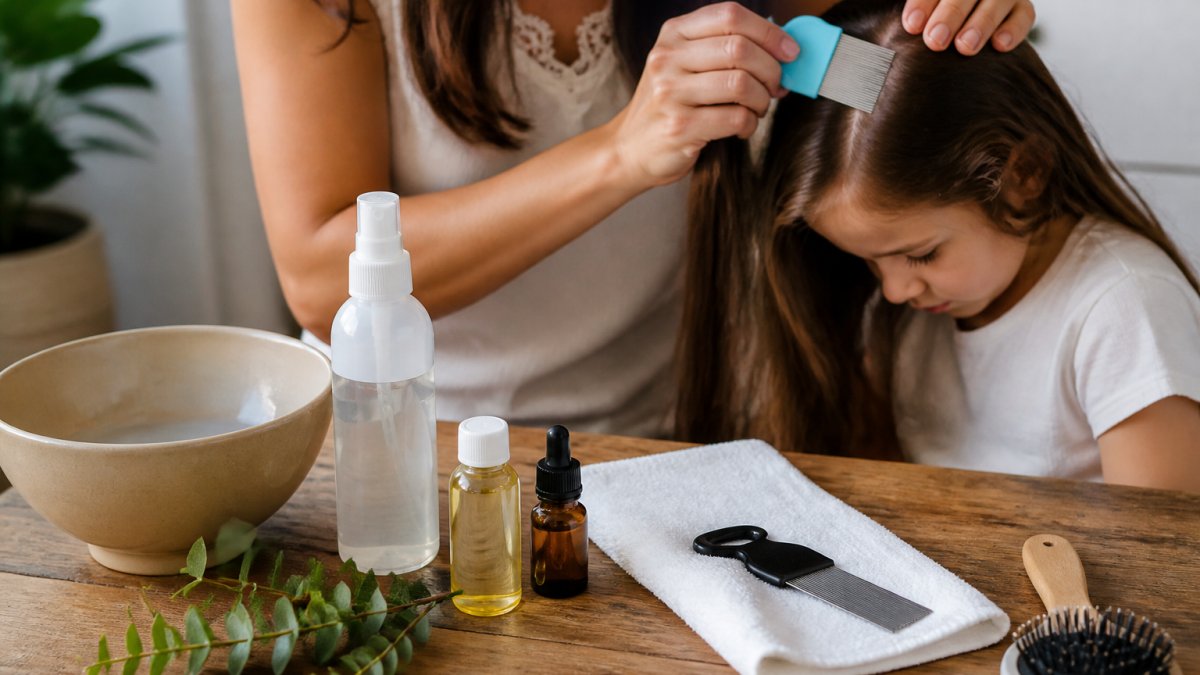
Table of Contents
- Why Natural Nit Removal Works Better Than You Think
- How to Tell Nits From Dandruff and Empty Casings
- Wet Combing for Lice: The Core Removal Method
- Choosing the Right Lice Nit Comb
- How Often to Comb for Lice: Building a Follow-Up Calendar
- Vinegar for Lice Eggs: What the Evidence Says
- Safety, Sensitivity, and Age-Specific Guidance
- Prevention Without Over-Cleaning Your Home
- Frequently Asked Questions
Last Updated: October 19, 2026
Why Natural Nit Removal Works Better Than You Think
Most parents reach for a medicated shampoo first. That is often the wrong move.
Physical removal of lice nits is a method that works no matter how resistant the bugs are.
Below, we show you exactly how to remove lice nits naturally, step by step. You will get a combing routine, a follow-up calendar, and honest answers about home remedies.
How to Tell Nits From Dandruff and Empty Casings
Nits are often confused with dandruff, hair spray, or old egg casings. Getting this wrong wastes weeks. Here is the quick test.
A nit is a lice egg glued to the hair shaft. It cannot be flicked away with a finger. Dandruff flakes slide off easily. That is the first clue.
Viable Eggs vs. Hatched Casings
A viable egg is plump, oval, and tan or brownish. It sits tight against the hair. A hatched casing is clear or white and looks like an empty shell. It stays glued on but no longer holds a bug.
So a head full of white specks may mean the hatch already happened. It may also mean old shells are left over. Neither is an active case on its own.
Where Nits Hide on the Hair Shaft
Nits cluster near the scalp, especially behind the ears and at the nape of the neck. Eggs are laid close to the root because the scalp is warm.
- Behind the ears
- At the back of the neck
- Along the crown
Check these four zones first. Use bright light and a fine-toothed comb. Part the hair in small sections so nothing hides.
Wet Combing for Lice: The Core Removal Method
Wet combing for lice is the most reliable natural method. Hair is wet and coated with conditioner, which stops the comb from snagging. The comb then lifts eggs and bugs together.
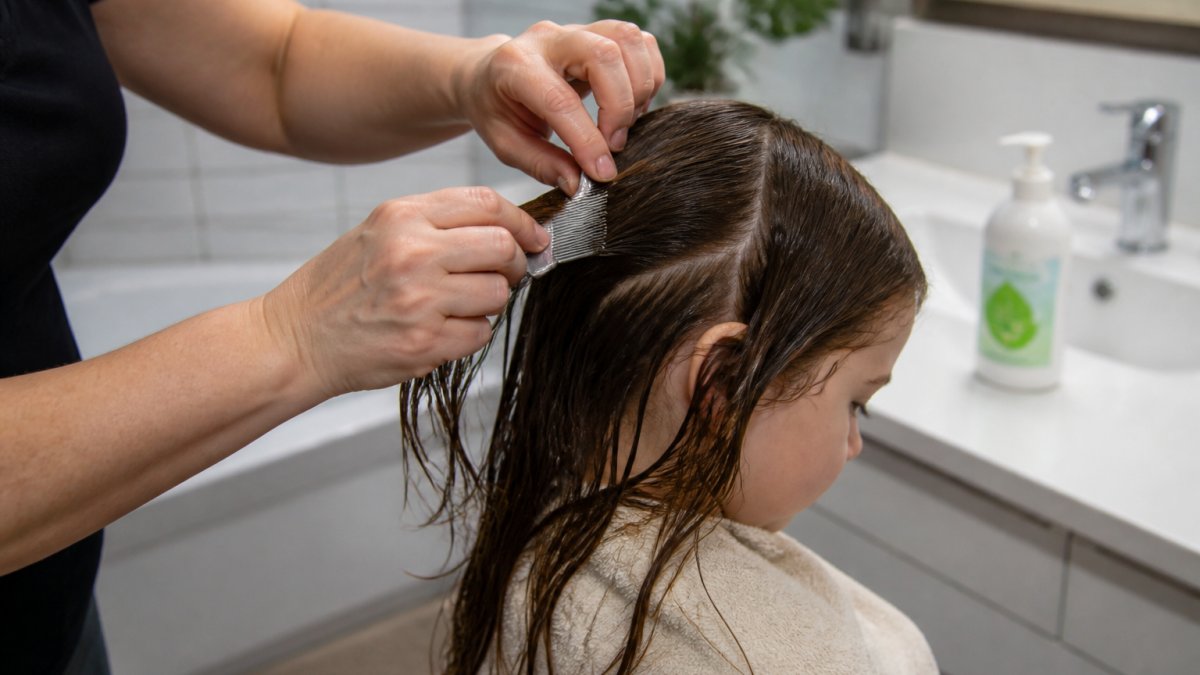
The key is repetition, not force. One pass misses eggs. A full session takes 15 to 30 minutes on longer hair.
Step-by-Step Combing Technique
Follow these steps in order:
- Wash the hair and leave conditioner in. Do not rinse.
- Detangle with a wide-tooth comb first.
- Section hair into small parts and clip each one aside.
- Place the nit comb flat against the scalp.
- Draw it firmly from root to tip in one stroke.
- Wipe the comb on a white paper towel after each pass.
- Check the towel for bugs and eggs.
- Work through every section, then repeat the whole head.
Rinse and repeat every three to four days for two weeks. That schedule catches new hatchlings before they lay eggs.
Choosing the Right Lice Nit Comb
A metal lice nit comb beats a plastic one almost every time. The teeth are cut fine and stay rigid, so they grip eggs instead of bending around them. Plastic combs flex and let eggs slip through.
Look for these features:
- Teeth spaced under 0.3 mm apart
- Rounded tips so the scalp is not scratched
- A sturdy metal body
Cheap combs are false economy here. One good comb lasts for years and does more than any bottle.
How Often to Comb for Lice: Building a Follow-Up Calendar
Comb every three to four days for at least two weeks. That gap matches the egg-hatching window: eggs hatch roughly 7 to 12 days after being laid, and newly hatched nymphs cannot lay eggs for another 7 to 10 days.
But a calendar alone is not enough. You need a decision guide for what you find at each session, a clear definition of success, and adaptations for hair that is long, thick, curly, or textured.
The Day-by-Day Combing and Recheck Plan
| Day | Action | What to Check | Decision Guide |
|---|---|---|---|
| Day 1 | Full wet comb session (15-30 min) | Live bugs, eggs near scalp | Record what you find. This is your baseline. |
| Day 4 | Repeat comb | New hatchlings | If you find live bugs, continue the schedule. If clear, continue anyway. |
| Day 7 | Repeat comb | Any remaining eggs | If eggs are still glued within 1 cm of the scalp, infestation may be active. |
| Day 10 | Repeat comb | Clear sections | If two sessions in a row are clear, you are close to done. |
| Day 14 | Final check | No bugs, no new eggs | If clear, stop. If live bugs remain, see a healthcare professional. |
What Counts as Success
Success is not "no nits on the comb." Old empty casings can stay glued to hair for months as the hair grows out. Success is:
- Two consecutive full combing sessions that turn up no live lice and no plump, tan eggs within 1 cm of the scalp.
- No new itching or scratching reported by the person infested.
- No live bugs found on a final check at day 14.
If you still find live bugs after two weeks of consistent combing, or if the scalp is inflamed or infected, see a healthcare professional. Do not keep treating repeatedly without a clear reason.
Adapting the Schedule for Long, Thick, or Curly Hair
Long or thick hair takes longer per session, plan for 30 to 45 minutes, not 15. Section the hair into smaller parts (six to eight sections instead of four), and keep a spray bottle of water and conditioner handy to re-wet sections as you go. For curly or textured hair, detangle gently with a wide-tooth comb first, and consider combing in smaller subsections to avoid snagging.
When to Escalate
- Live lice still present after two full weeks of combing.
- Signs of secondary infection: redness, swelling, pus, or tender lymph nodes.
- Infestation in an infant under 2 months old, consult a healthcare professional before any treatment.
Vinegar for Lice Eggs: What the Evidence Says
Vinegar for lice eggs is one of the most repeated home remedies online. The theory is simple: the acetic acid in vinegar supposedly dissolves the glue that anchors nits to the hair shaft.
That does not make vinegar useless. A diluted rinse may soften the hair cuticle and make combing slightly easier, and it is gentle enough for most scalps.
An Evidence-Ranked Look at Common Home Remedies
Not all natural methods are equal. Below, the common remedies are grouped by what they actually do, and how strong the evidence is.
Physical removal methods (strongest evidence)
- Wet combing with conditioner: The most reliable natural approach. Conditioner immobilizes lice and lubricates the hair so a fine-toothed metal comb can lift eggs and bugs. Multiple public health bodies, including the UK's NHS, recommend wet combing as a first-line option. The catch is repetition, one session misses eggs.
- Dry combing on short hair: Faster but less effective on long or thick hair because static and snagging reduce comb contact with the scalp.
Suffocation methods (moderate evidence, major limitation)
- Olive oil, mayonnaise, and thick conditioners: These coat the hair and can slow live lice, and some small studies suggest they reduce bug numbers. They do not dissolve egg glue, and eggs need no air, so they survive. Combing still does the real work.
- Petroleum jelly: Occasionally suggested, but it is difficult to wash out and can irritate the scalp. Not recommended for children.
Essential oils (weak evidence, real safety risks)
- Tea tree oil and neem oil: Lab studies show some repellent and insecticidal activity, but clinical evidence in humans is limited and inconsistent. These oils can cause burning, allergic contact dermatitis, and hormonal effects in young children. Never use them undiluted, and patch test first.
- Eucalyptus and lavender oils: Sometimes added to DIY sprays. Evidence is anecdotal. Asthma and allergy risks are real, especially for children.
Household substances (weak or no evidence)
- Vinegar: May soften hair and aid combing; does not reliably kill eggs or lice.
- Saline spray: Gentle but weak. No credible evidence it loosens eggs.
- Garlic paste, onion juice, and kerosene: Folk remedies with no supporting evidence. Kerosene is dangerous and should never be used on skin.
What the pattern tells you
Methods that physically remove lice and eggs, especially wet combing, have the strongest support. Remedies that try to chemically dissolve glue or smother bugs have weaker evidence and, in the case of essential oils, meaningful safety concerns.
Safety, Sensitivity, and Age-Specific Guidance
Natural does not always mean safe for everyone. Babies, young children, and people with sensitive skin need extra care. Check with a healthcare professional before trying new oils or remedies, especially on infants.
A few practical rules:
- Patch test any oil on the inner arm first.
- Keep oils away from the eyes.
- Do not leave heavy oil treatments on overnight for young children.
For sensitive scalps, a gentle enzyme-based solution can help clean the hair without harsh chemicals. Our non-toxic, bio-degradable formulas are safe for body, home, and pets.
Prevention Without Over-Cleaning Your Home
Lice do not survive long off the head. They need warmth and blood to live. So there is no need to scrub the whole house.
Focus on the items that touch the head:
- Wash bedding and pillowcases in hot water.
- Soak brushes and hair ties.
- Vacuum car seats and sofa cushions.
Skip the foggers and harsh sprays. They add chemical exposure and do little against lice. A calm, targeted clean is enough.
Frequently Asked Questions
What kills lice and nits immediately?
No home method kills every louse and nit instantly. Wet combing with a fine-toothed metal nit comb removes live lice and eggs in one session, and repeating it every few days clears the infestation. Vinegar and oils may loosen eggs but are not proven to kill them outright. For a confirmed active infestation, a non-toxic enzyme-based solution combined with consistent combing can be a practical approach that avoids harsh pesticides.
How often should you comb hair to remove lice and nits?
Comb every two to three days for at least two weeks after the last live louse is found. This schedule catches nymphs that hatch after your first session, before they can lay new eggs. Check the whole scalp each time, working in small sections from root to tip. If you find new nits close to the scalp, keep combing for another two weeks.
Can white vinegar kill lice eggs?
Vinegar is often cited as a way to dissolve the glue that holds nits to the hair shaft, but the evidence for killing eggs is weak. Some parents use a diluted vinegar rinse before combing to make eggs easier to slide off. It is not a stand-alone treatment. Pair it with wet combing and a repeat schedule, and stop if the scalp becomes irritated.
How can you tell nits from dandruff?
Nits are glued to one side of the hair shaft and will not flick away easily, while dandruff sits loosely on the scalp and hair and brushes off. Viable eggs are oval and tan or brownish, close to the scalp. Empty casings are clear or white and sit further down the shaft. A fine-toothed nit comb is the quickest way to confirm what you are seeing.
Lice are stubborn, and the cycle feels endless when eggs keep hatching. The answer is not a harsher chemical. It is a good comb, a steady schedule, and gentle products that respect your family's skin.
Natural Ginesis makes non-toxic, bio-degradable enzyme blends for body, home, and pets. Our formulas help you clean safely without harsh pesticides, and they are gentle enough for sensitive scalps. Get started with Natural Ginesis and take the guesswork out of natural lice care.