

22nd Nov 2026
How to Stop a Lice Infestation Naturally and Safely
Last Updated: November 21, 2026
Quick Summary
To stop a lice infestation naturally, confirm it first by finding live lice or eggs within 1/4 inch of the scalp, then wet-comb with conditioner daily for two full weeks. No home remedy kills lice eggs outright, so oils and vinegar only support combing, never replace it. Check and treat every head in the house the same day.
- Treat only when you find live lice or eggs within 1/4 inch of the scalp.
- Wet-combing with conditioner has the strongest non-drug evidence and costs very little.
- Comb daily while live lice or eggs near the scalp are still found.
- Lice spread through head-to-head contact, not through the air or pets.
- If daily combing for two full weeks fails, speak to a pharmacist or doctor.
Table of Contents
- Confirming an Active Lice Infestation Before You Treat
- How to Remove Lice and Nits from Hair with Wet-Combing
- Home Remedies to Kill Lice Eggs: What the Evidence Shows
- Does Vinegar Kill Lice? Separating Myth from Practice
- Suffocating Oils and Essential Oils: An Evidence-Graded Comparison
- How to Prevent Lice from Spreading to Family and Classmates
- Safety Guidance for Children, Pregnancy, Allergies, and Pets
- When Natural Methods Fail: Medicated Treatment and Medical Advice
- Frequently Asked Questions
Confirming an Active Lice Infestation Before You Treat
Finding a single nit does not always mean an active lice infestation. According to the University of California Statewide Integrated Pest Management Program, you only need to treat when you find live lice or eggs within 1/4 inch of the scalp.
Many parents have already treated twice with drugstore shampoo before they confirm what they were treating. So start here, with a proper check.
Live Lice vs. Nits: What You Are Actually Looking For
Live lice are tan or grey-brown insects, about the size of a sesame seed, that move fast and avoid light.
Nits are eggs glued to hair shafts. Fresh eggs sit within 1/4 inch of the scalp. Eggs further down the hair have usually already hatched or failed.
Here is what most guides get wrong: dandruff and hair spray flakes slide off the hair. Nits stay stuck.
- Check under bright light, section by section
- Look behind the ears and at the nape of the neck first
- Use a fine-toothed lice comb on wet, conditioned hair
- Confirm before you treat, every single time
How to Remove Lice and Nits from Hair with Wet-Combing
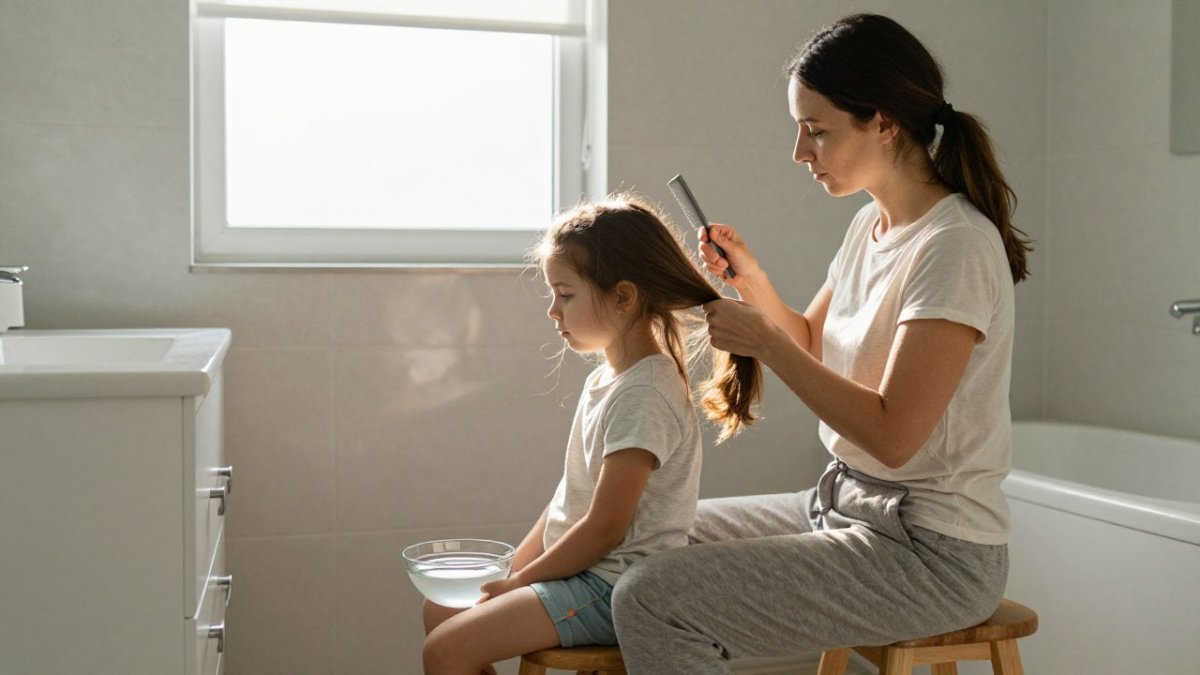
Wet-combing is a common non-drug method for removing lice and nits from hair. Wet-combing can remove lice and nits without drugs, and it costs very little to try.
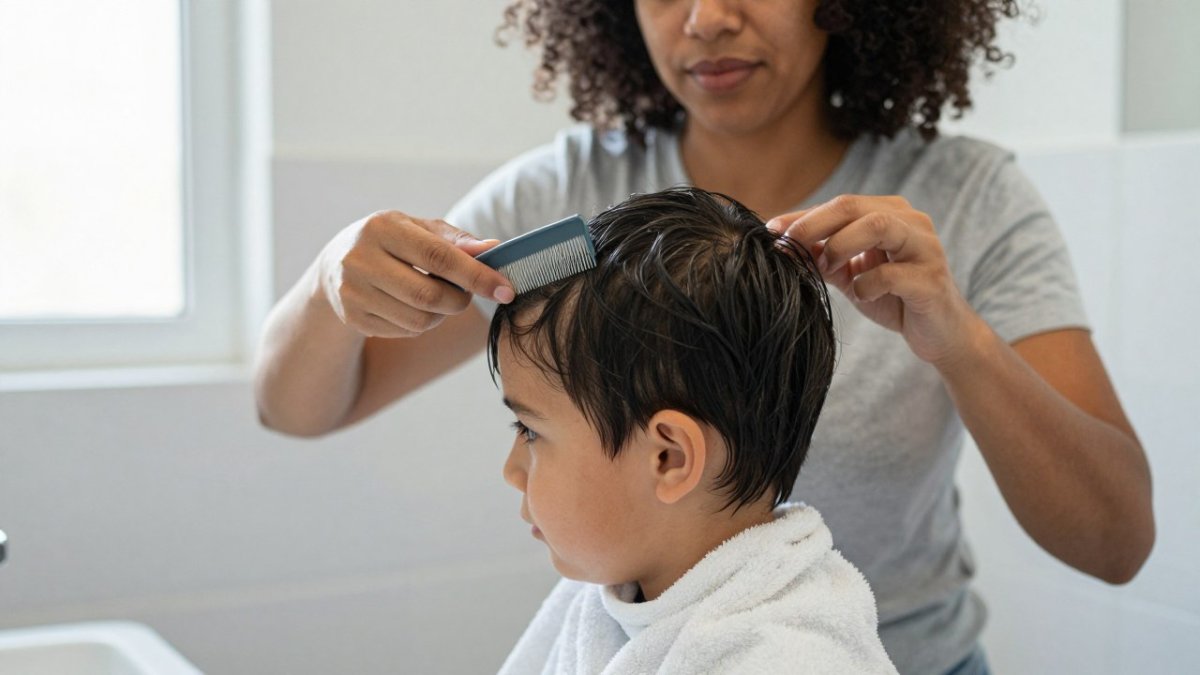
The method is simple but repetitive. Coat the hair with conditioner, detangle, then comb from root to tip in small sections.
Most families quit too early. Combing once is not treatment. It is a single pass in a two-week process.
A Day-by-Day Combing Schedule That Works
The UC IPM guidance is blunt about this: comb daily while live lice or eggs near the scalp are still being found. Here is the schedule we suggest.
| Day | Task | Time Needed |
|---|---|---|
| Day 1 | Wet-comb whole head, treat if confirmed | 30-45 minutes |
| Days 2-7 | Comb daily, check close contacts | 15-20 minutes |
| Day 8 | Repeat treatment if using a product | 30 minutes |
| Days 9-14 | Comb every 2 days | 15 minutes |
| Day 15 | Final check, clear or continue | 20 minutes |
Time Needed
Two weeks is the realistic window. Lice eggs hatch over roughly a week, so a single session misses the next generation.
Home Remedies to Kill Lice Eggs: What the Evidence Shows
No home remedy has strong published evidence that it kills lice eggs outright. That is the honest answer, and it matters more than a long list of folk cures.
A PubMed-indexed review in the Journal of Pediatric Nursing assessed six popular remedies, including vinegar, isopropyl alcohol, olive oil, mayonnaise, and melted butter.
Manual removal is the approach most often described for taking eggs off the hair. Combing physically takes eggs off the hair.
- Mayonnaise and olive oil: may slow adult lice, do not kill eggs
- Vinegar: may loosen nit glue, no proof it kills
- Petroleum jelly: smothers some lice, very hard to wash out
- Essential oils: variable, never apply undiluted
Does Vinegar Kill Lice? Separating Myth from Practice
Vinegar is not a reliable way to kill lice or their eggs.
That is a modest, practical benefit, not a cure.
If you want to try it, dilute plain white vinegar with water, apply to damp hair, leave it a few minutes, then comb thoroughly.
The same logic applies to every kitchen remedy: use it to support combing, never to replace it.
Suffocating Oils and Essential Oils: An Evidence-Graded Comparison
Oils work by coating lice and blocking their air supply. How well that works depends on the oil, the contact time, and whether you comb afterward.
A useful way to read the evidence is to ask three questions: Was the study done on human heads or in a lab dish? Did it measure dead lice, dead eggs, or just fewer live lice after combing? And was combing done alongside the oil, which makes it hard to credit the oil alone? Most positive reports of home remedies fall into the last category: the oil helped, but combing did the real work.
Johns Hopkins Medicine lists tea tree oil, mayonnaise, neem oil, vinegar, and saline spray among remedies parents try, and describes them as messy.
| Method | What the evidence actually shows | Kills eggs? | Practical notes |
|---|---|---|---|
| Wet-combing with conditioner | Strongest non-drug evidence; removes lice and nits mechanically | Removes them | Daily for two weeks; the benchmark other methods are measured against |
| Olive oil | Lab studies show it can slow adult lice; human trials are small and usually combine it with combing | No | Needs long contact time and thorough combing; greasy but low risk |
| Mayonnaise | Anecdotal and small studies; thick enough to smother some adults if left on for hours | No | Hard to wash out; patch test if sensitive to egg or vinegar |
| Petroleum jelly | Smothers adults in lab conditions; very difficult to remove from hair | No | Not recommended for children who may touch eyes; multiple washes needed |
| Tea tree oil | Some lab evidence against lice; human studies are limited and often use diluted formulas | Unknown | Dilute only; allergy and irritation risk, especially in children |
| Neem oil | Traditional use; limited human data | Unknown | Strong smell; patch test first |
| Vinegar | May loosen the glue holding nits; no reliable evidence it kills lice | No | Useful as a combing aid, not a standalone treatment |
| Saline spray | No evidence it kills lice; may help wet-comb | No | Low risk but low benefit |
Two practical points follow from this table. First, no oil or essential oil has strong published evidence that it kills lice eggs outright. Second, the methods with the best evidence are the ones that physically remove lice and nits, which is why combing appears in every row as a partner rather than an optional extra.
Watch out: essential oils are concentrated plant chemicals. Tea tree oil and lavender oil should never be applied undiluted, and should be avoided on infants.
How to Prevent Lice from Spreading to Family and Classmates
Lice spread through head-to-head contact, not through the air or through pets. Household members and other close contacts should be checked, and anyone found infested should be treated.
That last part is where prevention usually fails. One child gets treated, a sibling stays untreated, and the cycle restarts within a week.
- Check every head in the house on the same day
- Tell the school so classmates can be checked
- Wash bedding, pillowcases, and towels in hot water
- Dry on high heat for at least 30 minutes
Safety Guidance for Children, Pregnancy, Allergies, and Pets
Natural does not automatically mean safe. Essential oils are concentrated plant chemicals, and some are risky for young children. The cautions below are organized by who is being treated, because the same remedy can be reasonable for one person and a poor choice for another.
Infants and Young Children
For children under two, the safest first step is mechanical removal: wet-combing with conditioner and a fine-toothed comb. Many pediatric practitioners advise against essential oils on infants altogether, and undiluted tea tree oil or lavender oil should never be applied to a child's skin. If you use any oil, dilute it well, keep it away from the eyes, and stop at the first sign of redness or irritation.
Pregnancy and Breastfeeding
If you are pregnant or breastfeeding, ask a pharmacist or clinician before using any lice product, natural or medicated. Some essential oils are best avoided during pregnancy, and the evidence for many home remedies is thin enough that a professional opinion is worth the call. Wet-combing remains a low-risk option while you wait for advice.
Allergies, Asthma, and Sensitive Skin
Anyone with eczema, a sensitive scalp, or a known plant allergy should patch test any new oil on the inner arm before applying it to the head. People with asthma should be cautious with strong-smelling oils and should avoid breathing in concentrated vapors. If a rash, swelling, or trouble breathing appears after any treatment, stop and seek medical advice the same day.
Pets and Household Animals
Pets do not carry head lice, so do not treat the dog or cat for them. Fleas are a different problem with different products. Keep lice combs and treatments away from pets, and store oils out of reach. Some essential oils are toxic to cats and dogs if ingested or applied to their skin, so never use a lice remedy on a pet without veterinary guidance.
A Quick Decision Path
- Confirmed live lice on a healthy adult or older child: wet-combing first, then a diluted oil only if it helps combing.
- Infant under two: wet-combing only unless a clinician advises otherwise.
- Pregnant or breastfeeding: ask a pharmacist before any product, natural or medicated.
- Known allergy or asthma: patch test and avoid strong vapors.
- Pets in the home: treat the humans, not the animals.
Watch out: if you are unsure whether a remedy is appropriate for someone in your household, the safest move is to confirm the infestation first and then ask a pharmacist before applying anything.
When Natural Methods Fail: Medicated Treatment and Medical Advice
If you have combed daily for two full weeks and still find live lice, it is time to speak to a pharmacist or doctor. Medicated treatments exist, and some lice populations show resistance to common ingredients, which is why a professional opinion helps.
The international recommendations on head louse control note that heated-air and suction-based devices are now part of the treatment picture alongside traditional options.
Where does Natural Ginesis fit? Natural Ginesis offers non-toxic, bio-degradable products for body, home, and pets, made with an organic enzyme blend.
A lice infestation is stubborn, but it is not complicated.
If you want a non-toxic option for the whole household, Natural Ginesis offers pesticide-free enzyme formulas for body, home, and pets.
Frequently Asked Questions
How fast can you get rid of a lice infestation naturally?
There is no reliable one-day fix. Wet-combing removes live lice and eggs mechanically, but eggs within 1/4 inch of the scalp need repeat passes as they hatch. UC IPM advises combing wet, conditioned hair daily while live lice or eggs near the scalp are still found. Most families need one to two weeks of consistent combing plus a follow-up check. Oils and mayonnaise may slow adult lice but are not reported to kill eggs, so they work best alongside combing rather than instead of it.
Does vinegar kill lice and their eggs permanently?
The research does not support vinegar as a reliable cure. A Journal of Pediatric Nursing paper assessed six purported home remedies, including vinegar, but the supplied record does not show results proving it kills lice or eggs. Johns Hopkins lists vinegar among remedies parents try and describes these approaches as messy. Vinegar may help loosen nit glue, but you still need a fine-toothed comb and repeat sessions. Treat vinegar as a combing aid, not a standalone treatment.
How do you prevent lice from spreading to other people in the house?
Check every household member and close contact, and treat anyone found infested, as the CDC advises. WHO guidance adds that bedding, clothing, and towels used by the infested person should be decontaminated, which means washing in hot water and drying on high heat. Avoid sharing hats, brushes, and pillows during treatment. You do not need to fumigate the house: focus on items that touch the head and on repeat combing until no live lice remain.
Are natural lice remedies safe for children, pregnancy, and pets?
Most suffocating oils and wet-combing are low-risk, but essential oils are not automatically safe. Tea tree, lavender, and neem oils can irritate sensitive skin and should not be used undiluted, especially on young children or during pregnancy without checking with a pharmacist or doctor. Keep all treatments away from eyes and never use pet flea products on people or human lice products on animals. If your child has asthma, eczema, or a known allergy, patch-test first and ask a clinician before starting.
