

28th Nov 2026
What Is the Best My Hair Helpers Alternative for Lice?
Last Updated: November 28, 2026
Quick Summary
An enzyme-based product plus scheduled combing is the practical my hair helpers alternative for lice if you want low effort and a non-toxic formula. Enzyme products dissolve the glue binding nits to hair, but they still require combing and a follow-up pass because nothing removes every egg in one session.
- Wet combing is the cheapest effective method but demands the most caregiver time.
- Dimethicone coatings usually need a second application about a week later.
- Repeat your chosen treatment on its stated schedule, usually day 8 to 10.
- Check every head in the house on day one, whether or not anyone is itching.
- If infestation persists after two properly completed rounds, seek professional advice.
Table of Contents
- Why Families Look for a My Hair Helpers Alternative
- Natural Head Lice Treatment Options Compared Side by Side
- Wet Combing for Lice: The Low-Cost Method Worth Mastering
- What Kills Lice Eggs and Why Nit Removal Still Matters
- A Head Lice Treatment Routine for Families
- Matching the Method to Hair Type, Age, and Skin Sensitivity
- Choose Your Natural Lice Treatment and Start Today
- Frequently Asked Questions
Why Families Look for a My Hair Helpers Alternative
Parents searching for a my hair helpers alternative for lice usually arrive at the same place: the first treatment did not work, and the second bottle cost more than expected.
The reason is straightforward. The American Academy of Pediatrics guidance on head lice myths and realities notes that over-the-counter lice treatments are sometimes not the most effective option, and that lice can develop resistance to active ingredients. That single point explains why so many households start hunting for a different approach.
Below, we compare the realistic alternatives side by side: enzyme-based products, oil remedies, dimethicone coatings, and plain wet combing. We will also show you the routine that actually clears a household, and how to match a method to your child's hair type.
Natural Head Lice Treatment Options Compared Side by Side
No single natural method wins on every measure. The honest comparison comes down to six things: how it works, the quality of evidence behind it, how long it takes, how much effort it demands, how well it handles nits, and what it costs per household. Most product pages skip the evidence and cost columns; that is exactly where families get burned.
| Method | How It Works | Evidence Quality | Effort Level | Retreatment | Best For |
|---|---|---|---|---|---|
| Enzyme-based products | Dissolve the glue binding nits to hair | Limited independent evidence; manufacturer claims | Low | Combing plus a follow-up pass | Families wanting a low-effort, non-toxic option |
| Oil and essential-oil remedies | Coat and immobilize lice | Limited; mostly traditional use | Medium | Repeated applications | Cautious households trying a first home step |
| Dimethicone coatings | Physically coat lice and disrupt their function | Moderate; listed in pediatric guidance as a non-pesticide option | Medium | Second application about a week later | People avoiding pesticide ingredients |
| Wet combing | Manual removal with a fine-toothed comb | Good; consumer reporting and clinical guidance support it | High | Every few days for about two weeks | Budget-conscious, patient families |
Enzyme-Based Products
Enzyme-based lice products work on a different principle from shampoos. Instead of attacking the insect with a chemical, they target the nit glue that holds eggs against the hair shaft. Loosened eggs comb out far more easily.
Product listings describing enzyme-based lice formulas describe naturally occurring yeast enzymes used to dissolve that glue. This is where our own approach sits: Natural Ginesis offers an organic enzyme blend that is non-toxic and bio-degradable, and its products are safe for body, home, and pets.
The trade-off is honesty about expectations. Enzyme products still require combing and a follow-up pass, because nothing removes every egg in a single session. Independent published evidence on enzyme formulas is thin compared with dimethicone or wet combing, so treat manufacturer claims as claims, not proof.
Oil and Essential-Oil Remedies
Olive oil, almond oil, and essential oils like tea tree and lavender appear on almost every home-remedy list. Healthline's review of home remedies for head lice lists wet-combing with conditioner, olive or almond oil, and tea tree or lavender oil as approaches that may help eliminate lice.
Read that word carefully: may. Oils appear to work by coating and immobilizing lice rather than poisoning them. Essential oils can also irritate sensitive skin, so patch-test first and never apply undiluted tea tree oil to a child's scalp.
Best for: households wanting a gentle first step while they decide on a fuller plan. Skip if: your child has a heavy infestation, a sensitive scalp, or you need a fast, predictable result.
Dimethicone and Non-Pesticide Coatings
Dimethicone is a silicone-based liquid that coats lice and disrupts their ability to manage water and move. It contains no pesticide, which is why pediatric guidance often lists it as an option for families avoiding chemical treatments.
Application matters more than the bottle. Dimethicone products typically need to stay on the hair for the full stated time, and most require a second application about a week later to catch newly hatched lice. Skipping the second round is the most common reason families report failure. Dimethicone is not a cure-all for heavy infestations either; combining it with combing gives a more reliable result.
Cost and Household Math
Product pages rarely do the household math, so here is the framework. Wet combing costs only a good metal nit comb and conditioner, but it consumes the most caregiver time. Dimethicone and enzyme products carry an upfront product cost and usually need two applications, so budget for two bottles per affected head, not one. Oils are cheap per bottle but often need repeated use. For a family with two or three children, the cheapest method by sticker price is rarely the cheapest by total effort and repeat purchases.
Safety and When to Get Advice
All lice products, natural or not, carry label precautions. Check the label for age limits, avoid broken or infected skin, and patch-test oils or coatings on a small area first. Unproven home remedies such as petroleum jelly, mayonnaise, or vinegar are not reliably effective and can be hard to wash out. If infestation persists after two properly completed treatment rounds, or if the scalp looks infected, seek advice from a pharmacist or healthcare professional.
Wet Combing for Lice: The Low-Cost Method Worth Mastering
Wet combing is the cheapest effective method available, and it is the one most families quit too early. The principle: soak hair with conditioner, then draw a fine-toothed metal comb from root to tip, section by section, wiping the comb on a white paper towel after every stroke.
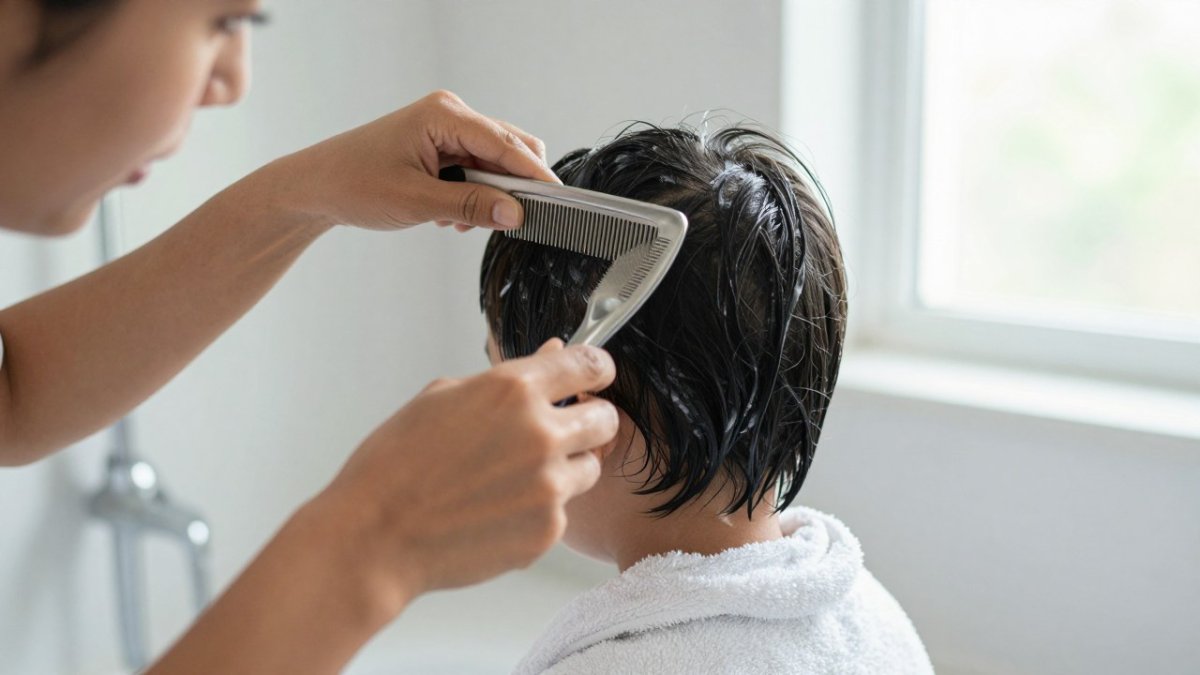
Consumer reporting has highlighted wet combing with a fine-toothed metal nit comb as among the most effective treatments, per Consumer Reports coverage of head lice treatments. The catch is time.
A common mistake is using a plastic comb with rounded teeth. Buy a stainless steel nit comb with closely spaced teeth, and keep it dedicated to lice checks.
What Kills Lice Eggs and Why Nit Removal Still Matters
Nothing reliably kills every egg in place, which is why nit removal remains the deciding step. Eggs are cemented to the hair shaft with a glue-like substance, and many treatments leave that glue intact even when they kill live lice.
That distinction explains the classic failure pattern: hair looks clear on day one, then itching returns about a week later. Those are newly hatched lice from eggs that survived.
Three practical rules follow:
- Comb out nits rather than trusting a product to dissolve them all.
- Repeat your chosen treatment on the schedule it states, usually day 8 to 10.
- Check with a nit comb weekly for two to three weeks after the last live louse is found.
Enzyme formulas that target nit glue exist precisely because manual removal is tedious. They reduce the pulling, but they do not replace the comb.
A Head Lice Treatment Routine for Families
A head lice treatment routine for families works best as a calendar, not a single product. Treat every affected head on day one, then treat the house, then repeat.
Day 1: Treat every household member who has live lice or nits close to the scalp. Wash bedding and pillowcases in hot water, and vacuum upholstery and car seats.
Days 2 to 7: Comb each treated head every second day with a nit comb. This catches stragglers early.
Day 8 to 10: Apply the second treatment, even if hair looks clear. This is the step most families skip.
Weeks 3 to 4: Weekly comb checks. Only stop when two consecutive checks find nothing.
Watch out: treating one child and leaving siblings unchecked is the single most common cause of reinfestation. Check every head in the house on day one, whether or not anyone is itching.
Matching the Method to Hair Type, Age, and Skin Sensitivity
Hair type changes which method is realistic, and most guides gloss over it. Fine hair combs out quickly and shows nits easily. Thick hair holds eggs near the roots and takes far longer to comb thoroughly.
A practical decision guide by hair type:
- Fine, straight hair: wet combing is fast and effective; enzyme or dimethicone products plus combing work well.
- Thick or long hair: budget extra combing time; dimethicone coatings can help loosen nits before combing.
- Curly or coily hair: condition heavily, work in small sections, and consider a coating product to reduce pulling; avoid dry combing.
- Mixed hair types in one household: choose one method that suits the most sensitive scalp and adapt combing time per head.
Age and skin sensitivity narrow the list further.
Caregiver constraints matter too. A single parent working evenings may not have an hour per child for wet combing; a low-effort coating plus scheduled combing may be more realistic.
This is where a gentle formulation earns its place. Natural Ginesis products are built around a non-toxic, bio-degradable enzyme blend that is designed to hydrate the scalp and help prevent oily build-up.
Skip if: you have an active skin infection or broken skin on the scalp, in which case speak to a pharmacist or doctor first.
Watch out: treating only the child with visible nits and skipping siblings with different hair types is a common cause of reinfestation; check every head on day one.
Choose Your Natural Lice Treatment and Start Today
The right choice depends on your household, not on a label. If you want low effort and a non-toxic formula, an enzyme-based product plus scheduled combing is the practical pick. If budget is tight, master wet combing. If you are avoiding pesticides entirely, dimethicone is a sound option with a second application.
Whichever you choose, commit to the follow-up. The treatment you finish beats the treatment you start.
Most lice plans fail at the second application, not the first. Natural Ginesis makes that follow-through easier with non-toxic, bio-degradable enzyme formulas that are safe for body, home, and pets, dissolve the glue holding nits in place, and hydrate the scalp instead of stripping it. Get started with Natural Ginesis and clear your household without harsh chemicals.
Frequently Asked Questions
What can I use instead of lice treatment products?
Wet combing with conditioner is the most accessible non-product option. Healthline lists conditioner-assisted wet combing alongside olive oil and essential oils as home approaches that may help eliminate lice. A stainless steel fine-toothed comb is the key tool, and you repeat the combing every few days until no live lice appear. Natural Ginesis offers enzyme-based products as one option for families looking for a non-toxic formulation.
What kills lice eggs in your hair?
Nothing applied to the hair reliably kills every egg, which is why manual nit removal matters. The glue binding nits to the hair shaft (nit glue) protects them from many treatments. At home, combing out nits with a fine-toothed comb after treatment is the practical way to clear eggs.
How does wet combing compare with lice treatment products?
Wet combing costs little beyond a good comb and conditioner, but it takes time and repeated sessions. Products are faster to apply but vary in effectiveness; the American Academy of Pediatrics notes some OTC treatments are not the most effective and lice can be resistant to active ingredients.
Are natural lice treatments effective?
Evidence varies by method. Healthline says wet combing, oils, and essential oils may help eliminate lice but gives no comparative success rate. Treat natural options as part of a routine that includes combing and follow-up checks, not as a guaranteed one-step fix.
When should you contact a healthcare professional about head lice?
Seek advice if lice persist after two or more properly done treatments, if the scalp shows signs of infection such as spreading redness or weeping, or if someone in the household has a skin condition that makes harsh products risky. The American Academy of Pediatrics notes lice can resist some OTC ingredients, so a clinician can confirm the diagnosis and discuss options, .
