

20th Nov 2026
Natural Remedies for Chronic Scalp Itch That Work

Last Updated: October 23, 2026
Quick Summary
Natural remedies can calm a chronic scalp itch, but they rarely cure the underlying condition. Dilute apple cider vinegar, tea tree oil, peppermint oil, colloidal oatmeal, coconut or jojoba oil, and aloe vera, patch test each one, and give it a fair four-week trial. See a dermatologist if the scalp itch lasts more than a few weeks or comes with sores, spreading redness, or hair loss.
- Dilute one part apple cider vinegar to three parts water, apply after shampoo, and rinse after two minutes.
- Add two to three drops of tea tree oil to a carrier oil or a cup of water, never neat.
- Patch test any new remedy on your inner forearm for 24 hours before use.
- Change one variable at a time and track itch, flaking, and redness on a 1-5 scale.
- Book a dermatologist if itch lasts more than a few weeks or disrupts sleep.
Table of Contents
- Why Your Scalp Itches: Causes of Persistent Itchy Scalp
- Home Remedies for Itchy Scalp: What the Evidence Supports
- Natural Remedies for Itchy Scalp and Dandruff: Vinegar, Tea Tree, and Oatmeal
- How to Use Each Remedy Safely: Dilution, Patch Tests, and Reactions
- A Symptom-Based Decision Guide for Scalp Itch Relief
- When to See a Dermatologist for an Itchy Scalp
- Building a 4-Week Trial Plan and Tracking Your Response
- Conclusion
- Frequently Asked Questions
Why Your Scalp Itches: Causes of Persistent Itchy Scalp
An itchy scalp is one of the most common complaints dermatologists hear, and it often shows up without an obvious cause. A systematic review of scalp itch published in PubMed Central notes that patients frequently report scalp itch with no clear trigger on examination. That single fact explains why so many people cycle through remedies without relief: they treat the itch, not the reason behind it.
Dandruff, Dry Scalp, and Seborrheic Dermatitis
Three conditions cause most chronic scalp itch, and they need different responses:
- Dandruff: flaking linked to a yeast that lives on most scalps. Itchy, snowy shoulders, worse in winter.
- Dry scalp: tightness and fine flakes from lost moisture. Common with hot showers and harsh shampoo.
- Seborrheic dermatitis: red, greasy, yellow-tinged patches, often at the hairline. This one is a medical condition, not a cosmetic annoyance.
The American Academy of Dermatology's guide to itchy scalp causes lists ten possible reasons and stresses matching relief to the cause. Dandruff, for example, responds to dandruff shampoo, not to oil treatments.
Product Triggers, Protective Styles, and Hair Type
Your routine may be the culprit. A common mistake is layering more product onto an already irritated scalp.
Watch for these triggers:
- Sulfate-heavy shampoos that strip natural oils
- Leave-in products with fragrance or alcohol
- Tight braids, weaves, or ponytails that pull at the roots
If your scalp itches most under a protective style, the style itself deserves a look before any remedy does.
Home Remedies for Itchy Scalp: What the Evidence Supports
Home remedies for itchy scalp can ease symptoms, but the evidence behind them is thinner than most listicles admit. A 2024 review of medicinal plants for itch relief in PubMed Central reports that chamomile and calendula may soothe itching, while lavender and licorice may offer antimicrobial benefits.
That distinction matters. Natural ingredients can calm irritation. They rarely cure a condition.
What the research and dermatology guidance do support:
- Cooling and anti-inflammatory effects from peppermint, chamomile, and aloe vera
- Moisture restoration from coconut, jojoba, and olive oils
- Gentle exfoliation from colloidal oatmeal and diluted vinegar rinses
Natural Remedies for Itchy Scalp and Dandruff: Vinegar, Tea Tree, and Oatmeal
Natural remedies for itchy scalp and dandruff fall into a few clear groups.
Tea tree oil. A well-known antifungal and antibacterial oil.
Peppermint oil. Provides a cooling sensation that temporarily quiets itch.
Colloidal oatmeal. Soothes irritation and supports the skin barrier.
Coconut and jojoba oil. Moisturize dry scalp and loosen flakes before washing.
Aloe vera and lemon juice. Aloe calms redness.
How to Use Each Remedy Safely: Dilution, Patch Tests, and Reactions
Safety comes down to three habits: dilute, patch test, and watch for reactions. Essential oils are the biggest risk. Tea tree and peppermint oil can burn skin when applied undiluted.
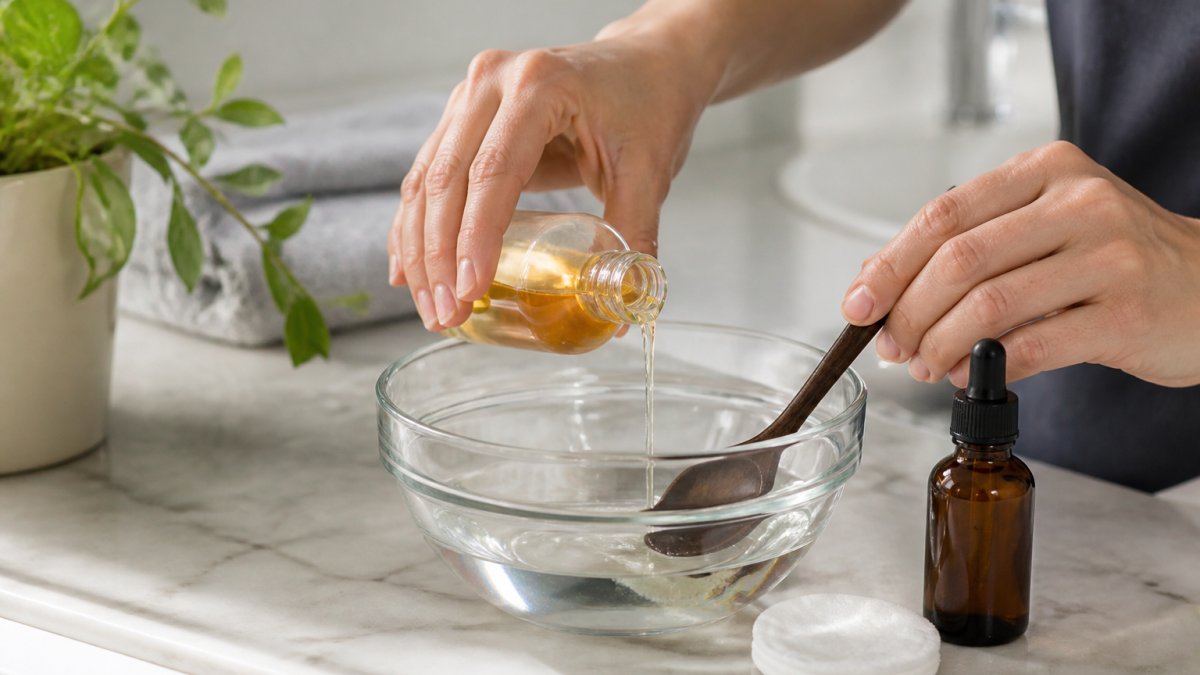
Run this checklist before trying anything new:
- Dilute essential oils in a carrier oil or water (roughly 1-2% strength)
- Patch test on your inner forearm for 24 hours
- Avoid broken, cracked, or sunburned skin
A Symptom-Based Decision Guide for Scalp Itch Relief
Match the remedy to the symptom, not the other way around. This table is the shortcut most guides skip, and it is built around one rule: symptoms point you toward a sensible next step, not toward a diagnosis.
| Your main symptom | What it may suggest | Sensible first step | Avoid |
|---|---|---|---|
| White or yellowish flakes, oily scalp, itch worse in winter | Dandruff linked to Malassezia yeast | An antifungal shampoo (zinc pyrithione, ketoconazole, or selenium sulfide) or a diluted tea tree oil rinse | Heavy occlusive oils that feed yeast |
| Tight, dry, fine flakes, itch after hot showers | Dry scalp from moisture loss or harsh surfactants | Coconut or jojoba oil as a pre-shampoo treatment; colloidal oatmeal rinse; switch to a gentle, sulfate-free wash | Vinegar and other strong acids on cracked skin |
| Red, greasy, yellow-tinged patches at the hairline or behind the ears | Seborrheic dermatitis | See a dermatologist; medicated shampoo is often needed | Relying on home remedies alone |
| Itch under braids, weaves, or tight ponytails | Product buildup and traction | Loosen the style, cleanse gently, give the scalp rest between styles | Tight restyling or adding more product |
| Itch with rash, pustules, crusting, or weeping | Possible infection or contact dermatitis | Medical evaluation before any self-treatment | All home remedies until cleared |
| Itch that spreads to face or neck, or comes with hair loss | Inflammatory or systemic cause | Book a dermatology appointment | Extended trial-and-error |
If two rows describe you, treat the more serious one first. A few practical notes on reading the table:
- Flakes are not all dandruff. Fine, dry flakes that drift off easily often signal dryness; larger, greasy, yellowish flakes that cling to the scalp point more toward seborrheic dermatitis. The two need different care, and oils that help dryness can worsen a yeast-driven flare.
- Chronicity changes the calculus. Itch that has persisted for more than a few weeks, or that keeps returning after a remedy is stopped, is a signal to look for a cause rather than rotate through more remedies. The keyword here is chronic, and chronic itch deserves a diagnosis before a routine.
- Symptoms alone cannot confirm a diagnosis. Psoriasis, eczema, contact dermatitis, and fungal infection can all present with itch and flakes, and they require different care. A symptom guide narrows your options; it does not replace an exam.
When to See a Dermatologist for an Itchy Scalp
See a dermatologist when scalp itch lasts more than a few weeks, keeps returning, or comes with warning signs. The AAD's guidance is clear that relief depends on the cause, and some causes need prescription care.
Book an appointment if you notice:
- Hair loss or thinning patches
- Sores, crusting, or weeping skin
- Itch that disrupts sleep
- No improvement after four weeks of careful home care
Chronic scalp itch is a symptom, not a diagnosis. Getting the label right is the whole game.
Building a 4-Week Trial Plan and Tracking Your Response
One remedy at a time, four weeks, written notes. That is the whole method, and it is the part most remedy lists leave out. A trial plan matters most for chronic itch, because the goal is not a single good day but a pattern you can actually read.
Week 1: Baseline and patch test. Before you change anything, record your current itch level, flaking, and redness on a 1-5 scale for three days. Then patch test the single remedy you plan to try on your inner forearm for 24 hours. If there is no reaction, start it twice weekly.
Week 2: Hold steady. Keep the same remedy, the same dilution, and the same frequency.
Week 3: Adjust one variable. If the remedy is helping but not enough, adjust dilution or frequency, not the ingredient. If it is making things worse, stop.
Week 4: Decide. Better, same, or worse. Keep what works, drop what does not, and write one sentence about why.
A simple tracking table keeps the four weeks honest:
| Day | Remedy and dilution | Itch (1-5) | Flaking (1-5) | Redness (1-5) | Notes |
|---|---|---|---|---|---|
| Mon | Tea tree oil, 2 drops in 1 tbsp carrier | 3 | 2 | 1 | Mild sting, faded in 10 min |
| Thu | Same | 2 | 2 | 1 | No sting |
A few rules that make the plan more useful:
- Change one thing at a time. If you start a new shampoo and a new oil in the same week, you cannot tell which one helped or hurt.
- Photograph the scalp before you start. It is the fastest way to tell whether a remedy is helping or quietly making things worse, especially when flakes and redness change slowly.
- Set a stopping rule in advance. Stop at the first sign of burning, swelling, or spreading redness, and do not push through irritation to finish the four weeks.
- Respect the evidence limits. Natural remedies can calm irritation, but a four-week trial that shows no improvement is information, not failure. A remedy that has not helped in four weeks of consistent use probably will not, so change the approach or get a diagnosis.
Conclusion
Persistent scalp itch is frustrating, and the internet's endless remedy lists rarely help you find the cause. Start with your symptoms, dilute everything, patch test, and give each remedy a fair four-week trial.
Natural Ginesis makes non-toxic, bio-degradable products for body, home, and pets, with an organic enzyme blend that cleans without harsh chemicals. Our formulas hydrate the scalp, help prevent oily buildup, and remove dirt and odors safely.
Frequently Asked Questions
How long should I try home remedies for itchy scalp before seeing a doctor?
Give a single remedy a fair trial of two to four weeks, tracking itch, flaking, and redness as you go. If symptoms persist beyond that window, worsen, or come with hair loss, sores, or spreading redness, book a dermatologist. A 2017 systematic review in PubMed Central notes that scalp itch is a frequent complaint in dermatological practice and can occur without an evident cause, which is exactly the scenario where professional diagnosis beats more guessing.
Can dandruff cause chronic scalp itch?
Yes. Dandruff and seborrheic dermatitis are among the most common drivers of persistent scalp itch, and the American Academy of Dermatology lists dandruff among the ten reasons a scalp itches, recommending dandruff shampoo and scalp treatments for it. If flaking is your main symptom alongside itch, treat the flaking first. If a medicated or natural dandruff routine does not settle things within a few weeks, get the scalp examined rather than layering on more remedies.
Are natural remedies for chronic scalp itch safe for sensitive skin?
Many are, but only with dilution and a patch test. Essential oils such as tea tree and peppermint should never go on the scalp neat; dilute them in a carrier oil like coconut or jojoba first. Apply a small amount behind the ear or on the inner forearm and wait 24 to 48 hours before treating the whole scalp. A 2024 review in PubMed Central notes chamomile and calendula may soothe itching, but it does not provide scalp-specific trial results, so treat relief claims as possible rather than proven.
Why is my scalp continuously itchy even after washing?
Continuous itch after washing usually points to a cause rather than simple dirt: dry scalp from harsh surfactants, product residue, dandruff, or a reaction to fragrance and preservatives. The American Academy of Dermatology advises identifying the cause instead of assuming a remedy will fix it. Try a fragrance-free wash, rinse thoroughly, and pause new styling products for two weeks. If the itch continues, a dermatologist can check for seborrheic dermatitis or another condition that needs targeted care.
