

25th Nov 2026
7 Non Toxic Flea Treatment for Dogs Steps That Work
Last Updated: November 2, 2026
Quick Summary
A non toxic flea treatment for dogs works by combining pet care with environmental control, because adult fleas are only the visible symptom while eggs, larvae, and pupae live in carpets, bedding, and yards. Match the method to your dog's age, health, and household, and treat the environment as part of the plan.
- A single female flea can lay dozens of eggs a day that roll off your dog into soft surfaces.
- Puppies under 12 weeks are the highest-risk group, so lean on daily flea combing, bathing, and hot-water bedding washes.
- Only food-grade diatomaceous earth is appropriate around pets, and heavy airborne dust can irritate breathing.
- Permethrin and some other pyrethroid actives labeled for dogs are highly toxic to cats.
- Re-check every 7 days for at least 12 weeks, since pupae can survive that long in protected spots.
Table of Contents
- Start With the Flea Life Cycle, Not the Spray Bottle
- Step 1: Build Your Non Toxic Flea Treatment for Dogs Checklist
- Step 2: Choose a Non Toxic Flea Treatment for Dogs That Fits the Dog
- Flea Treatment for Puppies: What Changes Under 12 Weeks
- Essential Oils for Fleas on Dogs Safety: What Is Safe and What Is Not
- How to Get Rid of Fleas on Dogs and in the House
- Flea and Tick Prevention for Dogs: Monitoring After Treatment
- What to Do After a Suspected Adverse Reaction
- Frequently Asked Questions
Start With the Flea Life Cycle, Not the Spray Bottle
Most flea products fail because they target the wrong stage of the problem. The same old cycle keeps repeating in homes: treat the dog, see fleas again in two weeks. The rest of a flea infestation lives in your carpet, bedding, and yard as eggs, larvae, and pupae.
Why Killing Adult Fleas Alone Fails
Adult fleas are the visible symptom, not the source. A single female can lay dozens of eggs a day, and those eggs roll off your dog into every soft surface it touches. Kill the adults and the next generation hatches within days to weeks, depending on temperature and humidity. This is why a non toxic flea treatment for dogs must combine pet care with environmental control, not just a spray on the back of the neck.
Step 1: Build Your Non Toxic Flea Treatment for Dogs Checklist
A checklist turns a confusing shelf of products into a repeatable decision. Before you buy anything labeled natural, run through these five checks.
- Species and life-stage stated on the label (dog vs. cat, puppy vs. adult)
- Active ingredients listed with concentrations, not just "botanical blend"
- Application frequency and treatment duration clearly defined
What to Check on the Label Before You Buy
The FDA guidance on flea and tick product safety directs owners to follow labeling exactly, including species and age restrictions. "Natural" on a package does not mean risk-free. The EPA's advice for pet owners with pesticide concerns points owners to a veterinarian or the National Pesticide Information Center when a product's suitability is unclear.
Step 2: Choose a Non Toxic Flea Treatment for Dogs That Fits the Dog
Match the method to the dog, not the other way around. A senior dog with sensitive skin, a puppy under 12 weeks, and a working dog that swims weekly all need different answers.
| Method | Best For | Frequency | Watch For |
|---|---|---|---|
| Flea combing | Puppies, daily monitoring | Daily | Misses fleas on thick coats |
| Enzyme-based sprays | Sensitive skin, whole-home use | Per label | Patch-test first |
| Diatomaceous earth | Carpets, cracks, yard edges | Weekly in peak season | Use food-grade only; dust irritates lungs |
| Cedar oil products | Repelling fleas and mosquitoes | Monthly | Never use near cats |
| Oral supplements | Dogs with flea allergy dermatitis | Daily | Slower onset than topicals |
Diatomaceous earth deserves a caution: only food-grade is appropriate around pets, and you should apply it as a thin dust, then vacuum it up, because heavy airborne dust can irritate breathing.
Flea Treatment for Puppies: What Changes Under 12 Weeks
Age and health status change the risk calculus more than the product label's marketing does. A puppy under 12 weeks, a senior dog on daily medication, a pregnant or nursing bitch, a dog with flea allergy dermatitis, and a household that also includes a cat each need a different decision path. Use the guidance below as a starting framework, then confirm with your veterinarian before applying anything.
Puppies Under 12 Weeks
Puppies under 12 weeks are the highest-risk group for adverse reactions, and most conventional topical treatments are not labeled for them. A 2026 vet-reviewed guide identifies daily combing, weekly hot-water bedding washes, and regular vacuuming as the most effective genuinely non-chemical approaches to flea management (WebVet's 2026 flea treatment guide).
Read the age restriction on the label, not the word "natural."
Senior Dogs and Dogs With Health Conditions
Older dogs, dogs with liver or kidney disease, dogs with epilepsy, and dogs recovering from illness are more vulnerable to any active ingredient, including botanical ones. Before starting a new product, bring your dog's current medication list to your vet and ask two questions: does this active ingredient interact with anything my dog takes, and is there a mechanical or environmental-only plan that would work for us?
Pregnant and Nursing Dogs
Pregnant and nursing dogs should not be treated with any product, conventional or botanical, without explicit veterinary direction. The risk is not only to the mother but to nursing puppies exposed through contact. In most cases, the safer plan is environmental control: wash bedding frequently, vacuum daily, keep the whelping area separate from infested rooms, and use flea combing to monitor the mother.
Households With Cats
This is the single most common serious mistake in flea control. Permethrin and some other pyrethroid actives that are labeled for dogs are highly toxic to cats, and cats groom themselves and each other, so a product applied to a dog can reach a cat through shared bedding or direct contact. If you share your home with a cat, choose products labeled for both species or use environmental and mechanical methods only, and keep treated dogs separated from cats until the product has dried per the label.
A Quick Decision Path
- Puppy under 12 weeks: comb, bathe, wash bedding, call the vet before any product.
- Senior or medically fragile dog: vet review of interactions first, mechanical and environmental methods as the base plan.
- Pregnant or nursing dog: no product without veterinary direction; environment and combing only.
The pattern across all five groups is the same: match the method to the dog's age, health, and household, and treat the environment as part of the plan rather than an afterthought.
Essential Oils for Fleas on Dogs Safety: What Is Safe and What Is Not
Essential oils for fleas on dogs safety is a topic where good intentions cause real harm. Some oils repel fleas; others are toxic to dogs, and the dose and dilution matter enormously. A 2026 review of flea treatments categorized products by neurotoxic actives, organophosphates, and pyrethroids to rank them from least to most toxic (Nontoxic Lab's 2026 flea treatment review).
How to Get Rid of Fleas on Dogs and in the House
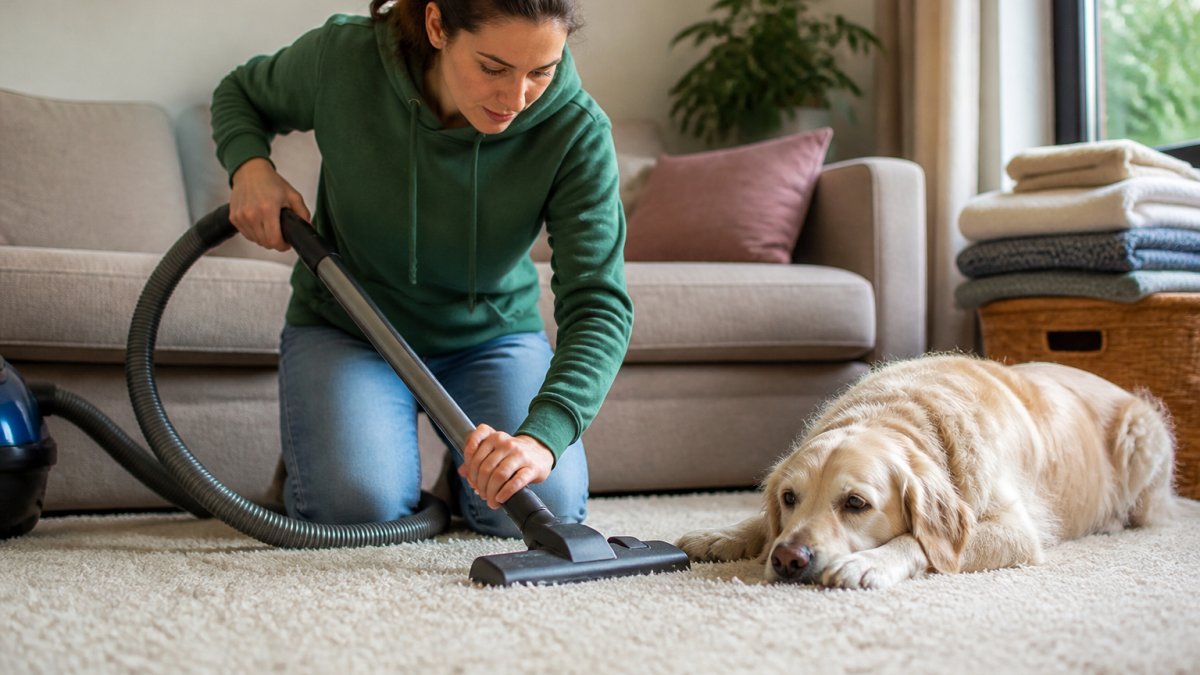
Getting rid of fleas on dogs and in the house is a two-front job: the dog and the environment. Skip either and the cycle restarts.
The Home-Control Routine That Breaks the Cycle
- Vacuum daily during an active infestation, then weekly once clear
- Wash bedding and soft toys weekly in hot water
- Comb your dog daily and drown collected fleas in soapy water
Flea and Tick Prevention for Dogs: Monitoring After Treatment
Flea and tick prevention for dogs does not end when the fleas disappear. Ticks attach for days before they are visible, so check under the collar, between toes, and around the ears after every walk in tall grass. A 2026 report found that some common flea-and-tick medications may pose environmental risks to wild insects (Phys.org's 2026 report on pet flea treatment risks), which is one reason many owners are rethinking long-term chemical exposure.
What to Do After a Suspected Adverse Reaction
A suspected reaction is a sequence, not a single decision. Work through these steps in order, and do not skip ahead to trying a different product.
Step 1: Stop the Exposure
Stop using the product immediately. If it was a topical, bathe the dog with mild soap and lukewarm water, not hot, and rinse thoroughly, because heat can increase absorption of some actives. If it was an oral product, remove it from the dog's reach and do not give another dose. If the product was applied to bedding or carpet, remove the dog from that room and ventilate it.
Step 2: Recognize What Is Urgent
Call your veterinarian or an emergency clinic right away if you see any of the following: tremors, muscle twitching, seizures, difficulty breathing, excessive drooling, vomiting, weakness or collapse, disorientation, or widespread hives.
Milder signs, mild lethargy, a small area of redness, or a single episode of soft stool, still warrant a call to your vet, but they are less likely to be emergencies.
Step 3: Contact the Right Resource
The EPA advises contacting a veterinarian or the National Pesticide Information Center for guidance on pesticide-related pet exposures (EPA's advice for pet owners with pesticide concerns). Your vet knows your dog's history; the poison-control resource can help identify the active ingredient and expected effects. Have both the product label and the packaging in hand when you call.
Step 4: Document the Exposure
Write down the product name, active ingredient and concentration, the amount applied, the time of application, the time symptoms started, and every symptom you observed. Note your dog's weight and any medications it takes. This record is what your vet needs to treat the dog and what you need if you later report the product or seek a refund.
Step 5: Do Not Stack Products
Do not apply a second product to "fix" the first reaction. Combining actives, even botanical ones, can compound the exposure and make it harder for your vet to identify the cause.
Watch out: some reactions are delayed. A dog can seem fine for hours after application and then develop signs, so keep the dog under closer observation for at least 24 to 48 hours after any new product, and longer for puppies, seniors, and dogs with health conditions.
Step 6: Review Before You Retry
Once your dog is stable, review the label with your vet. Ask whether the reaction was likely contact irritation, an ingredient sensitivity, or a dose issue, and whether the same active ingredient should be avoided in the future. Record the answer in the same log you use for applications, so the next decision is informed rather than repeated.
Frequently Asked Questions
What is the safest way to get rid of fleas on a dog?
Start with a physical check: comb daily with a fine-toothed flea comb and wash bedding weekly in hot water. Then add a non toxic flea treatment for dogs that carries clear label directions for species and life stage. The FDA advises following labeling exactly, and the EPA directs owners with concerns to a veterinarian or the National Pesticide Information Center. Treat the home at the same time so eggs and larvae do not restart the infestation.
Are essential oils safe for flea treatment on dogs?
Not all of them, and dose matters. Essential oils for fleas on dogs safety comes down to the oil, the concentration and the dog. A 2026 review of flea products sorted options by neurotoxic actives, organophosphates and pyrethroids, and some plant oils still irritate skin or cause breathing problems in sensitive dogs. Never use a concentrated oil neat on a dog, never apply a product labeled for humans, and keep puppies away from oils entirely. Ask a veterinarian before using any oil on a dog with allergies or a history of skin sensitivity.
How often should you treat a dog for fleas?
Follow the application frequency printed on the product label, since treatment duration varies from up to seven days for some sprays to up to 12 weeks for longer-acting options. Between applications, comb your dog daily and check the flea life cycle in your home: eggs hatch, larvae develop and adults emerge over weeks, so stopping early lets the population rebuild. A 2020 study of a plant-based supplement reported it limited flea numbers in dogs with moderate infestation under study conditions, but it was tested alongside a full routine, not as a one-off.
Can puppies use natural flea treatments?
Only products labeled for their age and weight range. Flea treatment for puppies is where label restrictions matter most: the FDA advises following species and life-stage limits, and many products are not approved for very young dogs. For puppies under 12 weeks, mechanical control is the safer first step, including daily combing and hot-water bedding washes. Ask a veterinarian before applying anything to a puppy, and never split an adult dose. If you see fleas on a young puppy, contact a vet rather than experimenting with home remedies.
