

24th Nov 2026
Organic Pest Control for Sensitive Skin: What Works
Last Updated: November 1, 2026
Quick Summary
Organic pest control for sensitive skin works best when you match the product to the setting: skin-safe botanical repellents for your body, and neem, azadirachtin or Bt products applied with gloves for home and garden. Patch test every new product on your inner forearm for 24 hours before full use, and avoid alcohol-heavy, fragrance-heavy and concentrated pyrethrin formulas.
- Natural and organic do not automatically mean safe for your skin, so read the full ingredient list.
- A 2020 comparison of organic insecticide ingredients reported pest-infestation reductions ranging from 46.1% to 73.9%.
- Pyrethrin is effective but one of the more irritating options for reactive skin, especially in concentrated formulas.
- Natural products work best as part of integrated pest management alongside sanitation, cultural practices and mechanical control.
- Enzyme products for lice, bed bugs and fleas need contact time and repeat applications, not a single spray.
Table of Contents
- Why Organic Pest Control Needs a Different Approach for Sensitive Skin
- Natural Bug Repellent Ingredients and What Each One Does
- Choosing a Natural Insect Repellent for Sensitive Skin
- Non-Toxic Pest Control That Still Reduces Infestations
- Natural Pest Control for the Home: Lice, Bed Bugs and Fleas
- Patch Testing and Irritation Triggers to Watch For
- Matching a Natural Pest Control Kit to Your Household
- Frequently Asked Questions
Why Organic Pest Control Needs a Different Approach for Sensitive Skin
If your skin stings, itches or breaks out after every bug spray you try, you are not imagining it. University of Florida IFAS research on natural pest control products notes that contact with skin or eyes can be irritating for some products, even ones labeled natural.
Here is the uncomfortable truth most guides skip: "natural" and "organic" do not mean "safe for your skin." At Natural Ginesis, we build non-toxic, biodegradable pest products for the body, home and pets, so we spend a lot of time on this gap.
The stakes are real. More people are reaching for DIY and natural options than ever. Fewer know how to pick one their skin can tolerate.
Personal Repellents vs. Home, Lawn and Garden Control
Personal insect repellents go on skin. They need to repel mosquitoes, gnats and ticks for a set number of hours, then be reapplied. Home, lawn and garden pest control goes on surfaces, soil or plants.
Why does the split matter for sensitive skin? Because a product designed for a garden bed may contain a higher concentration of active ingredients than your skin can handle.
Quick rule of thumb:
- On your body: skin-safe repellent only
- On your lawn: outdoor pest products, applied with gloves
- In your home: home pest control, kept off skin and out of reach of pets and kids
Watch out: spraying a garden product on your skin because it says "organic" is how irritation starts.
Natural Bug Repellent Ingredients and What Each One Does
Natural bug repellent ingredients fall into two groups: plant-based actives that kill or repel pests, and carrier or support ingredients that make a formula usable on skin. Knowing which is which tells you what a product can and cannot do, and for sensitive skin it tells you which ingredient is most likely to cause the sting.
The main plant-based actives:
- Neem oil: disrupts feeding and growth in many insects; useful in garden and home settings, but heavy and greasy on skin and best kept off the face
- Pyrethrin: a plant-derived insecticide; effective but a known irritant for some people, especially in concentrated or alcohol-based formulas
- Azadirachtin: the active compound in neem; interferes with insect development and is usually gentler in diluted garden and home formulas
Then there are the non-plant options people ask about: diatomaceous earth for home and garden pests, soap solution for soft-bodied insects, and Bacillus thuringiensis for certain larvae.
Plant-Based Actives: Neem, Pyrethrin and Azadirachtin
A 2020 comparison of common organic insecticide ingredients, indexed by the PubMed Central study on organic insecticide efficacy, reported pest-infestation reductions of 73.9%, 61.7%, 48.6% and 46.1% across the comparisons.
What that range tells you: plant-based actives work, but not equally, and not instantly. Expect to reapply. Expect slower knockdown than a synthetic.
For sensitive skin, the ingredient list matters more than the headline. Pyrethrin is effective and also one of the more irritating options for reactive skin.
Protection Duration: What to Expect from Each Ingredient
Protection duration varies by ingredient, concentration, sweat, and the pest you are avoiding, and it decides whether a natural repellent actually works on a hike.
- Pyrethrin-based products: longer knockdown and repellency, but the irritation risk is higher, so patch test first and avoid broken skin
- Diatomaceous earth and Bt: not skin repellents at all; they work on surfaces, soil, and larvae, and belong in the home or garden category
For backpacking or long outdoor exposure, plan to carry the bottle and top up.
Matching the Ingredient to the Pest and the Setting
The same ingredient can be right for one job and wrong for another. A short chooser:
- Mosquitoes and gnats outdoors: skin-safe botanical repellent with essential oils or a neem-based skin formula, reapplied often; keep it off the face and out of the eyes
- Ticks outdoors: botanical repellents offer shorter protection windows, so reapply and check skin after exposure; treat clothing and gear separately from skin
- Lawn and garden pests: neem, azadirachtin, or Bt applied with gloves; never rub a garden product into your arm
That split is the part competitors miss. Online results mix skin repellents with lawn treatments, and readers end up applying the wrong product to the wrong surface. Match the ingredient to the setting first, then to your skin sensitivity.
Choosing a Natural Insect Repellent for Sensitive Skin
Start with the label, not the marketing. A natural insect repellent for sensitive skin should list every active ingredient, state its intended use, and avoid vague claims like "chemical-free" when the product clearly contains plant compounds.
Use this checklist before you buy:
- Every active ingredient is named, with a percentage
- The label says "for skin" if you plan to wear it
- No alcohol-heavy or fragrance-heavy formula if your skin reacts easily
Non-Toxic Pest Control That Still Reduces Infestations
Non-toxic pest control works best as a system, not a single spray. UF/IFAS guidance on natural products for landscape and garden pests makes the point plainly: natural products are most effective as part of integrated pest management, alongside sanitation, good cultural practices and mechanical control.
In plain terms, that means:
- Sanitation: clear food scraps, standing water and clutter where pests shelter
- Cultural practices: healthy soil, proper spacing, right watering
- Mechanical control: traps, screens, vacuuming, washing bedding hot
The Organic Center's research on organic management and plant resistance adds another layer: organic management can promote natural pest control by altering how plants resist insects. Healthy plants host fewer pests. Fewer pests means less product on your skin and in your home.
For sensitive-skin households, that order matters. Reduce the pest pressure first, then use the gentlest product that finishes the job.
Natural Pest Control for the Home: Lice, Bed Bugs and Fleas
Indoor pests are where sensitive skin suffers most, because treatment happens on the body, on bedding and on pets.
What to look for in a home kit:
- Lice: a treatment that works on hair and scalp without harsh solvents, plus a comb and a bedding wash step
- Bed bugs: a multi-step approach covering mattress, seams, baseboards and laundry
- Fleas: pet-safe treatment plus thorough vacuuming and washing of pet bedding
This is the area we know best. Maintaining this gentle approach to pest management often complements a broader routine centered on organic skincare products that prioritize skin barrier health.
One honest caveat: enzyme products need contact time and repeat applications to break a full infestation cycle. They are not a one-spray fix, and no honest natural product is.
Safety for Children, Pregnancy, Pets and Sensitive Households
Most guides mention sensitive skin and then say nothing about who should avoid which ingredient. That gap matters, because the same botanical that is fine on an adult forearm can be a problem on a child's scalp or around a cat.
A practical safety pattern:
- Children: patch test on the inner forearm first, keep essential-oil products away from the face and hands, and avoid concentrated pyrethrin around infants; enzyme-based and mechanical approaches are usually the gentler starting point
- Pregnancy: treat the home with mechanical and sanitation steps first, use the least concentrated product that finishes the job, and check with a clinician before applying any botanical repellent over large areas
- Pets: cats and dogs metabolize essential oils differently, so keep concentrated oils, diffusers and treated bedding out of reach; wash pet bedding hot and vacuum thoroughly rather than spraying the animal directly unless the label says pet-safe
Evidence and Realistic Expectations
Natural home pest control works best as a system, not a single spray. UF/IFAS guidance on natural products for landscape and garden pests makes the point plainly: natural products are most effective as part of integrated pest management, alongside sanitation, good cultural practices and mechanical control.
In plain terms, that means:
- Sanitation: clear food scraps, standing water and clutter where pests shelter
- Cultural practices: healthy soil, proper spacing, right watering
- Mechanical control: traps, screens, vacuuming, washing bedding hot
For lice, bed bugs and fleas, expect to repeat the cycle, and follow the label for application timing.
For sensitive-skin households, reduce the pest pressure first, then use the gentlest product that finishes the job, and patch test anything that touches skin before full use.
Patch Testing and Irritation Triggers to Watch For
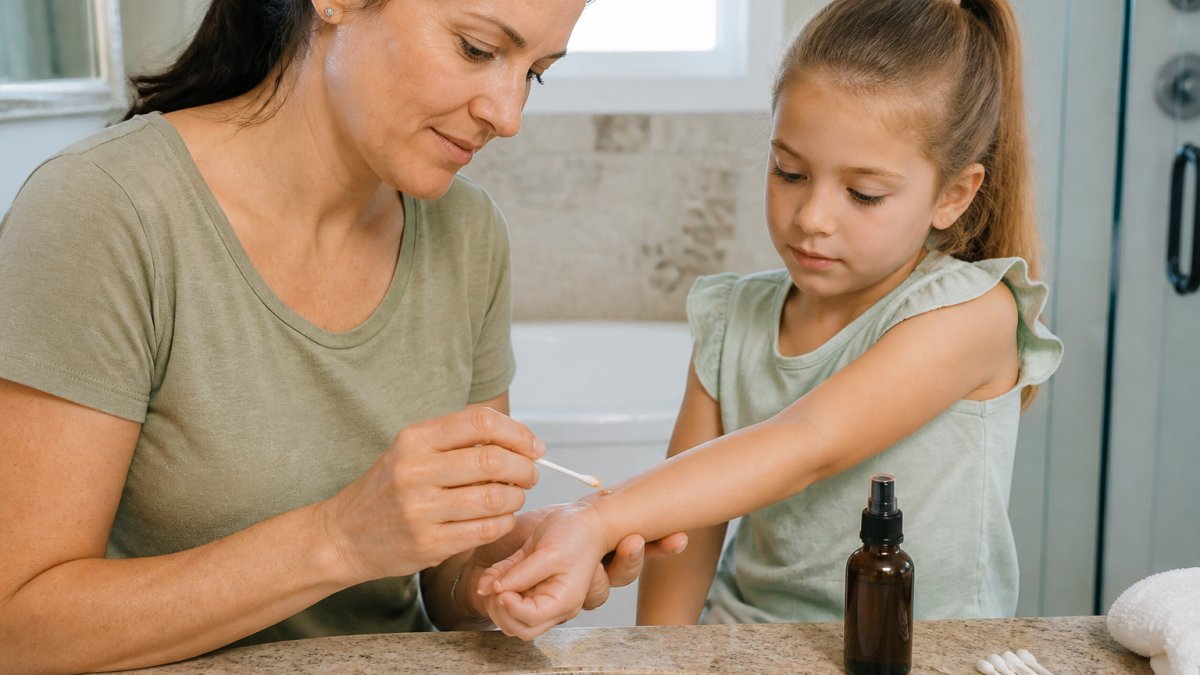
Patch testing is the single most useful habit for anyone with reactive skin, and almost nobody does it. It takes five minutes and prevents a week of misery.
How to patch test a natural repellent or pest product:
- Apply a small drop to the inner forearm
- Wait 24 hours without washing the spot
- Check for redness, swelling, itching or burning
- If clear, test a second spot for 48 hours before full use
- Stop immediately at any reaction and rinse with cool water
Common irritation triggers to watch for on labels:
- Pyrethrin and other plant-derived insecticides in concentrated form
- Alcohol as a solvent, which stings broken skin
- Fragrance and essential oils at high concentration
Watch out: applying a new product to a rash, an open scratch or sunburned skin skips the test entirely and usually makes things worse.
Matching a Natural Pest Control Kit to Your Household
The right kit depends on three things: the pest, the setting, and how sensitive the skin in your home is. Use this table to match your situation to the right approach.
| Your situation | Best approach | Watch for |
|---|---|---|
| Child with lice, sensitive scalp | Enzyme-based lice kit plus hot bedding wash | Harsh solvents, repeated chemical shampoo |
| Bed bugs in bedrooms | Multi-step home kit, mattress and seam treatment | Skipping laundry and baseboards |
| Dog or cat with fleas | Pet-safe flea treatment plus vacuuming | Treating the pet but not the bedding |
| Mosquitoes and gnats outdoors | Skin-safe botanical repellent, reapplied often | Alcohol-heavy DEET-free sprays |
| Lawn or garden pests | Neem or Bt products with gloves, plus sanitation | Spraying garden products on skin |
Best for: households treating body, home and pet pests with one non-toxic system. Skip if: you have a severe infestation that needs a licensed professional assessment first.
A kit that covers body, home and pets in one consistent, biodegradable system saves you from juggling five products with five different ingredient lists. That consistency is what makes sensitive-skin management possible.
Pest problems hit hardest when you are already managing sensitive skin, and the last thing you need is a product that trades one irritation for another.
Frequently Asked Questions
What is the best natural insect repellent for sensitive skin?
There is no single best option, because reactions vary by person. Look for short ingredient lists built on plant-based actives such as neem oil or pyrethrin, and check that the label says DEET-free and non-toxic. A 2020 comparison of organic insecticide ingredients reported infestation reductions between 46.1% and 73.9%, so effectiveness varies by active ingredient. Patch test on your inner forearm for 24 hours before wider use, and reapply according to the label rather than guessing at protection duration.
Does organic pest control really work?
It can, but the results depend on the ingredient and how you use it. Treat organic pest control as one layer of a plan, not a standalone fix.
Which natural pest-repellent ingredients may irritate sensitive skin?
Essential oils are the usual culprit, along with any product that stays on the skin for hours. If your scalp or skin reacts easily, start with a water-based mixture rather than an oil-heavy one, keep it off broken skin, and stop use at the first sign of redness or stinging.
Is organic pest control safe to use around pets and children?
Safe enough to consider, but not automatically safe. Keep children and pets out of treated areas until the product has dried, follow the label's dilution and reapplication instructions, and store products out of reach. For pets with fleas, choose a product formulated for animals rather than adapting a household or body product.
