

20th Nov 2026
7 Safe Home Treatments for Skin Parasites That Actually Work

Last Updated: November 19, 2026
Quick Summary
No home remedy reliably kills skin parasites on its own, so the safe approach is gentle supportive care such as cool compresses, colloidal oatmeal baths, and fragrance-free moisturizer alongside a confirmed diagnosis and prescribed treatment. Avoid undiluted essential oils, bleach, vinegar soaks, and hot water, which can burn or irritate skin.
- Cool compresses applied for 10 to 15 minutes calm itch-driven scratching.
- Children and pregnant women should avoid strong essential oils entirely.
- Treat everyone in the household on the same day to prevent reinfestation.
- Itch can persist for two to four weeks after successful scabies treatment.
- Dry washed items on the hottest setting for at least 20 minutes.
Table of Contents
- Parasite Under Skin Symptoms: What You're Actually Dealing With
- Home Remedies to Kill Skin Parasites: What Works and What's Risky
- How to Get Rid of Skin Parasites in Humans: A Step-by-Step Plan
- Parasite Infection Treatment: Prescription vs. Natural Approaches
- Preventing Reinfestation: Cleaning Your Home and Belongings
- Choosing a Non-Toxic Treatment for Your Family
- Frequently Asked Questions
Parasite Under Skin Symptoms: What You're Actually Dealing With
Most itchy rashes are not parasites. That distinction matters more than any home remedy you'll read about, because treating the wrong problem wastes weeks and can make irritated skin worse.
Parasite under skin symptoms usually include intense itching that worsens at night, a pimple-like rash, and sometimes thin burrow lines in the skin. Scabies mites cause this pattern.
The CDC's scabies treatment guidance notes that a healthcare professional can prescribe a cream or lotion that kills scabies mites.
Common Signs by Parasite Type
Different parasites leave different clues. Here's how to tell them apart:
- Scabies mites: night-time itching, rash between fingers, wrists, and waist
- Head lice: scalp itching, tiny eggs glued to hair shafts near the roots
- Body lice: itching along seams of clothing, often in crowded living conditions
- Cutaneous larva migrans: a winding, raised red line where larvae move under the skin
When Itching Isn't Parasites
Not every itch has a bug behind it. Eczema, dry skin, allergic reactions to detergent, and fungal infections all mimic parasite symptoms. Sensations of crawling or pinprick tingling can also occur without any infestation at all.
A common mistake is assuming that crawling sensation means parasites. It doesn't always. A doctor can confirm the diagnosis with a skin scraping or a close look at the affected area.
Home Remedies to Kill Skin Parasites: What Works and What's Risky
Honest answer: no home remedy reliably kills skin parasites on its own. Some ease itching and support skin comfort. Others carry real risk. The useful skill is sorting household measures into three buckets: supportive care that is safe alongside treatment, remedies with some evidence but not enough to replace medication, and substances that can harm skin. That sorting matters more than any single ingredient, because the same oil can be soothing on intact skin and corrosive on broken skin.
Supportive Measures That Are Safe Alongside Treatment
These do not kill parasites, but they reduce discomfort and skin damage while you wait for a diagnosis or complete a prescribed course:
- Cool compresses: a clean cloth wrung out in cool water, applied for 10 to 15 minutes, calms itch-driven scratching.
- Colloidal oatmeal baths: finely milled oatmeal suspended in lukewarm water temporarily reduces itch; it is not a treatment for the infestation.
- Fragrance-free moisturizer: dry, scratched skin cracks more easily and invites secondary bacterial infection, so barrier repair is genuine care.
- Short, cool showers and gentle cleansers: hot water and harsh soap worsen itch and strip the skin barrier.
- Keeping nails short and clean: this reduces skin damage from night-time scratching, which is when scabies itch is usually worst.
A common pattern is that families try a strong remedy first and gentle care last. Reversing that order lowers the risk of a chemical burn layered on top of an infestation.
Remedies With Some Evidence but Not Enough to Replace Treatment
Research into plant-based options is ongoing, and the honest framing is "promising, not proven." A 2025 study in Scientific Reports on geraniol from Apiaceae plants described essential oils from that plant family as promising for scabies treatment, but the study did not establish a proven home cure.
-
Neem oil: traditional use against mites; skin irritation is common, so patch-test first.
-
Clove oil: strong; can burn sensitive skin and should not be used undiluted.
-
Silicone-based dimeticone oils: a 2014 paper by H. Feldmeier and co-authors on dimeticones described these low-viscosity silicone oils as rapidly killing insects, which is why they appear in some lice products. Dimeticone is a physical mechanism, not a plant extract, and it is formulated for specific parasites; a lice product is not a scabies treatment.
Watch out: concentrated essential oils can cause allergic reactions or chemical burns, especially on broken skin.
Substances and Habits That Can Harm Skin
Some household remedies circulate widely and should be avoided regardless of how often they appear online:
- Undiluted essential oils, especially clove and oregano: risk of contact dermatitis and burns.
- Petroleum jelly or oil under occlusion on large areas: can trap heat and worsen irritation; never use occlusive layers on infants.
- Bleach baths or diluted bleach sprays on skin: not a parasite treatment and can cause chemical irritation.
- Vinegar soaks: may sting broken skin and do not penetrate burrows.
- Hot water or hot-air hair dryers aimed at the scalp: can burn skin and does not reliably kill nits.
- Scrubbing or picking at burrows and bites: opens the skin to bacterial infection.
Safety Guide for Children, Pregnancy, and Sensitive Skin
Children and pregnant women should avoid strong essential oils entirely. Some, like undiluted clove and tea tree oil, are not considered safe for infants.
For these groups, stick to gentle cleansing, cool compresses, and a call to a doctor. Prescription options exist that are studied for use in pregnancy and early childhood, and a clinician can advise on the safest route.
Why Symptom Relief Is Not Proof of Cure
Itch can persist for two to four weeks after successful scabies treatment because the allergic reaction to mite proteins outlasts the mites themselves. That means a calming oil that reduces itch tells you almost nothing about whether the parasite is gone. Judging success by comfort alone is how people stop treatment early and reinfest the household. The reliable check is clinical: a follow-up look at the skin, and repeat treatment only if advised.
How to Get Rid of Skin Parasites in Humans: A Step-by-Step Plan
Getting rid of skin parasites in humans takes a clear sequence: confirm the diagnosis, treat every affected person at once, and decontaminate the home. Skipping any step invites reinfestation.
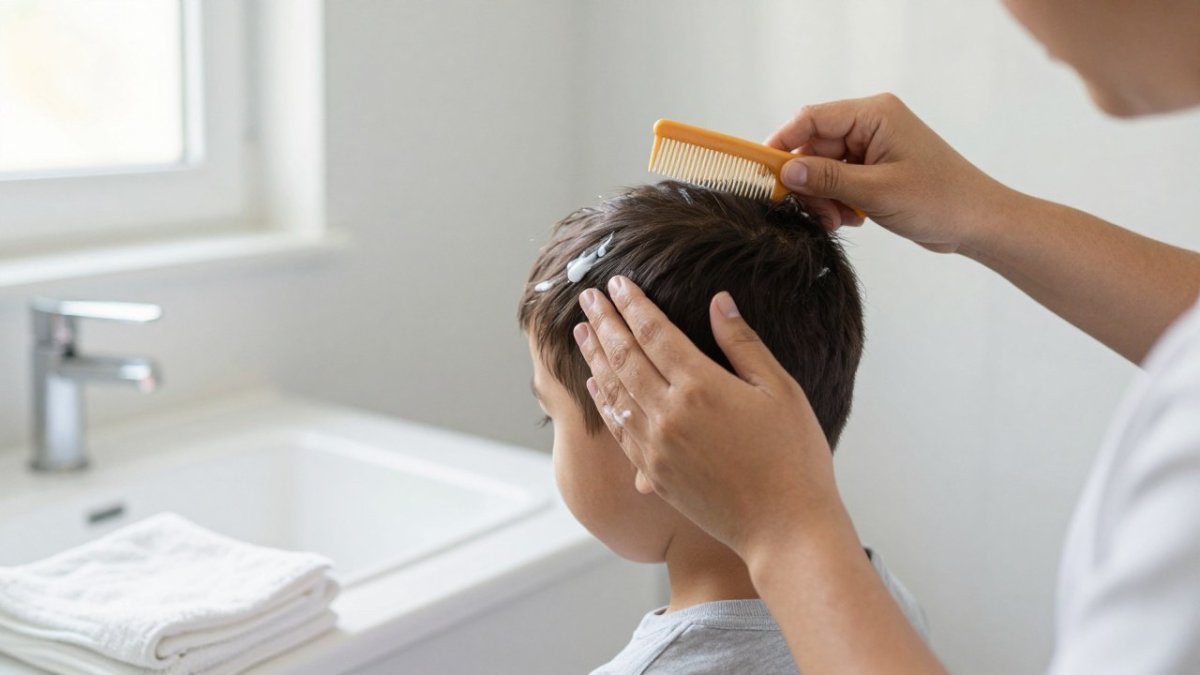
Follow these steps:
- Get a diagnosis. See a pharmacist or doctor to confirm what's causing the symptoms.
- Treat everyone in the household on the same day. Parasites spread through close contact, so partial treatment fails.
- Apply treatment exactly as directed. Leave creams or lotions on for the full recommended time.
- Comb out nits. Use a fine-tooth comb on wet, conditioned hair every few days.
- Wash bedding and clothing. Use hot water and dry on a high setting.
- Repeat treatment if advised. Some parasites need a second round after a week.
- Check again after two weeks. Confirm the infestation has cleared.
Parasite Infection Treatment: Prescription vs. Natural Approaches
Prescription treatment is the proven route for scabies and lice. Natural approaches work best as support: easing itch, calming irritated skin, and cleaning the home without harsh chemicals.
The World Health Organization's scabies fact sheet describes topical creams or oral medication as the standard treatment options. Natural products are not a substitute for that, and any guide claiming otherwise is overselling.
Here's the honest comparison:
| Approach | Best For | Limits |
|---|---|---|
| Prescription creams | Confirmed scabies, lice | Needs a clinician |
| Oral medication | Widespread or resistant cases | Prescription only |
| Dimeticone products | Lice on children | Not for scabies |
| Essential oils | Soothing itch | Not proven to kill mites |
| Enzyme cleaners | Home decontamination | Not a body treatment |
Preventing Reinfestation: Cleaning Your Home and Belongings
Reinfestation is the most common reason treatment fails. The WHO Regional Office for the Eastern Mediterranean guidance on scabies states that scabies management requires individual treatment and decontamination of household items. Both halves matter equally, but the cleaning advice needs to be parasite-specific, because lice, scabies mites, and fleas survive differently off the body.
What Actually Matters, by Parasite
- Head lice: they do not survive long off the scalp and do not jump; the priority is combing and treating the head, not fumigating the house.
- Body lice: they live in clothing seams, so laundering clothes and bedding in hot water and drying on high heat is the central measure, along with treating the person.
- Fleas: they can persist in carpets and pet bedding, so vacuuming and washing pet bedding matter more than for the other parasites.
A Practical Cleaning Checklist
- Wash all bedding, towels, and clothing in hot water
- Dry items on the hottest setting for at least 20 minutes
- Seal non-washable items (soft toys, pillows that cannot be washed) in a bag for about three days
- Vacuum mattresses, carpets, and upholstery, then empty the vacuum bag or canister outside
- Clean combs and brushes in hot water
- Treat all household members on the same day
- Wash pet bedding if fleas are involved
What You Do Not Need to Do
A common pattern is over-cleaning out of anxiety, which wastes money and exposes the household to unnecessary chemicals. You generally do not need to fumigate the home, treat carpets with insecticide for scabies, or discard mattresses. Scabies mites do not fly or jump, and they do not survive long in the environment. The exception is fleas, where environmental treatment can be justified. If a product claims to kill scabies mites on surfaces, ask whether the mites would already be dead by the time the product dries.
Timing and Coordination
Cleaning works only if it is synchronized with treatment. Treat everyone in the household on the same day, then clean, so that newly treated people are not immediately re-exposed. Repeat treatment if advised, usually about a week later for scabies, and check again after two weeks. A national scabies-control program in Pacific nations showed what full-scale treatment can achieve: according to a 2026 News-Medical report, more than 2.5 million ivermectin doses were provided, and scabies and impetigo decreased across all age groups.
Choosing a Non-Toxic Treatment for Your Family
For families who want to avoid harsh pesticides, the sensible path is a combined approach: proven medical treatment where it's needed, plus non-toxic products for the home and for ongoing comfort.
Our enzyme-based cleaners and pest control products are non-toxic, bio-degradable, and safe for body, home, and pets.
Skin parasites are stressful, and the sheer volume of conflicting advice makes it worse. Start with a diagnosis, treat everyone at once, and clean thoroughly.
Frequently Asked Questions
How do I get rid of parasites in my skin?
Getting rid of skin parasites usually starts with a correct diagnosis. For scabies, prescription scabicides are the standard; for lice, insecticidal shampoos or dimeticone-based products are common. Home care focuses on relieving itching and preventing reinfestation by washing bedding and clothing in hot water. If symptoms persist beyond a few days or worsen, see a doctor for parasite infection treatment.
Can skin parasites be treated safely at home?
Some skin parasites can be managed at home with over-the-counter products, but safety depends on the parasite and the person. Lice and scabies often require medication, and home remedies to kill skin parasites are not proven to be effective. For sensitive skin, children, or pregnancy, check with a healthcare professional before trying essential oils or other natural remedies. Always follow label instructions and avoid harsh scrubbing or shaving, which can irritate skin and worsen symptoms.
When should I see a doctor for a suspected skin parasite?
See a doctor if you have intense itching that disrupts sleep, a spreading rash, signs of infection like redness or pus, or if over-the-counter treatments fail. Also seek medical advice if you suspect scabies, creeping eruption, or if multiple household members are affected. A doctor can confirm the diagnosis and prescribe appropriate parasite infection treatment, which is often faster and safer than guessing with home remedies.
Can itching or crawling sensations be caused by something other than parasites?
Yes. Itching and crawling sensations can come from dry skin, allergies, eczema, or nerve conditions. If you feel crawling but see no rash or insects, or if symptoms persist without improvement, a medical evaluation can rule out non-parasitic causes. Do not assume parasites without evidence; unnecessary treatments can irritate skin and delay proper care.
