

23rd Nov 2026
Safe Organic Bed Bug Spray: What Actually Works
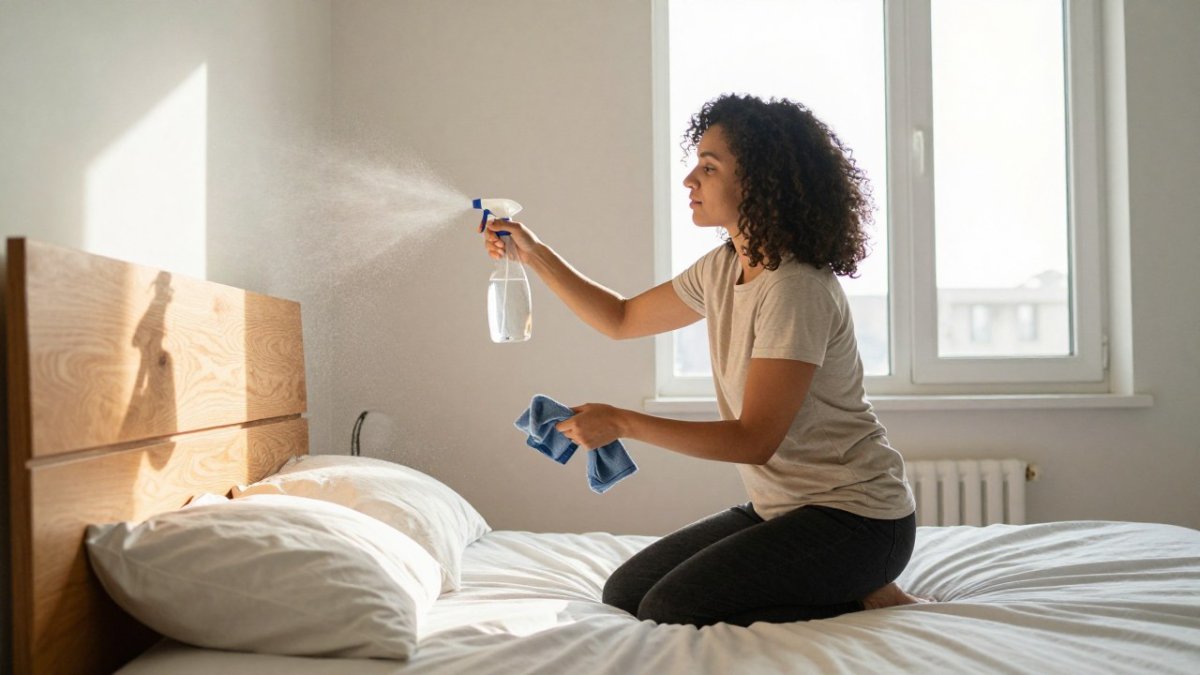
Last Updated: November 22, 2026
Quick Summary
A safe organic bed bug spray is a plant-based or enzyme-based insecticide that kills nymphs on contact but rarely clears a whole infestation alone. In testing of 11 products, only EcoRaider and Bed Bug Patrol killed more than 90% of nymphs when sprayed directly, and EcoRaider killed 87% of eggs while other non-synthetic products had no noticeable effect on eggs. Use any organic bed bug spray as one tool in a plan that includes laundering, vacuuming, a retreat in about two weeks, and monitoring.
- Only EcoRaider and Bed Bug Patrol killed more than 90% of bed bug nymphs when sprayed directly in a Rutgers comparison of 11 products.
- EcoRaider killed 87% of bed bug eggs, while the other non-synthetic products tested had no noticeable effect on eggs.
- Wash bedding on the hottest setting and tumble dry on high heat for at least 30 minutes to kill all life stages, including eggs.
- Plan a second spray application in about two weeks to catch nymphs that hatched after the first pass.
- Call a licensed pest professional if catches persist after two full treatment cycles.
Table of Contents
- What Safe Organic Bed Bug Spray Can and Cannot Do
- How to Get Rid of Bed Bugs Naturally, Step by Step
- Choosing a Safe Organic Bed Bug Spray Safe for Pets
- Using a Safe Organic Bed Bug Spray for Mattress and Bedding
- What Safe Organic Bed Bug Spray Reviews Should Tell You
- Verifying the Infestation and Monitoring Results
- Choosing the Right Natural Bed Bug Spray for Your Home
- Frequently Asked Questions
What Safe Organic Bed Bug Spray Can and Cannot Do
A safe organic bed bug spray kills nymphs on contact but rarely clears a whole infestation alone. Sprays are one tool in a plan, not the plan itself.
A safe organic bed bug spray is a plant-based or enzyme-based insecticide that targets bed bugs without harsh synthetic chemicals, but its real-world performance varies enormously by product and by life stage.
Here is what most buying guides get wrong. They treat "natural" as a synonym for "weak" or for "guaranteed safe." Neither holds up. A Rutgers Cooperative Extension comparison of bed bug control methods tested 11 products and found only two, EcoRaider and Bed Bug Patrol, killed more than 90% of bed bug nymphs when sprayed directly. The other nine fell short.
So efficacy depends on the specific product.
What the Studies Show About Natural Sprays
Direct-spray kill rates tell only part of the story. Eggs are the harder test.
In the same body of research reported by Entomology Today's coverage of natural bed bug pesticide testing, EcoRaider killed 87% of bed bug eggs while the other non-synthetic products tested had no noticeable effect on eggs at all. A separate study of BBT-2000, a cedar-and-soybean-oil formula, killed 43% of resistant bed bugs on pre-treated surfaces.
The lesson for shoppers: read the label for what a product claims against nymphs, adults, and eggs separately. A spray that handles adults may do nothing to the next generation.
Where Sprays Fit in a Full Treatment Plan
Sprays handle surfaces. They do not reach every harborage.
Bed bugs hide in cracks and crevices, behind baseboards, inside mattress seams, and in furniture joints. A thorough plan combines:
- Contact spray for visible bugs and treated surfaces
- Heat treatment or professional steam for deep harborages
- Laundering of bedding and fabrics on high heat
- Follow-up treatment at roughly two-week intervals to catch newly hatched nymphs
- Monitoring to confirm the infestation is actually gone
Skip the follow-up and you will likely see bugs return. Eggs survive many contact sprays, and nymphs hatch days later.
How to Get Rid of Bed Bugs Naturally, Step by Step
Natural bed bug control works when you treat it as a sequence, not a single spray session.
Step 1: Confirm the infestation before you buy anything. Look for rust-colored stains, shed skins, and live bugs along mattress seams, box spring edges, and the fold of the bed skirt.
Step 2: Strip and launder everything washable. Wash bedding, pillowcases, curtains, and machine-washable clothing on the hottest setting the fabric allows, then tumble dry on high heat for at least 30 minutes.
Step 3: Vacuum thoroughly and dispose of the bag. Run a vacuum with a crevice tool along seams, baseboards, furniture joints, and the perimeter of the room.
Step 4: Apply your organic bed bug spray to labeled surfaces only. Read the label before you spray.
Step 5: Retreat on schedule, not on impulse. Plan a second application in about two weeks to catch nymphs that hatched after the first pass. Eggs survive many contact sprays, so a single application rarely clears an infestation. Follow the label's retreat interval; applying more often than directed adds exposure without adding control.
Step 6: Monitor for at least four weeks. Check interceptors weekly and record catches. Fewer catches over successive weeks signals progress. New catches after a retreat date mean the plan needs another pass or a professional.
| Step | What You Do | Timing |
|---|---|---|
| Confirm | Inspect seams, baseboards, furniture; set interceptors | Day 1, check at 1 week |
| Launder | Hot wash and hot dry all fabrics | Day 1 |
| Vacuum | Crevice tool on harborages; seal and discard bag | Day 1 |
| Spray | Label-compliant application to permitted surfaces | Day 1 |
| Retreat | Second application per label interval | ~2 weeks later |
| Monitor | Check interceptors weekly and record | 4+ weeks |
Watch out: spraying before you confirm the infestation, or spraying surfaces the label does not permit, is the most common way homeowners waste product and prolong the problem.
Choosing a Safe Organic Bed Bug Spray Safe for Pets
A spray that is safe around pets is one whose label permits use in areas your animals can reach, applied exactly as directed. "Natural" alone does not make a product pet-safe.
The U.S. Environmental Protection Agency's guidance on safe bed bug treatment is clear on two points. Registered pesticides are evaluated for effectiveness and for whether they can be used without unreasonable adverse effects. The EPA also warns it has not registered any pesticide or repellent for use on human skin against bed bugs, and the same caution applies to your pets.
Practical rules for pet owners:
- Remove pets, food bowls, and water dishes from the room before spraying
- Let treated surfaces dry fully before animals return
- Never apply a home spray directly to an animal
- Check the label for the specific pests and surfaces it covers
If your pet has fleas as well as a bed bug concern, treat those as separate problems with products labeled for each.
Using a Safe Organic Bed Bug Spray for Mattress and Bedding
A mattress spray is only appropriate if the product label specifically permits mattress use. Many do not.
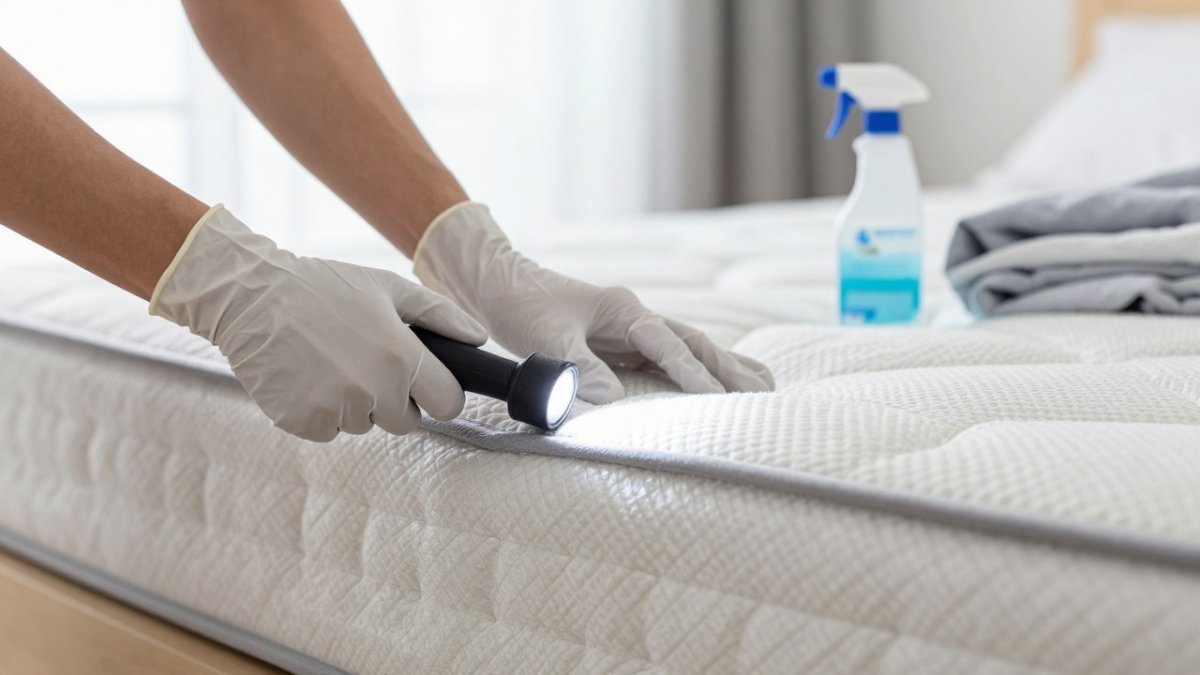
The Alaska Department of Environmental Conservation advises against applying insecticide to mattresses or bedding unless the label specifically says it can be used there. That single rule prevents most mattress-treatment mistakes.
When a product does allow it, apply a light, even mist to seams and tufts rather than soaking the surface, and let it dry completely before replacing sheets. For most households, laundering bedding on high heat does more against mattress-adjacent bugs than spraying the fabric itself.
Watch out: soaking a mattress with any spray, natural or not, can leave residue and moisture that damages the padding and gives you no extra protection.
What Safe Organic Bed Bug Spray Reviews Should Tell You
Most buying guides treat reviews as proof of efficacy. They are not. A review is one household's experience with one product on one surface, and it rarely reports the variables that determine whether a spray works: life stage targeted, surface treated, whether laundering and vacuuming were done, and whether a follow-up application happened.
What a useful review includes:
- The life stages the reviewer actually saw (nymphs, adults, or eggs) and whether they inspected after treatment
- The surfaces treated and whether the label permitted them
- Whether the reviewer combined spray with laundering, vacuuming, encasements, and a retreat
- Results reported at two weeks or later, not just on day one
- Whether catches in interceptors declined over successive weeks
What a review cannot tell you:
- Whether the product kills eggs. Most contact sprays do not, and a reviewer who only saw adults disappear has not tested the next generation.
- Whether resistance affected the outcome. Bed bug populations vary in susceptibility, so a product that worked in one home may underperform in another.
- Whether the label was followed. Off-label use can produce either false confidence or false failure.
A more reliable approach is to pair reviews with published efficacy data and the product label. The label tells you what the manufacturer claims and permits; published testing tells you how the active ingredient performed under controlled conditions; reviews tell you how the product behaved in real homes. None of the three is sufficient alone.
Watch out: reviews that promise instant eradication of a whole infestation from a single spray should be treated as marketing, not evidence. Bed bugs require follow-up because eggs survive contact sprays, and any product presented as a one-and-done solution is misrepresenting how bed bug control works.
Verifying the Infestation and Monitoring Results
You have not finished until monitoring proves it. This is the step most DIY guides skip.
Place interceptor cups under each bed leg and check them weekly. Fewer catches over successive weeks signals progress. New catches after a retreat date mean the plan needs another pass, or a professional.
Purdue University research on essential oil compounds toxic to bed bugs identified carvacrol, thymol, citronellic acid, and eugenol as the oil compounds most toxic to bed bugs. That finding helps you read ingredient lists, but it does not replace monitoring. Only your own weekly checks tell you whether the infestation is actually declining.
If catches persist after two full treatment cycles, call a licensed pest professional. Resistance and treatment failure are real, and a pro has tools a home spray cannot match.
Choosing the Right Natural Bed Bug Spray for Your Home
The right organic bed bug spray matches your surfaces, your household, and your willingness to follow a schedule. Match on those three and you will choose well.
Natural Ginesis offers non-toxic, bio-degradable cleaning and pest control products for body, home, and pets. Used as part of a plan, pair any spray with laundering, vacuuming, and a follow-up application, because that is what actually clears an infestation.
What to check before you buy:
- Label surfaces: does it list mattresses, fabrics, or only cracks and crevices?
- Life stages covered: does it claim action against eggs, or only adults?
- Household safety: is it appropriate for homes with children and pets?
- Retreat guidance: does the label tell you when to reapply?
Bed bugs do not clear up with one bottle and one afternoon. They clear up with a plan you actually finish. If you want a non-toxic, enzyme-based spray that fits safely into that plan for your home, your bedding, and your pets, start with Natural Ginesis. Our formulas are pesticide-free and bio-degradable, designed to eliminate bed bugs, lice, and fleas without harsh chemicals. Get started with Natural Ginesis and build a treatment routine your whole household can live with safely.
Frequently Asked Questions
Do natural bed bug sprays kill bed bug eggs?
Most do not, and that is the biggest gap in natural products. In a comparison of 11 non-synthetic pesticides, only EcoRaider had a noticeable effect on eggs, killing 87%, while the other tested products showed no noticeable effect. Plan on repeat applications timed to catch newly hatched nymphs, plus laundering and heat where fabrics allow, rather than expecting one spray to end the infestation.
Are organic bed bug sprays safe to use around pets?
Safety depends on the label, not the word natural. Keep pets out of the treated room until the product label says it is safe to return, cover or remove food and water bowls, and store bottles out of reach. Never apply a spray to an animal unless its label permits that use. If you need pet-safe flea or mite control, use a product made for that purpose instead of a bed bug spray.
Can you spray organic bed bug treatment directly on a mattress?
Only if the product label specifically permits mattress use. The Alaska Department of Environmental Conservation advises against applying insecticide to mattresses or bedding unless the label says it can be used there. Check the label before you spray, focus on seams, tufts and edge piping where bugs hide, and let the surface dry fully before putting bedding back on.
What kills bed bugs fast naturally?
Washing and drying bedding on the hottest setting the fabric allows, and steaming seams and crevices, can kill bugs on contact. In Rutgers testing, only two of 11 natural products exceeded 90% mortality when sprayed directly on nymphs. Use heat first, then spray harborages, and plan a follow-up application in about two weeks.
