

21st Nov 2026
Wondercide vs Greenbug for Fleas: Which Works Better?
Last Updated: November 12, 2026
Quick Summary
There is no peer-reviewed field study directly comparing wondercide vs greenbug for fleas, and neither brand publishes independent efficacy data, so neither can be called definitively better. Both rely on cedar oil and other botanical oils, and both are labeled for dogs, cats, indoor and outdoor use. Choose based on label transparency, reapplication interval, and cost per treated square foot rather than marketing claims.
- A flea population is roughly one-fifth adults and four-fifths eggs, larvae, and pupae hidden in carpet and bedding.
- Never use a dog-labeled flea product on a cat unless the label explicitly covers cats.
- Spray against the grain so the product reaches skin, and avoid the face entirely.
- Compare cost per treated square foot per month, not bottle price, and do the dilution math for concentrates.
- Treat the yard too, since skipping it lets fleas re-enter the home within days.
Table of Contents
- Wondercide vs Greenbug for Fleas: The Core Differences
- How Long Flea Treatments Take to Work
- Wondercide vs Greenbug for Fleas on Dogs
- Wondercide vs Greenbug for Fleas on Cats
- What Wondercide Flea and Tick Spray Reviews Reveal
- Application, Coverage, and Cost Per Treatment
- Building a Whole-Home Flea Plan with Natural Ginesis
- Frequently Asked Questions
Wondercide vs Greenbug for Fleas: The Core Differences
Choosing between Wondercide and Greenbug for fleas comes down to how much you value label transparency, product range, and documented evidence over marketing claims. At Natural Ginesis, we formulate our own enzyme-based pest products, so we read flea spray labels the way an editor reads a manuscript: looking for what's actually there and what's been left out.
Here is the honest starting point. The supplied research does not include a peer-reviewed field study comparing Wondercide and Greenbug against each other, and it does not include independent efficacy data for either brand. Check each product's current label and the company's own published information before deciding, and be cautious about any efficacy claim that does not state its test design.
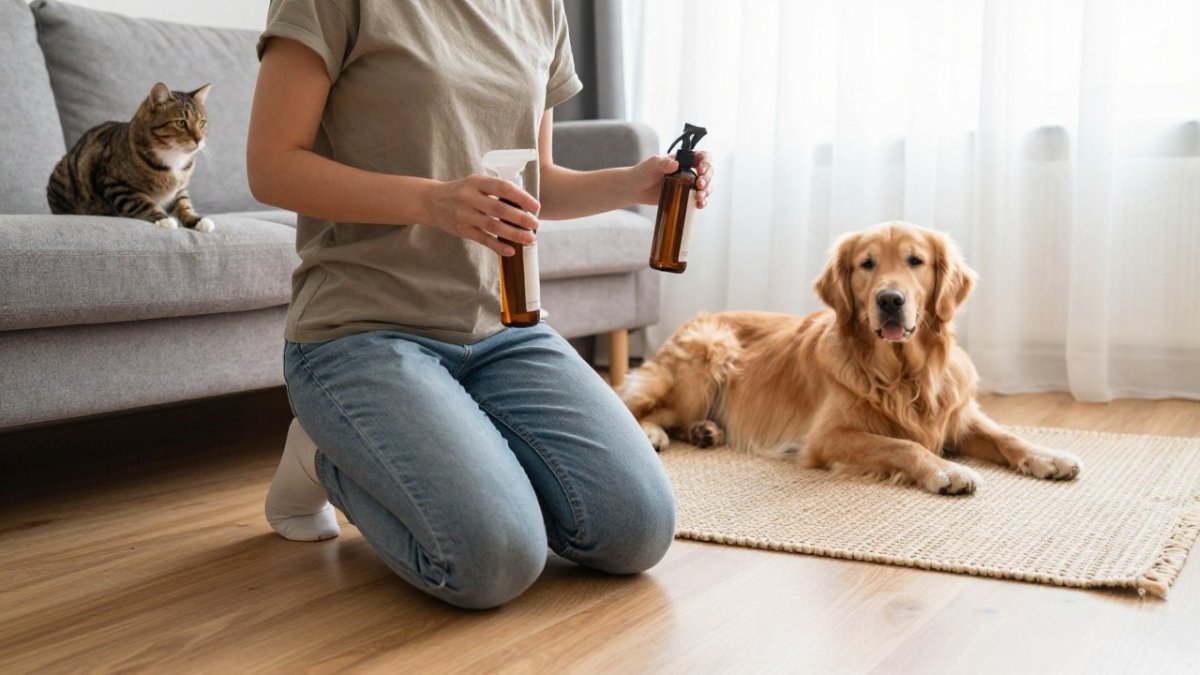
Side-by-Side Comparison Table
| Feature | Wondercide | Greenbug |
|---|---|---|
| Primary active ingredient | Cedar oil (plant-based) | Cedar oil plus other botanical oils |
| Flea life stages targeted | Adults, eggs, larvae (company claim) | Adults and eggs (per label directions) |
| Published study details | Not disclosed on site | Not publicly detailed |
| Pet use | Dogs and cats, per label | Dogs and cats, per label |
| Indoor and outdoor use | Yes, both | Yes, both |
| Third-party review volume | Mixed, small sample | Limited public data |
| Price transparency | Listed on brand site | Listed on brand site |
What most comparison guides miss is that both products sit in the same regulatory category. The EPA's regulation of flea and tick products explains that human-health and ecological-risk assessments are part of product registration. That does not tell you which product works better on your carpet, but it does tell you that neither brand's marketing copy substitutes for reading the label.
How Their Active Ingredients Differ
If you have a pet with sensitive skin, patch-test first. A common mistake is spraying a full coat on day one and assuming a reaction would have shown up in minutes. Botanical oils can cause contact irritation that appears hours later, so test a small area on the back and wait a day.
How Long Flea Treatments Take to Work
Expect flea control to take a full flea life cycle rather than a single application. Consistent treatment over several weeks is the realistic expectation.
Here's why. A flea population is roughly one-fifth adults and four-fifths eggs, larvae, and pupae hidden in carpet, bedding, and cracks in flooring. Pupae in carpet fibers and bedding hatch on their own schedule, often over one to several weeks depending on temperature and humidity, which is why follow-up treatment matters.
So a realistic timeline looks like this:
The CDC's flea control guidance makes the same point in plain terms: flea control is a household and environmental job, not a single-spray job. Anyone promising instant total elimination is selling you a fantasy.
Wondercide vs Greenbug for Fleas on Dogs
Flea sprays for dogs are generally applied directly to the coat. When choosing one, consider coat type and how the spray sits on the skin.
A few practical notes from how we'd approach it:
- Spray against the grain so the product reaches skin, not just the top layer of fur
- Avoid the face entirely; use a cloth for cheeks and around the ears
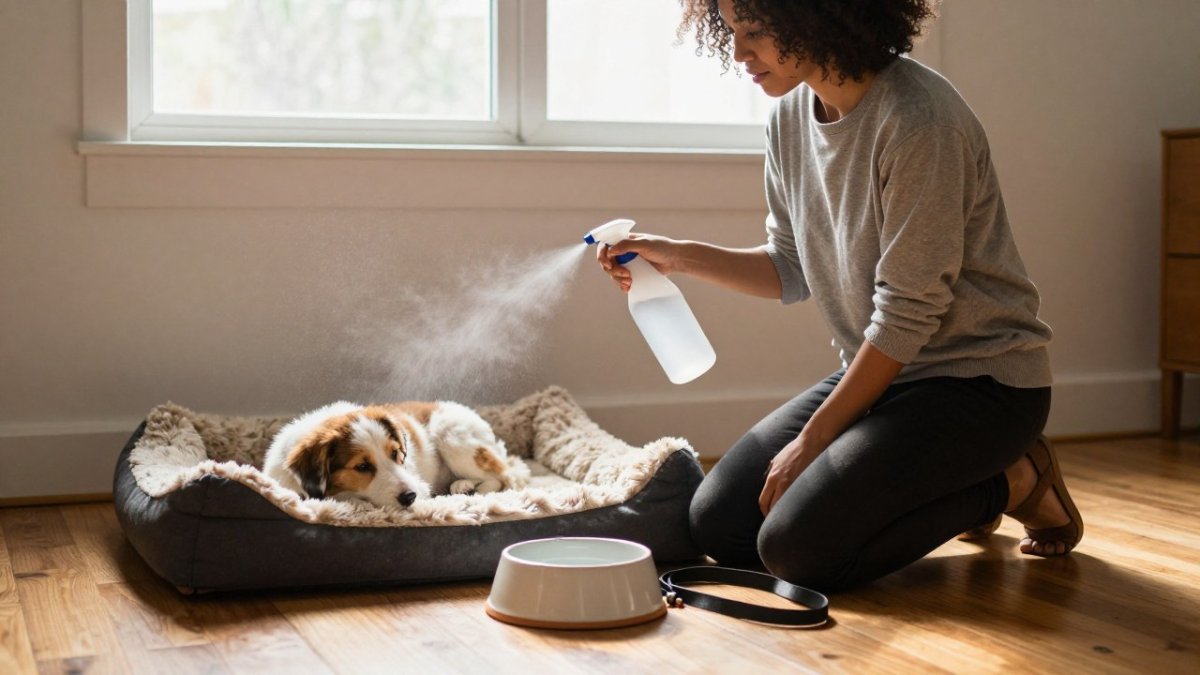
- Treat bedding and the dog's sleeping spot on the same day, or you're re-infesting the dog nightly
- Repeat per the label, not per your impatience
Watch out: spraying a dog and skipping the bedding is the most common reason owners conclude a product "doesn't work." The fleas are not on the dog. They're in the dog's bed.
Wondercide vs Greenbug for Fleas on Cats
Cats are where this comparison needs the most caution. Cats groom themselves constantly, which means anything applied to their coat may be ingested. That changes the risk calculation.
Never use a dog-labeled flea product on a cat unless the label explicitly covers cats. This is not brand-specific advice; it's a hard rule across the entire category, and it applies to botanical sprays as much as to synthetic ones.
For cats specifically, we'd suggest a different order of operations:
- Treat the environment first: bedding, carpet edges, furniture the cat sleeps on
- Use a damp cloth rather than a direct spray for the cat's coat where the label allows
- Keep treated areas ventilated and let them dry fully before the cat returns
- Watch for drooling, lethargy, or pawing at the mouth after any application and call your vet if it happens
The ASPCA's animal poison control resources are worth bookmarking before you start, not after something goes wrong. Some essential oils that may be used on dogs can pose risks to cats, so check species-specific guidance before applying any product.
What Wondercide Flea and Tick Spray Reviews Reveal
Wondercide flea and tick spray reviews are genuinely mixed, and that's more useful than a wall of five-star praise.
Read reviews in this category with three filters:
- Ignore "it didn't work" reviews that don't mention whether the home was treated. A spray applied only to the pet will fail every time.
- Discount reviews written within 24 hours. Botanical sprays need repeat application; day-one reviews measure smell, not results.
- Look for reviews that mention the full routine (vacuuming, bedding, yard). Those are the ones that tell you something.
What most reviews miss is the base rate problem: a flea infestation that's been building for weeks in a carpet won't be solved by any single bottle, natural or otherwise. When you see a one-star review saying "fleas came back after two weeks," that's usually a lifecycle problem, not a product failure.
Application, Coverage, and Cost Per Treatment
Comparing only the sticker price of one bottle can be misleading, because flea products are often sold in different formats and may require different reapplication schedules. The number that actually matters is cost per treated square foot per month, and you can build it yourself from the label without trusting anyone's marketing page.
Here is the framework, applied to both brands the same way.
Step one: identify the format. Flea products are sometimes sold as ready-to-use sprays and sometimes as concentrates. A concentrate is measured in concentrate volume and dilutes into a larger volume of finished spray, so comparing a concentrate price directly to a ready-to-use price can be a math error.
Step two: find the label coverage rate. The label states how much product to apply per unit of area, or how many square feet a bottle covers. Use the label's number, not the marketing page's. For indoor treatment, count carpet, rugs, furniture seams, baseboards, and the pet's bedding as treated area.
Step three: apply the reapplication interval. This is where the two brands separate in practice. A product labeled for reapplication every few days during an active infestation costs more per month than one labeled for a longer interval, even if the bottle price is identical. Multiply the per-application cost by the number of applications the label requires over a full flea life cycle, which most practitioners treat as roughly one to several weeks depending on temperature and humidity.
Step four: add the yard. Outdoor treatment is the line item most budgets miss. The yard is often the largest treated area in the whole plan, and skipping it means fleas re-enter the home on shoes and pet paws within days.
A general worked example makes the method concrete. Suppose a ready-to-use product covers a stated square footage and its label calls for reapplication every several days during an active infestation. Over a four-week cycle, you may need multiple bottles rather than one.
Two coverage realities apply to both brands equally:
- Indoor and outdoor coverage are separate line items. A bottle sized for a living room will not also treat a yard. Budget for both or accept that the yard is untreated.
- Bedding and laundry are not spray costs, but they are plan costs. Hot-water washing and vacuuming are part of the routine and belong in your monthly estimate even though no bottle is involved.
Watch out: comparing a concentrate to a ready-to-use spray by bottle price alone will make the concentrate look expensive when it is often the cheaper option per treatment. Do the dilution math before you decide either brand is the budget pick.
Building a Whole-Home Flea Plan with Natural Ginesis
A whole-home flea plan beats any single product, and that's the conclusion we'd stand behind after years of formulating enzyme-based pest products. Wondercide and Greenbug are both reasonable botanical options for the spray step. Neither replaces the rest of the plan.
Here's the routine we'd build:
- Treat the pet per label, and treat the bedding the same day
- Vacuum carpet, rugs, and furniture seams, then dispose of the bag or empty the canister outside
- Wash all pet bedding and your own bedding in hot water
- Treat indoor edges, baseboards, and under furniture
- Treat the yard, focusing on shaded, damp areas and where pets rest
- Repeat application on the label's schedule for at least a full flea life cycle
- Keep grass trimmed and reduce standing moisture outdoors
Where Natural Ginesis fits is the rest of the household. Our non-toxic, bio-degradable enzyme blends are designed for body, home, and pets, and they're built to break down dirt, odors, and organic residue rather than sit on surfaces as a chemical residue. For families with children and pets sharing the same floors, that matters. You can treat a carpet and let a toddler crawl on it the same day without a ventilation countdown.
If you're already using a botanical spray on the pet, our enzyme-based cleaners handle the laundry, the floors, and the bedding side of the plan without adding another pesticide to the mix. That's the gap we built the range to fill.
Flea season doesn't announce itself, and the first bite usually shows up before the first bottle does. If you want a household routine that's safe around kids, pets, and sensitive skin, start with products that don't force you to choose between effective and gentle. Natural Ginesis offers non-toxic, pesticide-free formulations with a unique organic enzyme blend, safe for body, home, and pets. Get started with Natural Ginesis and build a flea plan your whole household can live with.
Frequently Asked Questions
Does Wondercide actually kill fleas?
The supplied material does not include independent efficacy data for Wondercide, so judge any product claim alongside its current label directions and your own results.
How does Greenbug compare with Wondercide for flea control?
The supplied research did not include comparable efficacy data for either product, so you should not assume the two perform the same. Check each current label for active ingredients, approved use sites, and species limits before buying, and expect to treat bedding, carpet, and yard as well as the pet.
Can Wondercide or Greenbug be used on cats?
Do not assume a dog label applies to cats. Essential-oil sprays can affect cats differently, and species-specific directions exist for a reason. Read the current label for each product and confirm it lists cats, the age limit, and the application method. If the label only names dogs, keep it off your cat. For kittens, pregnant cats, or a cat with skin issues, ask your veterinarian before applying any flea spray.
How long does flea spray take to work?
Repeat application per the label is generally important for flea control. Real infestations involve eggs, larvae, and pupae in carpet and bedding, so expect several weeks of consistent treatment rather than a single spray. Vacuum daily, wash pet bedding in hot water, and reapply per the label. If fleas persist after a few weeks, consult your vet about an integrated plan.
