

16th Apr 2026
Tackling Pet Urine the Right Way: Why Enzyme Cleaners Make the Difference
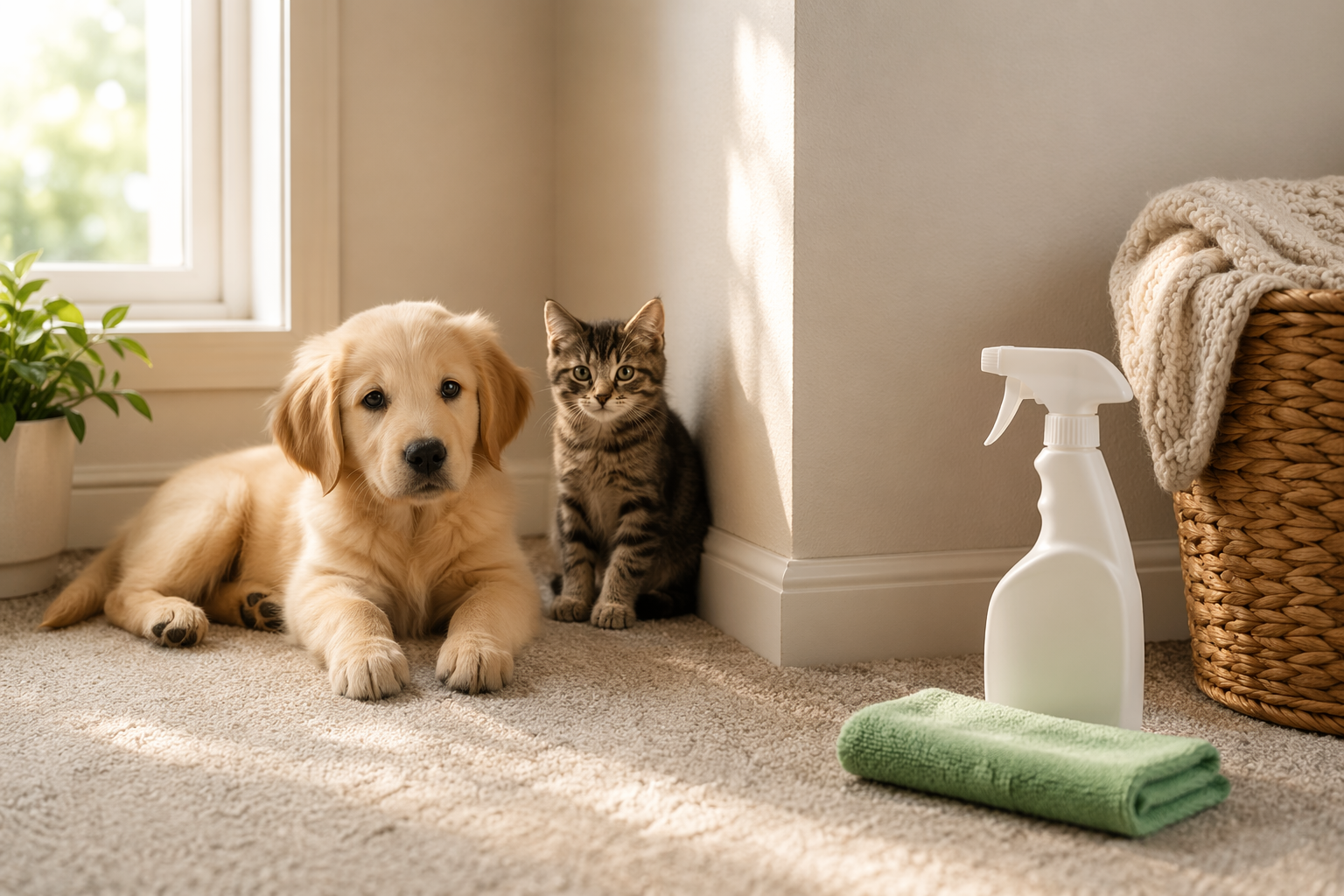
If you share your home with pets, you already know the joy they bring—along with the occasional not-so-joyful surprise. Whether it’s a new puppy still learning the rules or a cat that’s decided a corner of the room is now “the spot,” accidents happen.
The real challenge isn’t just cleaning what you can see—it’s handling what’s left behind.
Because with pet urine, the visible mess is only part of the story.
What You’re Really Dealing With
Pet urine doesn’t just sit on the surface. It seeps into carpet fibers, padding, grout lines, and even subflooring. As it dries, it leaves behind concentrated compounds like uric acid crystals that can linger long after the initial cleanup.
Cat urine, in particular, is a different level of stubborn. It’s more concentrated, often more pungent, and tends to soak deeply into one specific area—like the corner of a room, along a baseboard, or into a favorite rug. Over time, that one spot can quietly take over the entire space.
You might clean it… and think it’s gone…
Then a few warm days later, it’s back—and unmistakable.
And for pets, those lingering scents can act like a signal:
“This spot? Yes, this is the bathroom.”
Why Traditional Cleaners Fall Short
Most household cleaners are designed to sanitize or mask odors. They might disinfect the surface or leave behind a fresh scent, but they don’t fully break down the compounds that cause the odor in the first place.
In some cases, they can even make things worse by:
- Locking in the stain
- Spreading the affected area
- Leaving behind residues that attract dirt
With cat urine especially, surface cleaning often just scratches the top layer while the real issue continues to sit underneath—slowly releasing odor back into the room.
How Enzyme Cleaners Work (and Why They’re Different)
Enzyme cleaners don’t just cover up the problem—they digest it.
They contain natural enzymes that specifically target the organic material in pet urine. These enzymes break down proteins and uric acid crystals into smaller, odorless components. Instead of masking the smell, they eliminate it at the source.
With heavier situations—like a cat repeatedly using the same corner—the enzymes go to work deep in the fibers, padding, and even porous materials. They continue breaking things down over time, reaching into areas that would otherwise hold onto odor indefinitely.
It’s not about overpowering the smell—it’s about removing what’s causing it.
Getting the Best Results
Using an enzyme cleaner effectively is a little different from typical cleaning. A few simple steps can make a big difference:
- Blot first, don’t scrub – remove as much moisture as possible
- Saturate the area – the cleaner needs to reach as deep as the urine did
- Give it time – enzymes need time to break things down properly
- Avoid mixing with other cleaners – disinfectants can interfere with enzyme activity
For areas that have been used more than once (like that one persistent corner), multiple applications may be needed. Think of it less like a quick fix and more like fully resetting the space.
A Cleaner Home Without Harsh Trade-Offs
One of the biggest advantages of enzyme-based cleaning is that it works with nature instead of against it. You’re not relying on harsh chemicals or heavy fragrances to overpower odors—you’re letting a natural process do the heavy lifting.
That means a cleaner home that feels fresh—not artificially scented—and a space your pets won’t keep returning to.
The Bottom Line
Pet accidents are part of life—but they don’t have to become a permanent problem.
Whether it’s a one-time accident or a stubborn area that’s built up over time, enzyme cleaners offer a way to truly eliminate odors at their source—even the strong, lingering kind that can take over a room.
Because when cleaning goes deeper than the surface, you don’t just remove the mess—you restore the space.